Best Dutch Ovens
Honest Take · Licensed-Brand Cast Iron

Martha Stewart and Other Named-Brand Dutch Ovens: Is the Name Worth It?

A homeware name and a slow-cooker brand have both put their label on an enameled cast iron Dutch oven this year. Neither company casts iron for a living. We compared what each actually publishes about its pot — size, finish, price — against a cookware specialist selling a nearly identical size, to find out exactly what the famous name buys and what it quietly doesn't.

By Ilane Tall · Updated November 21, 2026 · Research-based.

Affiliate disclosure: we may earn a commission if you buy through the Amazon links on this page, at no extra cost to you.

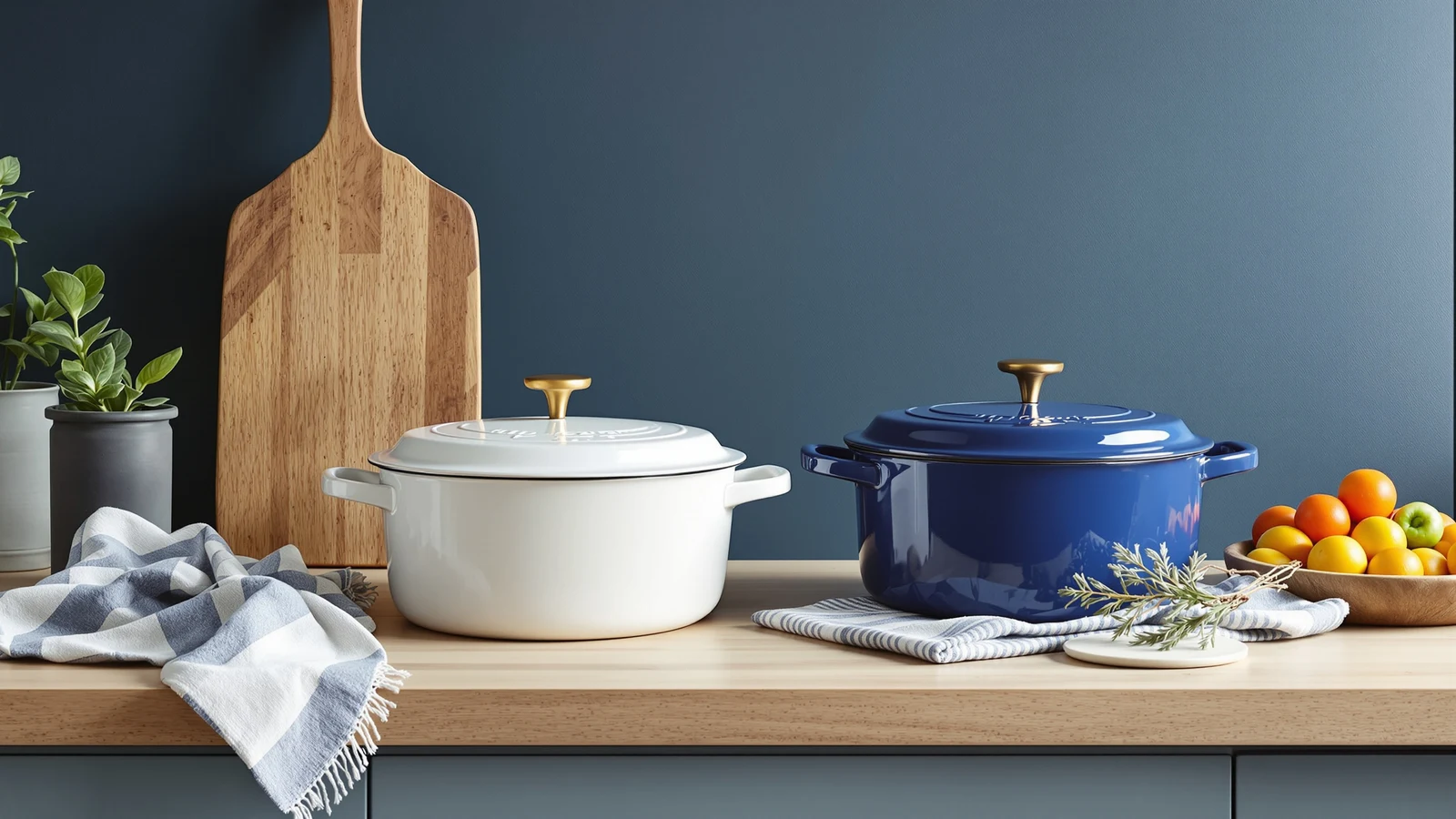
A Martha Stewart branded enameled cast iron Dutch oven and a Crock-Pot branded one side by side with an unbranded cast iron pot on a kitchen counter
Where the name comes from

Why a homeware name and a slow-cooker brand end up in cast iron

Enameled cast iron is, as we've said on almost every other page of this site, a commodity material: iron cast into a pot shape, then coated in glass so it never needs seasoning. The actual casting and enameling is done by a relatively small number of foundries and contract manufacturers worldwide, and a great many of the brand names you see stamped on the side of a Dutch oven are licensing arrangements — a company with no foundry of its own pays to put its name, its colorway and sometimes its own branding box on a pot it does not manufacture itself. This is not unique to cast iron; it is how a large share of consumer housewares reaches shelves, from branded cookware sets to branded small appliances.

It explains why a media and homeware name with no prior cookware manufacturing history can sell a Dutch oven at all, and why a slow-cooker company can sell one too: the entry cost to put a name on an already-tooled pot shape is far lower than the cost of developing cast-iron manufacturing from scratch. What differs, brand to brand, is how much the company actually changes about the pot beyond its surface — and how much it tells you about that. Compared against the different material categories we've covered elsewhere on this site, this is a simpler question: these are all enameled cast iron. The question here isn't the material, it's the name on the box.

The homeware name

What's actually specific to the Martha Stewart Gatwick line

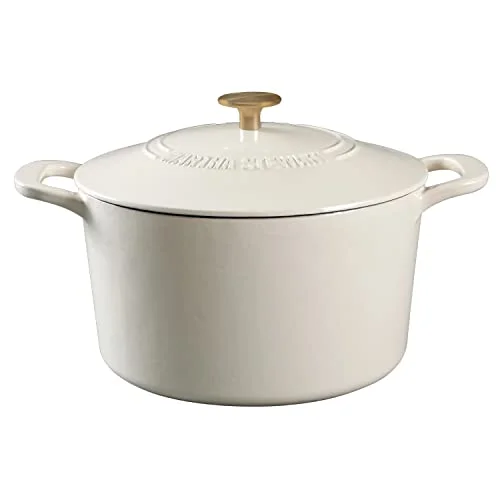
The MARTHA STEWART Gatwick 7-Quart Enamel Cast Iron Dutch Oven is sold in a Linen White with Gold finish, priced at $63.49. The listing gives us one size: 7-quart. That is the entirety of what we can state about this specific pot with confidence — the capacity, the named finish, and the price. We do not have a published oven-safe temperature, a wall thickness, or a lid design detail for this listing, so we won't guess at any of them; if those specifics matter to you, they're worth confirming on the current Amazon page before buying.

What the name specifically buys, based on what's published, is design: a named collection ("Gatwick"), a two-tone white-and-gold finish that reads as decorative rather than purely functional, and the Martha Stewart brand's general reputation for home aesthetics. That is a real and legitimate thing to pay for if a matching kitchen look is actually what you want. It is not evidence of cast-iron manufacturing expertise, because a homeware and media brand's core business has never been foundry work. The iron itself, and the basic enamel-over-cast-iron construction, is the same category of product as every other enameled Dutch oven on this site — the brand's contribution is sitting on top of it, not underneath it.

The appliance name

A slow-cooker brand's own cast iron line: what carries over, what doesn't

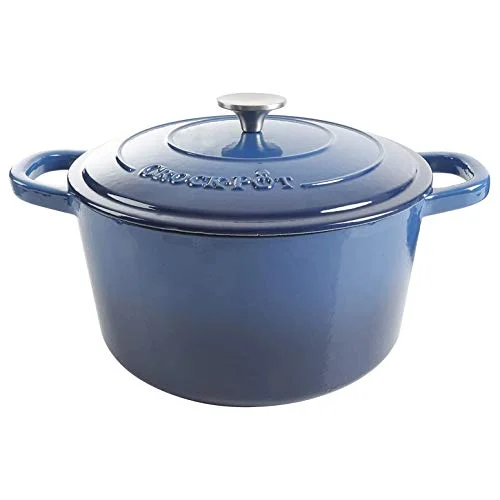
The Crock-Pot Artisan 7-Quart Round Enameled Cast Iron Dutch Oven, in Sapphire Blue, is priced at $49.10 — the cheapest of the three pots in this guide by a wide margin, and roughly $30 under the Martha Stewart pot at the same 7-quart capacity. Crock-Pot's name recognition comes entirely from electric slow cookers: countertop appliances built around a heating element, a removable stoneware or metal insert, and a timer. That is a genuinely different manufacturing discipline from casting iron and firing glass enamel onto it at high heat. An electric-appliance company's engineering strength is in heating elements, thermostats and plastic housings, not iron foundries.

What carries over honestly is the brand association with slow, low-and-slow cooking — "Crock-Pot" has become near-generic shorthand for exactly that style of cooking, and a Dutch oven is also a slow-cooking vessel, just one you put inside a conventional oven or on a stovetop burner instead of plugging in. What doesn't carry over is any demonstrated expertise in the pot itself: the listing names a size and a color and nothing else, so we have no manufacturer claim about wall thickness, enamel grade or lid fit to compare against the Martha Stewart pot or against a specialist's. If you're sizing this one against your own kitchen before you decide anything about the name, our guide to whether a given Dutch oven will actually fit your oven, sink and dishwasher covers the measurements worth checking before the finish color does any of the deciding.

Read this before you buy

Reading the warranty when the name is new to the category

Established cast-iron specialists frequently offer long, sometimes lifetime, warranties specifically against enamel defects, because enamel manufacturing is the core thing they do and they're confident enough in it to stand behind it for years. That confidence is a real signal, when a specialist offers it. Neither the Martha Stewart listing nor the Crock-Pot listing available to us states a specific warranty length or what exactly it covers, so we're not going to invent a number for either. What we can tell you is what to check before you buy, because a famous name does not automatically mean a generous warranty, and a company new to a category sometimes offers a shorter one, or routes claims through a different process than you'd expect from the name on the box.

Before buying, open the current Amazon listing and look specifically for a stated warranty term and who handles a claim — the brand's own customer service, the Amazon seller of record, or a separate importer, since licensing arrangements sometimes mean the name on the pot and the company that actually fields a defect claim aren't the same entity. It's also worth reading our guides on what actually goes wrong with a Dutch oven in practice: what to do if your pot arrives chipped or cracked and what to do about a cracked or melted lid knob — both walk through exactly the kind of defect a warranty is supposed to cover, and knowing what you'd be filing a claim for makes it easier to judge whether a listing's warranty language is actually reassuring or just vague.

The number that matters most

Price against a cookware specialist at a similar size

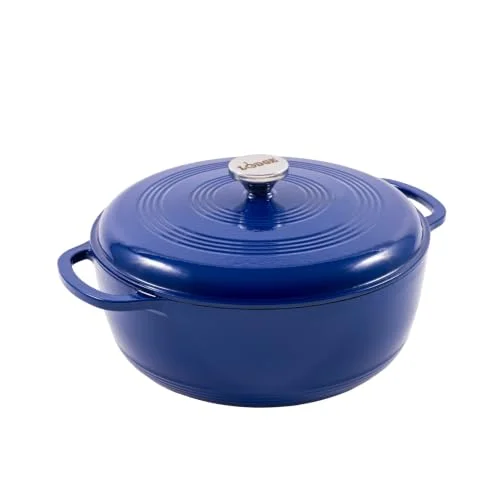
The Lodge Essential Enamel Cast Iron Dutch Oven, 7.5 Quart, in Indigo, is priced at $83.99 — a company that, as we've documented elsewhere on this site, has been casting iron since 1896. At 7.5 quarts it is slightly larger than both the Martha Stewart and Crock-Pot pots here, and it costs just $4.00 more than the 7-quart Martha Stewart Gatwick. That is the number worth sitting with: a homeware brand with no foundry of its own is priced within a few dollars of an actual cast-iron specialist offering more capacity. Whatever premium the Martha Stewart name is commanding, it is not a discount against the specialist — it is close to specialist pricing without specialist manufacturing history behind it.

The Crock-Pot pot flips the comparison the other way: at $49.10, it undercuts the Lodge by nearly $35 and the Martha Stewart pot by about $30, at the same 7-quart size the Martha Stewart pot carries. We don't have a wall-thickness or enamel-grade figure for the Crock-Pot listing to explain that gap, so we won't speculate about what specifically was cut to reach that price — only that a $35 difference against a specialist at a similar size is large enough to be worth checking the current listing's photos and buyer-facing specifications closely before ordering. For a broader look at how price actually tracks with size and construction across this category, see our comparison of four Dutch ovens at the same six-quart capacity and wildly different prices.

Side by side

The three, compared

PotBrand typeCapacityFinishPriceGet it
Crock-Pot Artisan 7-Quart Slow-cooker appliance brand 7 qt Sapphire Blue $49.10 Get it
Martha Stewart Gatwick 7-Quart Homeware & media brand 7 qt Linen White with Gold $63.49 Get it
Lodge Essential Enamel 7.5-Quart Cast-iron specialist since 1896 7.5 qt Indigo $83.99 Get it
The picks

Our picks, and who each one is for

01Best if the look is the point

MARTHA STEWART Gatwick 7-Quart Enamel Cast Iron Dutch Oven

Best for buyers who specifically want the Linen White and Gold finish

7 quarts·Linen White with Gold·Martha Stewart Gatwick line

At $63.49, this is a defensible purchase on exactly one basis: the finish. A gold-accented, linen-white cast iron pot is a specific aesthetic choice, and if that's what your kitchen is actually missing, the Martha Stewart name is doing real work by offering a collection you can't get from a cookware specialist's catalog. It is not a purchase to make on the assumption that the name implies cast-iron manufacturing depth — the listing doesn't claim that, and we won't on its behalf.

Buy this one for the gold trim, not for the name on the box.

Martha Stewart Gatwick enameled cast iron Dutch oven, linen white with gold
Price
$63.49
Check price →
02Best price of the three

Crock-Pot Artisan 7-Quart Round Enameled Cast Iron Dutch Oven

Best for the tightest budget among named-brand options

7 quarts·Sapphire Blue·Crock-Pot Artisan line

$49.10 is meaningfully less than either the Martha Stewart pot or the Lodge specialist pot, at the same 7-quart size as the Martha Stewart. Buy it expecting exactly what's published — a 7-quart enameled cast iron pot in Sapphire Blue — and nothing more, since the brand's actual expertise lies in electric slow cookers, not cast-iron foundry work. The slow-cooking brand association is real marketing value if that's what drew you in; it is not a manufacturing credential.

The cheapest named brand here, and the name is doing the least technical work of the three.

Crock-Pot Artisan enameled cast iron Dutch oven, sapphire blue
Price
$49.10
Check price →
03Best from an actual specialist

Lodge Essential Enamel Cast Iron Dutch Oven, 7.5 Quart

Best if you'd rather pay the specialist than the famous name

7.5 quarts·Indigo·Made by Lodge

$83.99 for a quarter-quart more capacity than either named-brand pot in this guide, from a company whose entire business is casting iron. It costs just $4.00 more than the Martha Stewart Gatwick and about $35 more than the Crock-Pot — a small gap against a brand with actual foundry history behind it, and the comparison this whole guide is really about. If you're weighing a famous name against a specialist's name you've never heard outside of cookware, this is the specialist.

Nearly the same price as the homeware pot, with a cast-iron pedigree the homeware pot doesn't have.

Lodge Essential Enamel cast iron Dutch oven, 7.5 quart, indigo
Price
$83.99
Check price →
The real question

When the name is genuinely the reason to buy, and when it is not

The name is genuinely the reason to buy in two specific situations. First, when the brand is actually selling you something a specialist doesn't offer — in the Martha Stewart Gatwick's case, that's a particular two-tone finish and a named design collection, which is a legitimate aesthetic purchase if that look is what you're after. Second, when the brand genuinely undercuts the category on price for the published specification you need, which is the Crock-Pot pot's case at $49.10 for a plain 7-quart enameled pot, as long as you're buying it for exactly the size and color stated and not for any implied manufacturing pedigree.

The name is not the reason to buy when you're assuming it implies something it hasn't demonstrated: that a slow-cooker company understands cast-iron enameling the way a foundry does, or that a homeware and media brand's design sense extends to the construction underneath the finish. It is also not a good reason when the premium over an actual specialist has nearly disappeared — paying $63.49 for a 7-quart homeware-branded pot when $83.99 buys 7.5 quarts from a company with more than a century of cast-iron manufacturing is the moment where the name has stopped being a discount and started being a wash. In that case, the specialist's pot is the more defensible purchase on the numbers alone, regardless of which name is more recognizable at a dinner party.

Our method

How we compared

What we did

Published specs and current prices, brand by brand

We compared the published size, finish and current Amazon price for the Crock-Pot Artisan 7-Quart, the MARTHA STEWART Gatwick 7-Quart and the Lodge Essential Enamel 7.5-Quart, and looked at each brand's own primary business — slow-cooker appliances, home and media products, or cast-iron manufacturing — to judge what expertise plausibly carries into a Dutch oven and what doesn't. Every specification named in this article is one that appears in the product listing for that exact item; where a listing doesn't publish a figure, such as a wall thickness or an oven-safe temperature, we say so rather than borrow one from a different pot.

What we didn’t

We don’t run a testing lab

We do not physically test these pots, we do not own them, and we have no star ratings or review counts for these specific listings to report, so we don’t publish any invented sentiment. Whether a brand new to this category has actually matched a specialist's enamel quality is a question that would take years of ordinary use to answer honestly, and no one — us included — can answer it after a short few weeks with the pot. What we can do is read what each company actually states, compare it plainly, and tell you when the silence on a spec is itself the answer.

FAQ

Common questions

Does Crock-Pot actually manufacture its own cast iron Dutch ovens?

Crock-Pot's core business and brand recognition come from electric slow cookers — countertop appliances built around heating elements and inserts, not from casting iron or firing enamel. The listing for the Crock-Pot Artisan 7-Quart doesn't state that the company casts the iron itself, so we don't assume it does. What carries over is the brand's association with slow cooking as a style, not a demonstrated foundry process.

What's different about the Martha Stewart Gatwick Dutch oven versus a generic one?

Based on what's published, the specific differences are the named "Gatwick" collection and the Linen White with Gold finish — a design and color choice, priced at $63.49 for 7 quarts. The underlying construction is the same category of enameled cast iron as every other pot on this site; the listing doesn't publish any additional material or manufacturing claim beyond size and finish.

Should I buy based on the brand name or the price?

Compare both against what a cast-iron specialist charges for a similar size first. Here, the Lodge Essential at 7.5 quarts costs $83.99, just $4.00 more than the 7-quart Martha Stewart pot at $63.49 — at that gap, the specialist is the stronger purchase on paper. The Crock-Pot pot at $49.10 is a genuine budget option at the same 7-quart size, provided you're buying it for the stated size and color and not for any implied manufacturing pedigree.

How do I check the warranty before buying a named-brand Dutch oven?

Open the current Amazon listing and look specifically for a stated warranty term and who handles a claim — licensing arrangements sometimes mean the name on the pot and the company that actually processes a defect claim are different entities. Neither the Crock-Pot nor the Martha Stewart listing we reviewed states a specific warranty length, so confirm it directly on the listing rather than assume a famous name guarantees a long one.

Keep reading

More from Best Dutch Ovens