Best Dutch Ovens
Roundup · Six-Quart Pots for the Stovetop

The Best Dutch Ovens for Soup, Chili and Stovetop Simmering

A braise wants a tight lid and three hours in a low oven, left alone. A pot of chili wants something else entirely: enough room to stir without splashing the cooktop, a bottom that won’t scorch while it holds a bare simmer all afternoon, and a lid you lift a dozen times while you taste and adjust the seasoning. We compared the published specifications and current prices for three six-quart enameled cast iron Dutch ovens built for that second job — the stovetop pot, not the braising pot — to find out what actually separates them.

By Ilane Tall · Updated November 7, 2026 · Research-based.

Affiliate disclosure: we may earn a commission if you buy through the Amazon links on this page, at no extra cost to you.

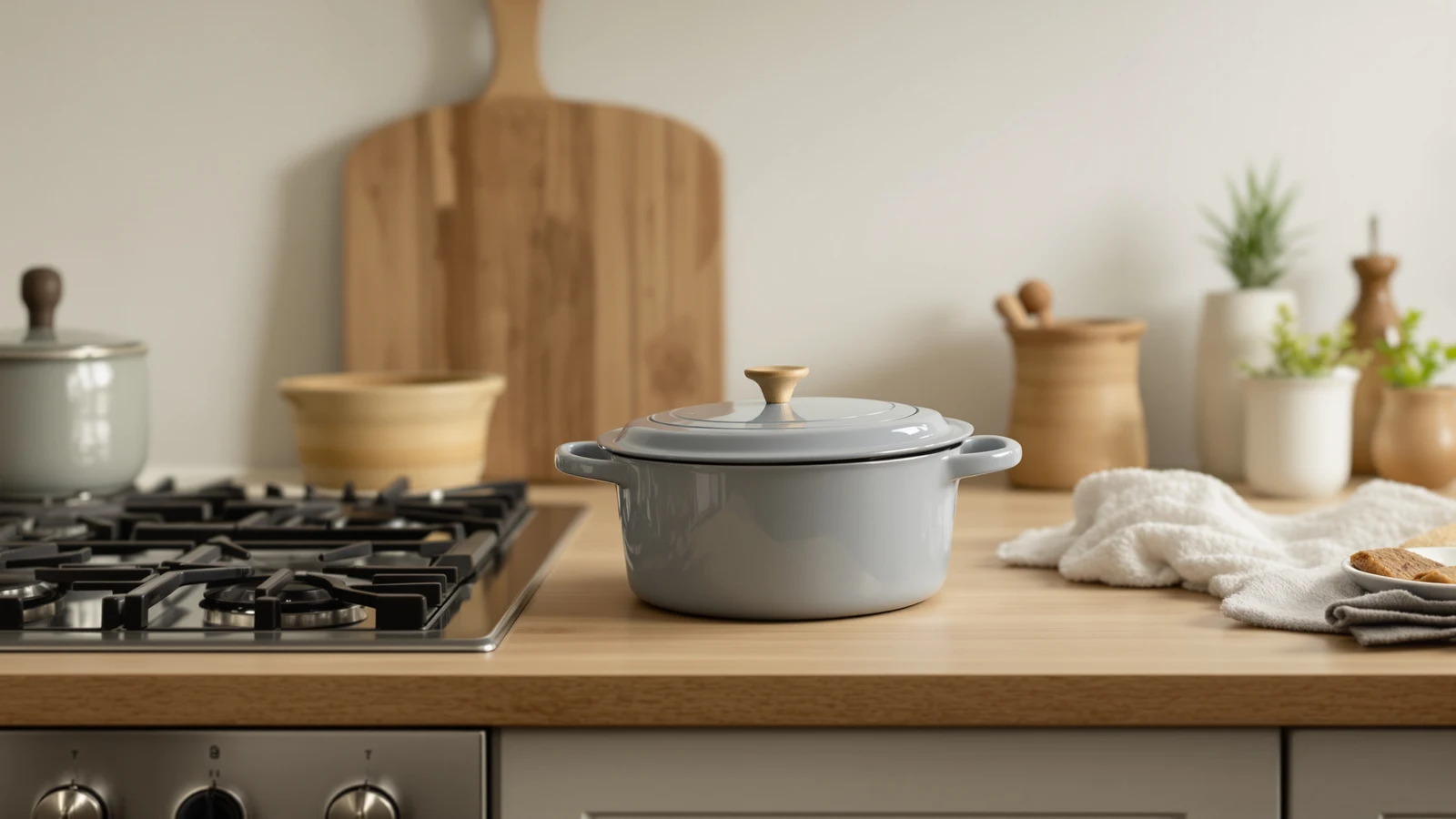
Six-quart enameled cast iron Dutch oven simmering a pot of chili on a stovetop burner
Capacity

Why six quarts suits a simmer better than a braise

A braise fills a pot partway: a chuck roast or a few pounds of short ribs, some aromatics, a cup or two of liquid, and a lid that goes on and stays on for three hours in a 300–325°F oven while the dry, even heat of the oven cavity does the work around the pot. A pot of soup or chili is a different shape of problem. It is mostly liquid from the start, that liquid expands as it heats and reduces as it cooks down, and you are standing over it on a stovetop burner for an afternoon, lifting the lid to stir, taste, and add more broth or beans. The pot needs headroom below the rim for a rolling simmer that won’t boil over, not headroom for a roast that isn’t going anywhere.

Six quarts is the capacity where that headroom works out for a normal household batch. It holds enough chili or soup to feed six to eight people with room left below the rim once the liquid is actually simmering, rather than sitting at the brim the way a smaller pot would with the same recipe. Go up to seven or eight quarts and you are heating more cast iron before the liquid itself comes up to temperature — a real cost on a stovetop burner, where the pot has no ambient oven heat helping it along, unlike a braise sealed inside a hot oven.

All three pots in this roundup are six quarts by their own listings: the Umite Chef is 6QT, the Amazon Basics is 6.0 Qt, and the Mueller DuraCast is 6 Quart – Round. That is not a coincidence of what happened to be in stock. Six quarts is the number where a stovetop soup pot and an oven braising pot overlap, and these three are sized specifically for the stirring, simmering job rather than the sealed, hands-off one.

Shape and handles

Stirring room and splash depth on an open stovetop

An oven braise sits covered for most of its cooking time, so the lid is doing the work of containing any splash. Chili and soup are usually cooked with the lid off, or cracked, for at least part of the afternoon — you want to see it reduce, stir in beans or vegetables partway through, and taste as you go. That means the shape of the pot matters in a way it doesn’t for a sealed braise: a round Dutch oven with a wide, shallow profile gives a wooden spoon more horizontal room to move per quart than a narrower, deeper pot holding the same volume, which is exactly the geometry that keeps an active stir from splashing the stovetop and the counter around it.

Handles matter here too, because a full six-quart pot of chili is heavy and you will be repositioning it — off the big burner to let it sit, back on to bring it up again, over to the sink to drain or rinse something. The Umite Chef and the Amazon Basics 6-Quart both name dual handles directly in their listings, which lets you grip and move a full pot with both hands symmetrically rather than favoring one side. The Mueller DuraCast’s listing doesn’t specify a handle configuration beyond “pot with lid,” so if handle shape and reach matter to you specifically, check the current photos on that listing before buying rather than assume it matches the other two.

Heat

Holding a low simmer for an afternoon without scorching

Cast iron’s defining property, enameled or bare, is thermal mass: it absorbs heat slowly and spreads it across the whole base rather than concentrating it under the burner's flame ring. That is the mechanical reason cast iron pots are good candidates for a chili or a pot of beans left at a bare simmer for hours — the base resists developing the single scorching-hot patch that a thin stamped pot can develop over the exact spot the flame touches. This is a known property of the material itself, not a claim specific to any one of these three pots.

The enamel lining adds a non-reactive surface on top of that iron, which matters for chili and tomato-based soups specifically: acidic ingredients don’t react with enamel the way they can with bare, unseasoned cast iron. None of the three listings here describe their interior enamel color, so we won’t claim any of them makes it easier to watch a simmer darken — that is a genuine difference between enamel finishes in general, but it is not a spec any of these three products publish.

What doesn’t change by brand is the flame itself. Cast iron’s even heat distribution helps avoid a hot spot, but it cannot turn a medium flame into a low one. Holding a soup or chili at a true simmer for an afternoon still means dialing the burner down further than instinct suggests, in any of these three pots.

After dinner

Reheating and freezing leftovers in the same pot

One real convenience of enameled cast iron over a bare metal stockpot is that it can go straight from the stovetop into the refrigerator, lid on, as the vessel you cooked in and the container you store leftovers in. It is non-reactive, it is already built to be washed by hand or in a dishwasher, and a six-quart pot of chili cooling overnight with its own lid on saves the step of ladling everything into a separate storage container.

The freezer is a different matter, and this is true of enameled cast iron as a category, not a quirk of these three pots specifically: the combination of a heavy cast iron body and a glass enamel coating does not take well to the extreme cold and the thermal swing of a home freezer, which is the kind of stress that can crack enamel over time. The safer routine is to refrigerate the pot itself for next-day eating, and ladle anything you want to freeze into separate freezer-safe containers rather than putting the Dutch oven itself in the freezer.

For reheating, the same even heat distribution that makes these pots good for a long simmer also makes them forgiving the next day — chili straight from the refrigerator comes back up to temperature over a low-to-medium flame without the scorched-bottom risk you’d get bringing a cold, dense mass up to heat in a thinner pot.

Side by side

The three, compared

PotBest forCapacityMade byNotablePriceGet it
Amazon Basics 6-Quart, Linen Gray Most balanced pick 6.0 Qt Amazon Basics Dual handles, stated oven safe $47.49 Get it
Umite Chef 6QT, Grey Lowest price, with potholders 6QT Umite Chef Dual handles, cotton potholders included $39.99 Get it
Mueller DuraCast 6 Quart No-frills, no bundle 6 Quart – Round Mueller Plain pot and lid, no stated extras $49.27 Get it
The picks

Our picks, and who each one is for

01Best overall

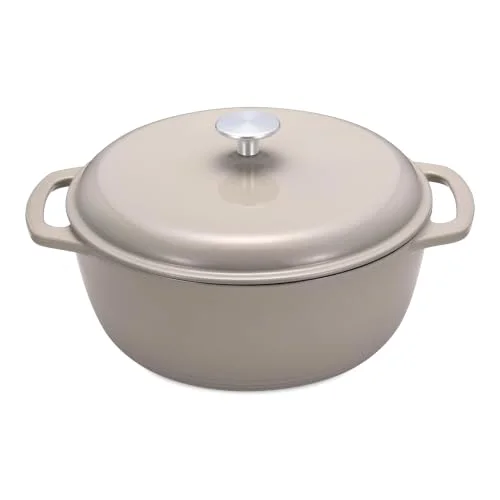
Amazon Basics Enameled Cast Iron Dutch Oven, 6-Quart, Linen Gray

Best balanced pick for soup and chili

6.0 Qt·Dual handles·Round·Stated oven safe

At $47.49, this is the pot that stacks the most relevant features for stovetop simmering without a premium price. The listing itself names dual handles and round construction — the shape and grip that matter most for stirring an uncovered pot of chili without splashing — and states plainly that it is oven safe, a useful fallback if you want to finish a pot of soup under a broiler or move it into a low oven to hold. It is also the pot we compared elsewhere on this site against CAROTE's entry-level line; see our CAROTE vs Amazon Basics comparison if you’re weighing this exact listing against another budget option.

The one that names the features a stovetop pot actually needs, in writing, at the lowest price that does.

Amazon Basics enameled cast iron Dutch oven, 6-quart, linen gray
Price
$47.49
Check price →
02Best value

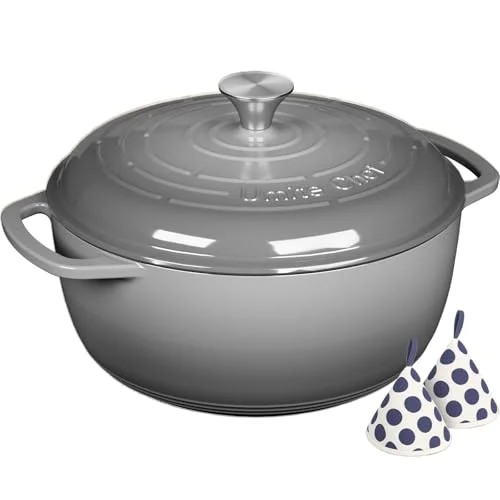
Umite Chef 6QT Enameled Cast Iron Dutch Oven, Grey

Best for the lowest price with potholders included

6QT·Dual handles·Cotton potholders included·Grey

At $39.99, this is the cheapest of the three, and the listing bundles a pair of cotton potholders with it — a genuinely useful inclusion for anyone lifting a full six-quart pot of chili off a hot burner who doesn’t already own a pair. Like the Amazon Basics pot, the title states dual handles directly, which is the detail that matters most for an afternoon of stirring and repositioning. We’ve also compared Umite Chef’s other sizes against a competing bundled line in our Overmont vs Umite Chef comparison, if you want to see how this brand’s bundles stack up at different capacities.

Potholders you’d otherwise have to buy separately, bundled into the cheapest pot of the three.

Umite Chef enameled cast iron Dutch oven, 6 quart, grey
Price
$39.99
Check price →
03Best plain pot

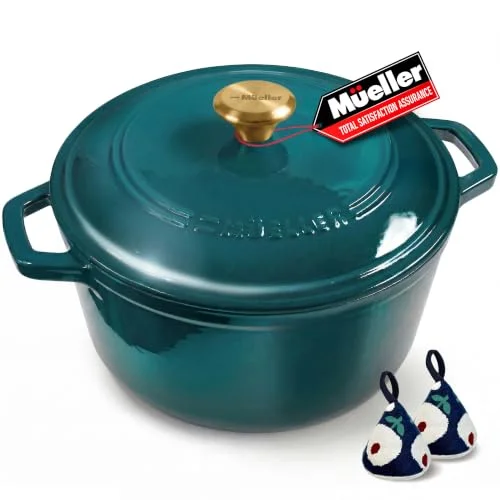
Mueller DuraCast 6 Quart Enameled Cast Iron Dutch Oven

Best if you don’t want to pay for a bundle

6 Quart – Round·Pot with lid·Made by Mueller

At $49.27, the Mueller DuraCast is the priciest of the three and the plainest listing — no bundled potholders, no handle style named outright, just a six-quart round enameled cast iron pot and its lid from a brand that sells kitchen cookware specifically. There is no visible star rating on this listing for us to report, which is common for enameled Dutch ovens sold under multiple color and size variants; see our guide to judging a Dutch oven with no star rating for why that gap on Amazon doesn’t by itself say anything about the pot. If you already own potholders and don’t need the extras the other two throw in, this is a straightforward option sized the same as both.

The plainest spec sheet of the three, at the highest price — worth it only if you’re not paying for the bundle anyway.

Mueller DuraCast 6 quart enameled cast iron Dutch oven
Price
$49.27
Check price →
The honest alternative

When a stockpot would honestly do the job just as well

None of this is an argument that a Dutch oven is always the right pot for soup. If you are mostly boiling stock, blanching, or simmering something that never touches a sear — a pure vegetable broth, a big batch of plain bone stock — a lightweight stainless stockpot does that job for less money, less weight, and with none of the enamel care that comes with cast iron. Stockpots also commonly run larger than six quarts, which matters if you’re cooking in volumes bigger than a single Dutch oven comfortably holds, like canning-sized batches or stock for a crowd.

Where a Dutch oven earns its place over a stockpot for chili specifically is the step before the simmer: searing ground beef or browning onions and peppers in the same pot you’ll simmer in, which cast iron's thermal mass handles more evenly than a thin stainless stockpot does. If your chili recipe skips that step entirely — everything just goes in raw and simmers — a stockpot will hold a simmer just fine and you’re not gaining much from the cast iron underneath.

If you’re trying to decide whether you need a dedicated stovetop pot at all alongside a braising Dutch oven you already own, our guide to building a small cast iron collection walks through when a second pot earns its cupboard space and when it’s better spent on something that does a different job entirely, like a plain stockpot.

Our method

How we compared

What we did

Specs and current prices, cross-checked

We compared the published specifications and current Amazon prices for the Umite Chef 6QT, the Amazon Basics 6-Quart and the Mueller DuraCast 6 Quart, limiting every claim in this article to what each listing actually states — capacity, handle style where named, included extras, and price. None of the three listings show a visible star rating or review count for us to report, and we have not invented one; see our guide to judging a Dutch oven with no star rating for why that is common across this category rather than a mark against any specific pot.

What we didn’t

We don’t run a testing lab

We do not physically test these pots, we do not own them, and we are not reporting owner sentiment we don’t have verified data for. How a pot actually behaves over a real afternoon of simmering chili is a fair question, and it is not one that a fortnight with a borrowed pot could answer honestly either, from us or from anyone else. What we can do is read the published specifications accurately, compare them side by side, and apply what is generally and reliably true about how enameled cast iron behaves as a material.

FAQ

Common questions

Do I need a six-quart Dutch oven for soup, or would a smaller one do?

Six quarts is the size that gives a family-sized batch of soup or chili room below the rim to simmer actively without boiling over, while still feeding six to eight people. A smaller pot forces you to cook in batches or simmer right at the brim; a larger one just means more cast iron to heat on a stovetop burner before the liquid itself gets hot. All three pots in this guide are six quarts for exactly that reason.

Can I put an enameled Dutch oven in the freezer to store leftovers?

It’s fine to refrigerate a pot of chili or soup directly in its Dutch oven overnight, lid on. The freezer is a different story: the combination of a heavy cast iron body and a glass enamel coating does not handle the extreme cold and thermal swing well, and it can contribute to cracking over time. Ladle anything you want to freeze into separate freezer-safe containers instead.

Will a low simmer scorch the bottom of a cast iron pot?

Cast iron’s thermal mass spreads heat across the whole base rather than concentrating it under the flame, which is why it resists developing the single scorching hot spot a thinner pot can get. That helps, but it doesn’t replace turning the burner down — holding a true afternoon-long simmer still means a genuinely low flame, in any pot, cast iron or not.

Which of these three Dutch ovens should I buy for chili or soup?

The Amazon Basics 6-Quart at $47.49 is the most balanced pick: it names dual handles and a stated oven-safe rating directly in the listing. The Umite Chef 6QT at $39.99 is the cheapest and comes with cotton potholders included. The Mueller DuraCast 6 Quart at $49.27 is the plainest listing of the three, with no bundled extras, worth it mainly if you already own what the other two throw in.

Keep reading

More from Best Dutch Ovens