Best Dutch Ovens
Buying Guide · Growing a Cast Iron Collection

One Dutch Oven or Two? Building a Small Cast Iron Collection

One good Dutch oven in the five-to-six-quart range already covers most of what a household cooks in an ordinary week — a braise, a pot of beans, a whole chicken. The case for a second pot is narrower than the collector instinct suggests. It is not a nicer copy of the same pot; it is a different size for the handful of meals the first one handles badly. Here is what one pot already covers, when a smaller or larger second pot earns the cupboard space, and which size to buy first.

By Ilane Tall · Updated October 31, 2026 · Research-based.

Affiliate disclosure: we may earn a commission if you buy through the Amazon links on this page, at no extra cost to you.

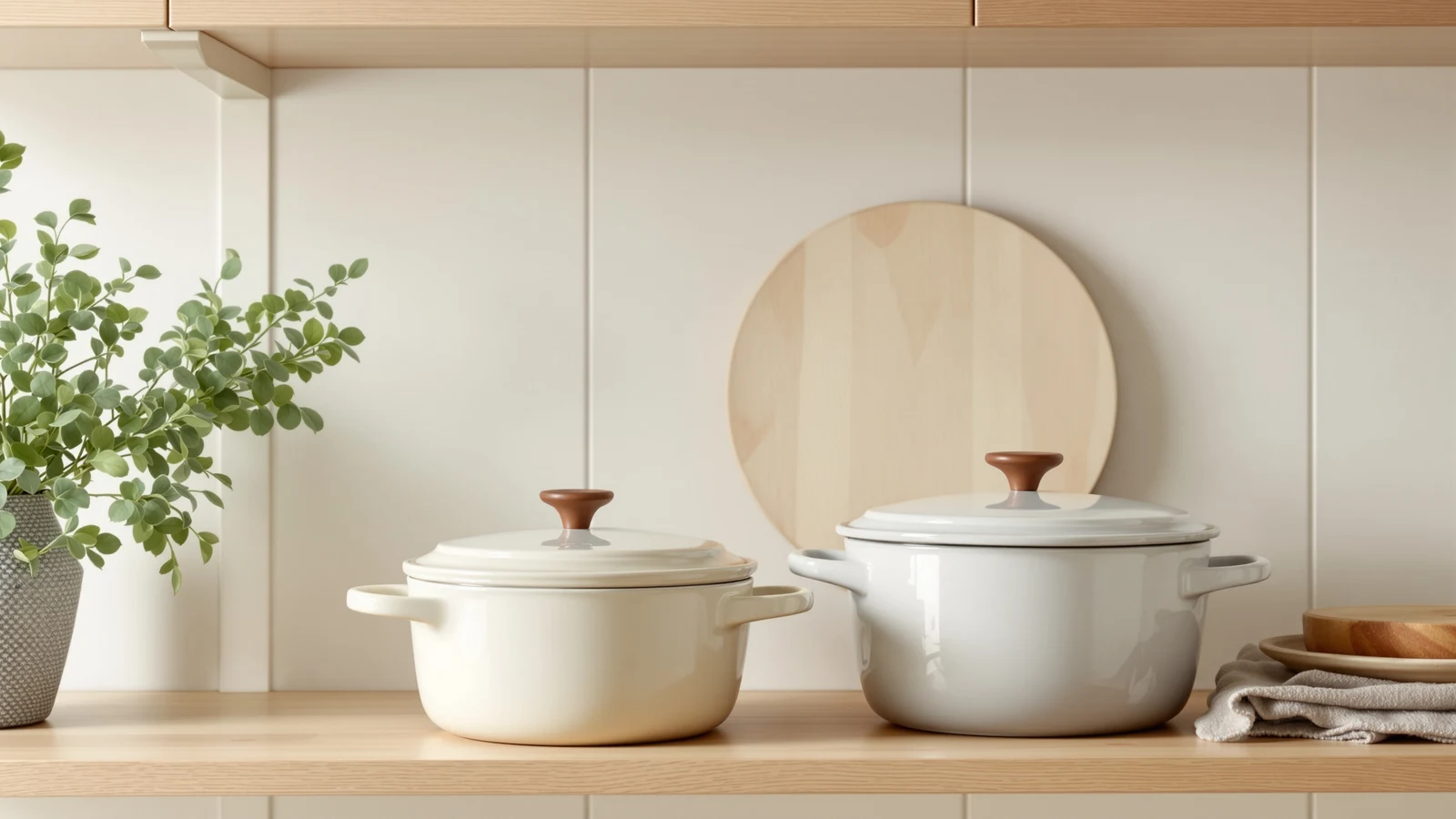
A small and a large enameled cast iron Dutch oven standing side by side on a kitchen counter
Start here

What one good pot already covers

A Dutch oven in the five-to-six-quart range is the size most buying guides, including our own guide to choosing a Dutch oven, point to first, and for a plain reason: it is large enough to braise a pot roast, hold a whole chicken with room for vegetables around it, bake a boule of sourdough under its own lid, and feed four to six people at dinner without ever feeling cramped. It is also small enough to lift, full, out of a hot oven with two hands and a reasonable amount of confidence. That middle ground is why a single pot in this range does most of the work in most kitchens, most weeks, for years.

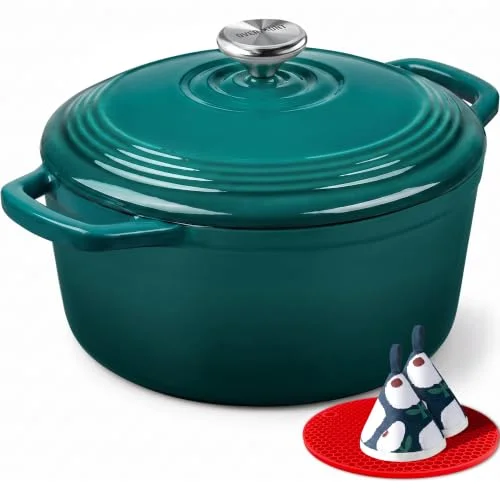
The Overmont 5.5QT enameled cast iron Dutch oven, which ships with a lid and a cookbook, sits exactly in that middle ground and is a reasonable example of the anchor pot a one-pot household owns. At $45.99, it is enameled cast iron, which means it arrives ready to use: no seasoning ritual, no rust risk, and no need to avoid a tomato-based braise the way you would with bare iron. One pot like this handles soups, stews, pot roasts, braised short ribs, baked beans, and bread, because the fundamental behavior of enameled cast iron — absorbing heat slowly and releasing it evenly over a long cook — does not change with size or price.

Where a single mid-size pot starts to show its limits is at the edges of the household: cooking a small, simple dinner for one person in a pot sized for six wastes stovetop space and makes a small amount of sauce reduce unevenly across a wide base, and cooking for a holiday crowd in the same pot means either doing two batches or serving less food per person than the table wants. Those two situations, not dissatisfaction with the first pot, are what create a real case for a second one.

Going smaller

The case for a second, smaller pot

A smaller Dutch oven earns its place for the meals a mid-size pot does badly: a side dish of beans or rice cooked alongside a larger main, a braise for one or two people where a six-quart base would spread a small amount of liquid too thin to properly cover the ingredients, or simply a lighter pot you are willing to use on a weeknight because it is not a two-handed lift straight out of storage. Smaller pots are also the practical answer when oven or stovetop space is the real constraint — our guide to small Dutch ovens for tiny kitchens goes through that case in more detail, but the short version is that a compact pot lets you run two burners or two oven racks at once without crowding either.

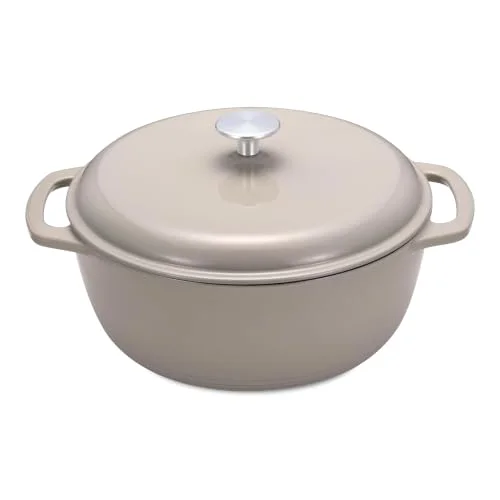
The Amazon Basics Enameled Cast Iron Dutch Oven, a 4.3-quart pot with dual handles listed as round and heavy-duty, oven safe for stews, roasting and baking, is a straightforward example at the small end of the collection. At $23.78 in Linen Gray, it costs less than the mid-size pot most households buy first, which matters if the second pot is genuinely a secondary, occasional-use item rather than something that needs to justify a premium price. A 4.3-quart capacity suits one or two servings comfortably: a weeknight chili for one, braised vegetables as a side, or a small batch of oatmeal or rice pudding baked under cover.

The honest limitation of a smaller second pot is simply that it is small. It will not hold a whole chicken comfortably, and a stew meant to feed four will overflow it. Buying it does not replace the mid-size pot; it sits beside it for the specific jobs that a six-quart base handles clumsily.

Going larger

The case for a second, larger pot

A larger Dutch oven earns its place in the opposite direction: hosting, batch cooking, and feeding more people than a mid-size pot comfortably serves. A seven-and-a-half-quart pot holds a larger whole chicken or a bigger pot roast with real room around it — the kind of headroom our guide to Dutch ovens for a whole chicken or pot roast treats as the deciding factor — and it lets you cook a double batch of chili or soup in one pass instead of two, which matters if freezing leftover portions is part of why you cook in bulk to begin with.

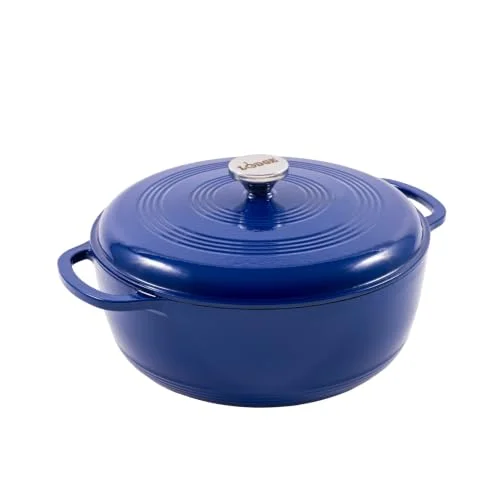
The Lodge Essential Enamel Cast Iron Dutch Oven, 7.5 Quart, in Indigo, is a reasonable example of the larger end of a collection. Lodge has cast iron in Tennessee since 1896, and the Essential Enamel line is enameled the same way the smaller pots on this page are, which means a 7.5-quart Lodge behaves like a larger version of the same cooking tool rather than a different category of product. At $83.99 it is the most expensive of the three pots in this guide, which tracks with it also being the largest and the heaviest.

That last point is the real trade-off with a larger second pot: capacity and weight rise together. A pot this size, full of stew, is genuinely heavy to lift out of a hot oven, and it is heavier still to store, which is a separate consideration from how much it costs.

Sequence matters

Buying in order: which size to get first

The order that avoids wasted money is: buy the mid-size pot first, use it for a few months, and let the actual gaps in your cooking tell you whether the second pot should be smaller or larger. A pot bought to solve a problem you do not actually have is the most common way a cast iron collection turns into cupboard clutter rather than a useful set.

If, after a few months with a mid-size pot like the Overmont 5.5QT at $45.99, the recurring friction is cooking small portions, running out of stovetop room, or wanting something light enough to reach for without thinking about it, the smaller pot is the right next purchase — the Amazon Basics 4.3-Quart at $23.78 answers that need for a combined outlay under $80. If instead the friction is hosting, batch cooking, or consistently wanting more capacity than six quarts gives you, the larger pot is the better second purchase — the Lodge 7.5 Quart at $83.99 answers that need, at the cost of a heavier, bulkier item to store.

One more practical note before buying either: none of the three pots in this guide carry a star rating or a review count in the product data we have for them, which is common for Dutch ovens generally and is not, by itself, a reason to avoid a listing. Our guide on judging a Dutch oven when Amazon shows no star rating covers what to read instead — the specification line, the brand's history, and the return window — and the same approach applies whether you are buying your first pot or your third.

The part nobody plans for

Storage and the cupboard space nobody budgets for

Cast iron does not nest the way mixing bowls or measuring cups do. A Dutch oven's lid sits flat across the full diameter of the pot, so three pots in a collection generally need three separate footprints rather than one stack that tucks neatly inside itself. Before adding a second or third pot, it is worth opening the cabinet you intend to use and checking, with a tape measure rather than a guess, whether it actually has the depth and shelf height for an additional lidded pot sitting upright.

Weight is the other part of the equation, and it compounds with size. Our breakdown of how much a Dutch oven actually weighs is worth reading before a collection grows past one pot, because the practical consequence is simple: heavier pots belong on lower shelves or in base cabinets, not stacked on a high shelf where lifting one down safely becomes its own small hazard. A 4.3-quart pot like the Amazon Basics is light enough to store almost anywhere, including a higher shelf, without much concern. A 7.5-quart pot like the Lodge Essential is the one to keep at counter height or below.

A workable default for a three-pot collection: the largest pot goes on the lowest, most accessible shelf, since it is both the heaviest to lift and the one most often used for big, planned-ahead cooking rather than a quick weeknight meal. The mid-size pot, used most often, goes at the most convenient reach height. The smallest pot, light and infrequently needed, can go wherever space is left over, including a higher shelf most households would otherwise consider awkward for cast iron.

Side by side

The three stages, compared

PotCollection stageCapacityMade byNotablePriceGet it
Overmont 5.5QT Buy first 5.5 qt Overmont Ships with lid and cookbook $45.99 Get it
Amazon Basics 4.3-Quart Add if you cook small 4.3 qt Amazon Basics Round, dual handles, Linen Gray $23.78 Get it
Lodge Essential Enamel 7.5 Quart Add if you cook for a crowd 7.5 qt Lodge Indigo, made by a foundry since 1896 $83.99 Get it
The picks

The picks, for each stage of collecting

01Buy first

Overmont Enameled Cast Iron Dutch Oven, 5.5QT, with Lid and Cookbook

Best as the one pot a household owns before any others

5.5 quarts·Enameled cast iron·Cookbook included·Made by Overmont

At $45.99, this is the pot sized to handle most of what a household cooks in an ordinary week without being too large to lift comfortably or too small to feed four to six people. It is enameled, so it needs no seasoning and tolerates acidic braises like tomato-based stews without issue. Buy this one first, use it for a few months, and let what it struggles with tell you whether the next pot should be smaller or larger.

The pot to own before deciding you need a second one.

Overmont 5.5-quart enameled cast iron Dutch oven with lid and cookbook
Price
$45.99
Check price →
02Add if you cook small

Amazon Basics Enameled Cast Iron Dutch Oven, 4.3-Quart, Linen Gray

Best second pot for cooking for one or two

4.3 quarts·Round, dual handles·Oven safe for stews, roasting and baking·Linen Gray

At $23.78, this is the lighter, smaller pot to add once a mid-size pot has shown its limits at the small end: side dishes, single-portion braises, or a weeknight meal cooked in a pot light enough to reach for without a second thought. Its dual handles and heavy-duty, round build are stated plainly in the listing, and at just over $30 it is a low-cost way to round out a collection without committing serious money to a pot that gets occasional, rather than daily, use.

The pot for the nights a six-quart base is simply more pot than the meal needs.

Amazon Basics 4.3-quart enameled cast iron Dutch oven in Linen Gray
Price
$23.78
Check price →
03Add if you cook for a crowd

Lodge Essential Enamel Cast Iron Dutch Oven, 7.5 Quart, Indigo

Best second pot for hosting and batch cooking

7.5 quarts·Enameled cast iron·Made by Lodge·Indigo

At $83.99, this is the pot to add once the recurring friction is capacity rather than portion size: a larger whole chicken, a bigger pot roast, or a double batch of soup meant for freezing part of it. Lodge has cast iron in Tennessee since 1896, and the Essential Enamel line extends the same no-seasoning, ready-to-use enamel to this larger size. It is also the heaviest of the three pots here, full or empty, so plan to store it on a lower shelf rather than overhead.

More pot for the meals that genuinely need more pot, not for the ones that don't.

Lodge Essential Enamel 7.5-quart cast iron Dutch oven in Indigo
Price
$83.99
Check price →
Our method

How we compared

What we did

Specs, capacity and price, cross-checked

We compared the published specifications and current Amazon prices for the Overmont 5.5QT, the Amazon Basics 4.3-Quart and the Lodge Essential 7.5 Quart, and limited every claim in this guide to what is actually stated for each listing: capacity, included accessories, handle and shape details, and the manufacturer. Where a specification such as an oven-safe temperature figure is not published for a given pot, we have left it out rather than borrow a number from a different listing.

What we didn’t

We don’t run a testing lab, and we have no review data for these listings

We do not physically test these pots, we do not own them, and none of the three listings in this guide carry a star rating or review count in the product data available to us — so we have not paraphrased owner sentiment we don’t actually have, and we have not invented a score. Everything in this guide about how a smaller or larger Dutch oven behaves comes from published specifications, pricing, and the general, well-established mechanics of how enameled cast iron cooks and how cast iron cookware is stored, not from a product-specific review we can’t point to.

FAQ

Common questions

Do I need more than one Dutch oven?

Not necessarily. One pot in the five-to-six-quart range, such as the Overmont 5.5QT, already covers most weekly cooking: braises, soups, a whole chicken, bread. A second pot only earns its cupboard space for specific gaps a mid-size pot handles badly, like cooking for one person or feeding a crowd far larger than six.

What size should I buy first?

A mid-size pot in the five-to-six-quart range. It is large enough for most main dishes and small enough to lift comfortably out of a hot oven. Buy and use that one for a few months before deciding whether a second pot should be smaller or larger — the gaps you actually hit will tell you which direction to go.

Should my second pot be smaller or larger?

It depends on what the first pot handles badly. If the recurring issue is cooking small portions or running out of stovetop space, a smaller pot like the Amazon Basics 4.3-Quart at $23.78 is the better next purchase. If the issue is hosting, batch cooking, or wanting more capacity for a whole chicken or pot roast, a larger pot like the Lodge Essential 7.5 Quart at $83.99 is the better choice.

How much extra cupboard space does a second Dutch oven need?

More than most people expect. Cast iron lids sit flat across the full diameter of the pot rather than nesting the way mixing bowls do, so each additional pot generally needs its own separate footprint. Measure the cabinet before buying, and store the heaviest pot on the lowest, most accessible shelf rather than overhead.

Keep reading

More from Best Dutch Ovens