Best Dutch Ovens
Honest take · Warranties and Returns

Dutch Oven Warranties: What ‘Lifetime’ Actually Covers

One brand built its reputation on a lifetime guarantee against manufacturing defects, and enough competitors have borrowed the word since that “lifetime warranty” now shows up on listings that have no comparable policy behind it. Here is what a Dutch oven warranty is actually written to cover, the ordinary kitchen habits that void one before you ever pick up the phone, and what the standard thirty-day Amazon return window gives you when a listing publishes no warranty at all.

By Ilane Tall · Updated November 1, 2026 · Research-based.

Affiliate disclosure: we may earn a commission if you buy through the Amazon links on this page, at no extra cost to you.

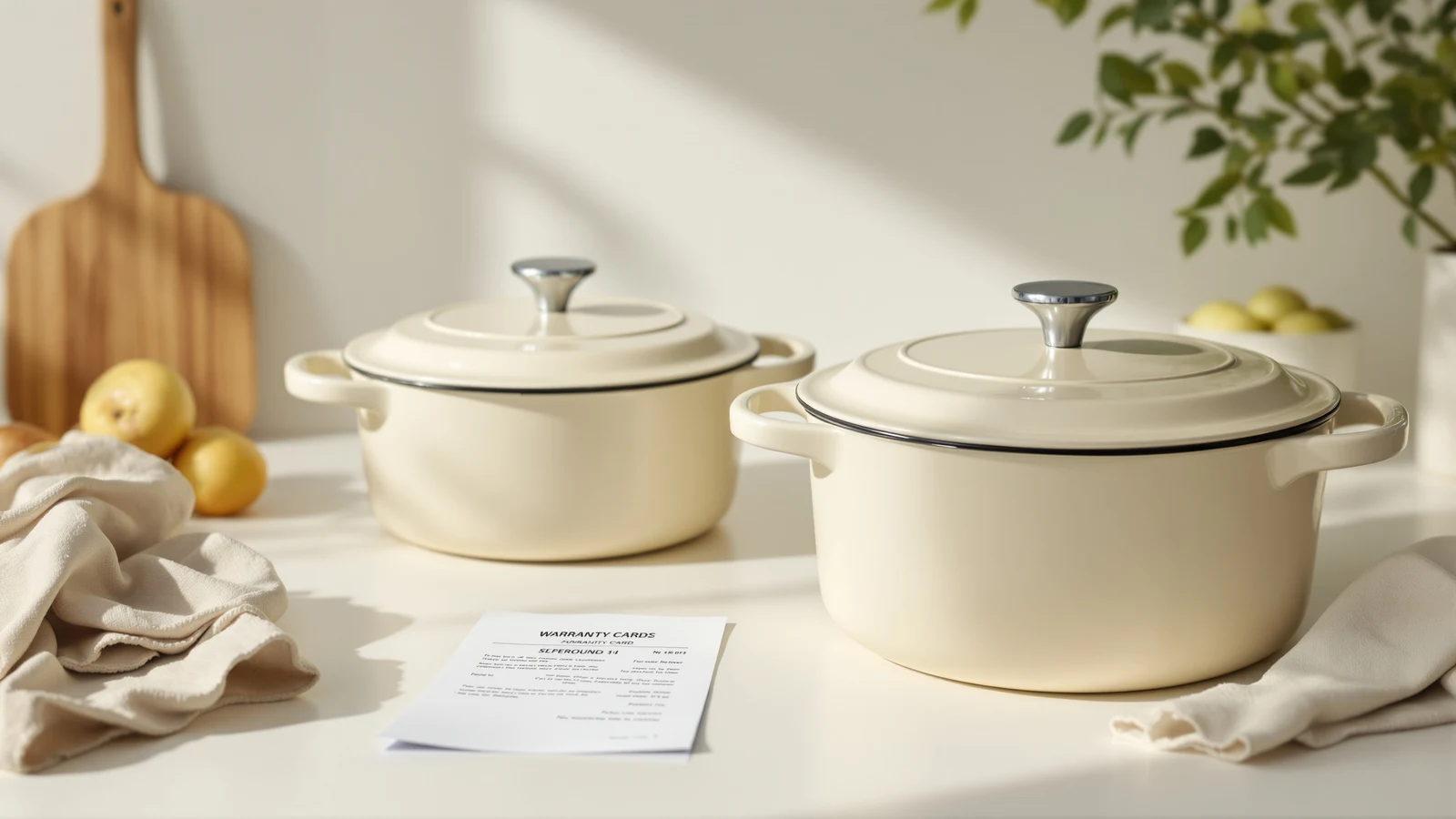
Enameled cast iron Dutch oven next to its original box and a sales receipt on a kitchen counter
Read the fine print

What ‘lifetime’ means when a company writes it

Le Creuset is the brand that made a lifetime warranty a baseline expectation in this category. For decades the company has stated that it stands behind its enameled cast iron against manufacturing defects for as long as the original owner has the pot, used in a normal home kitchen. That reputation is a large part of why a Le Creuset 5.5 qt. pot like the Flame in this guide can sell for $349.99 while enameled cast iron from newer brands sells for a fraction of that: buyers are paying, in part, for a company that has been honoring that promise since before most of its current competitors existed.

The lesson other brands took from that is the phrase, not necessarily the policy behind it. “Lifetime warranty” in a listing title is marketing copy until you read what it actually promises, and the word “lifetime” itself is doing less work than it sounds like it is. It essentially never means the pot is covered forever, unconditionally, no matter what happens to it. It almost always means coverage lasts for as long as the original purchaser owns the product, used as intended, against defects that existed in the item when it left the factory — not against anything that happened to it afterward in a working kitchen. Those two readings of the same word produce very different outcomes for a claim, and the gap between them is exactly where a lifetime warranty stops meaning what a shopper assumed it meant.

This matters most at the moment of comparison shopping, before any purchase happens. Our buying guide walks through the handful of specs worth reading closely before checkout, and warranty language belongs on that list for the same reason induction compatibility or oven-safe temperature does: a listing can say a true, impressive-sounding thing without telling you the scope that true thing actually covers. A warranty is only as good as what it is written to include, and that is almost never printed in the product title.

The claim that actually gets paid

Chips, cracks and the claims that actually get honoured

Enamel is glass fused to cast iron at high heat, and the most common damage to it — a chip at the rim from a metal spoon, a dull patch on the interior base after a few hundred dishwasher cycles, a hairline stain that won’t scrub out — is wear. It accumulates slowly, from ordinary use, over years. No manufacturer's warranty, lifetime or otherwise, is written to cover wear, because wear is not a defect; it is the expected result of using a glass surface the way a kitchen uses one. A claim built around “the enamel chipped after three years of metal utensils” is not a manufacturing-defect claim, no matter how disappointing the chip is to look at.

What actually gets honored traces back to something that was already wrong with the pot on day one: a crack present in the casting before the box was ever opened, enamel that bubbled or never bonded evenly to the iron underneath during manufacturing, a lid that doesn’t sit flush against the rim straight out of the packaging. Those are flaws in the object as it was made, and they are the entire reason a manufacturing-defect warranty exists at all. A pot cracked because it was dropped while being lifted out of a 400-degree oven cracks for a reason that has nothing to do with how it was cast — a full Dutch oven is heavier than it looks, and impact damage from a drop or a hard knock against a stovetop is treated the same way by essentially every warranty in this category, regardless of brand or price.

The practical test worth applying to any damage before you contact a brand: did this flaw exist before the pot was ever used, or did it appear after months or years of cooking in it? The first question points toward a defect claim with a real chance of being honored. The second points toward wear, which even the most generous lifetime warranty on the market was never written to cover.

Before you ever call

What voids a warranty before you even call

A handful of ordinary habits void cookware warranties across this entire category, not because any single brand is strict about it, but because these are the standard exclusions written into almost every manufacturer's warranty terms, Le Creuset's included. Using the pot for anything other than normal household cooking — a restaurant kitchen, a catering operation, any commercial use — typically falls outside a warranty written for domestic use, even if the pot performs identically either way. Buying from a seller who isn’t the brand itself or an authorized retailer is another common exclusion; a warranty is a promise from the manufacturer, and manufacturers generally reserve the right to limit that promise to products they can verify entered the market through a channel they control.

Repairing or modifying the pot yourself — filing down a rough spot, re-coating a chip, replacing a knob with a part the brand didn’t supply — is treated the same way a car dealership treats an engine you opened up yourself: it typically ends the warranty on the spot, because the manufacturer can no longer verify what state the product was in afterward. And across nearly every warranty of this kind, failing to keep proof of purchase removes your ability to make a claim at all, regardless of how clear-cut the defect looks. None of this is specific to the three pots in this guide; it is the standard shape of a cookware warranty generally, and it is worth knowing before a problem ever comes up rather than discovering it while trying to file a claim.

The quieter version of all this is simpler: a warranty protects you against what the factory did wrong, not against what happens afterward in your kitchen or in whoever's hands the pot passed through on the way to you. Reading the terms once, calmly, before anything goes wrong is the only way to know which category a future problem will fall into.

The three pots in this guide

What each listing actually says about warranty

01The long warranty

Le Creuset Enameled Cast Iron Round Dutch Oven, 5.5 qt., Flame

Best if the warranty itself is the purchase

5.5 qt·Enameled cast iron·Made by Le Creuset·Flame

At $349.99, this is the pot in this guide carrying the reputation the rest of the article is written around. Le Creuset's standing with a lifetime warranty against manufacturing defects is the single biggest reason a six-times price gap over the other two pots here is defensible at all — you are buying a company's decades-long track record of honoring that promise, not a material advantage in the iron itself. The scope still follows the same rule covered above: defects present from manufacturing, not wear from a metal spoon five years from now.

The premium here is largely a bet on a company that has already paid out on this promise for a very long time.
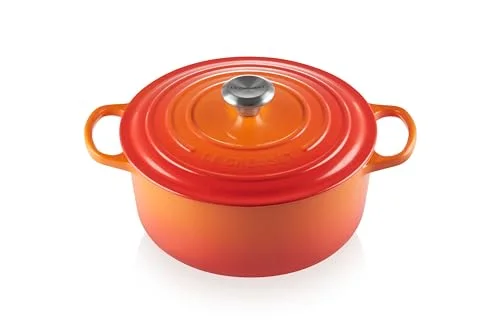
Le Creuset enameled cast iron round Dutch oven, 5.5 quart, Flame
Price
$349.99
Check price →
02No stated duration

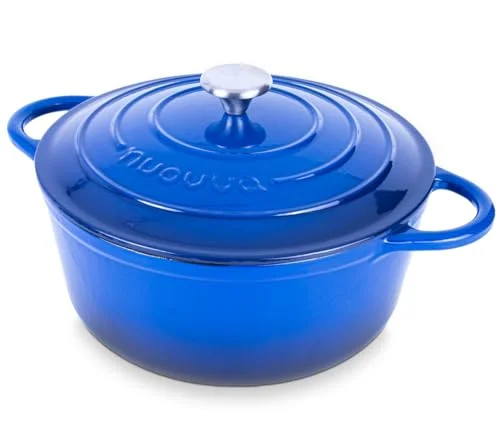
Nuovva Enamelled Cast Iron Dutch Oven Pot with Lid, 6.4 Quart, Dark Blue

Best if you are leaning on the return window instead

6.4 quarts·Non-stick casserole pot·Oven safe to 500°F·28cm

At $44.99, the Nuovva publishes a specific oven-safe figure — 500°F — but no warranty duration in the specifications we have on file for it. That is not unusual for a pot at this price, and it is not evidence the pot is any less sound; it simply means the practical protection for this purchase is the standard return window covered in the next section, not a long-dated manufacturer promise you can point to months or years later.

Treat the silence on warranty as a reason to check the current listing before buying, not as a mark against the pot.

Nuovva enamelled cast iron Dutch oven pot with lid, 6.4 quart, dark blue
Price
$44.99
Check price →
03Also no stated duration

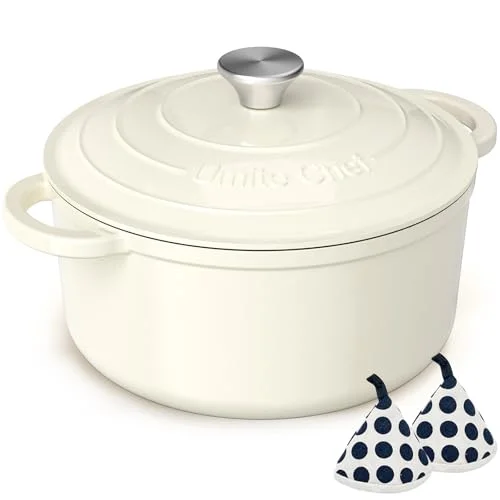
Umite Chef 5QT Enameled Cast Iron Dutch Oven, Cream White

Best entry-level pot if you understand the trade-off

5 quarts·Enameled cast iron·Ships with cotton potholders·Cream White

At $35.99, the Umite Chef is the least expensive of the three and, like the Nuovva, does not publish a specific warranty duration in its listing. It ships with cotton potholders, which is a genuine convenience given how heavy even a five-quart pot gets once it’s full and coming out of the oven, but it is not a substitute for a written defect policy. Buyers choosing this pot are, whether they think about it this way or not, choosing to rely on Amazon’s own return policy as their actual protection in the early weeks of ownership.

The cheapest honest route into this category, as long as you check for problems inside the standard return window rather than after it closes.

Umite Chef enameled cast iron Dutch oven, 5 quart, cream white
Price
$35.99
Check price →
When no warranty is published

Budget pots and the standard thirty-day return instead

When a listing stays silent on warranty duration, as the Nuovva and the Umite Chef both do here, the thing actually protecting you in practice is Amazon’s own return policy, not a promise from the pot’s manufacturer. Most items sold on Amazon, including cookware, qualify for a standard return window of roughly thirty days from delivery, and that window operates independently of whatever the manufacturer does or doesn’t offer on top of it. A cracked lid, a enamel flaw visible out of the box, a pot that arrives chipped in shipping — all of that is squarely what a return window exists for, and it is frequently faster and less bureaucratic than filing a manufacturer warranty claim would be, because it runs through the retailer you already bought from rather than a separate claims process.

This is also the honest case for buying a budget Dutch oven in the first place if a long warranty isn’t the deciding factor for you: the return window catches the failure mode that actually matters most at this price point, which is a defect present on arrival, not a defect that shows up after three years of ownership. What it does not do is replace a multi-year promise. If the enamel develops a genuine manufacturing flaw in year two, a pot with no stated warranty beyond the return window has, in practice, no further recourse written down anywhere — that is the real trade a lower price is making, whether or not the listing says so directly.

The window itself is worth treating as a deadline, not a formality. Inspect a new Dutch oven as soon as it arrives: check the enamel under good light for bubbling or uneven coverage, set the lid on the pot to confirm it sits flush, and run it through at least one real cook before the return window closes rather than after. A flaw caught on day twenty-five is a return. The same flaw noticed on day forty, on a pot with no published warranty, is simply yours.

Side by side

The three, compared on warranty and return

PotSizePublished warrantyPractical protectionPriceGet it
Le Creuset Round, Flame 5.5 qt Lifetime against manufacturing defects Brand warranty, plus the return window $349.99 Get it
Nuovva 6.4 Quart 6.4 qt Not stated in the listing Standard Amazon return window $44.99 Get it
Umite Chef 5QT 5 qt Not stated in the listing Standard Amazon return window $35.99 Get it
Easy to lose, hard to replace

Keeping the receipt and the box longer than you think

A thirty-day return window makes the packaging feel disposable almost immediately — the box gets flattened for recycling the same week the pot arrives, and the order confirmation email gets buried under everything else that lands in an inbox in a month. That instinct works against you the moment a warranty claim, rather than a return, becomes the relevant process. A lifetime warranty is only as useful as your ability to prove you are the original purchaser and when the purchase happened, and for most people the only record of that is an Amazon order history that can be harder to search than you'd expect once it's a year or two old, or a paper receipt that was thrown out with everything else from the delivery.

The habit worth building, especially on a pot you are buying to keep for decades rather than replace in a few years, is treating proof of purchase the way you'd treat a deed: save the order confirmation in a dedicated folder, screenshot it, or print it, separate from the general clutter of an inbox. The original box is a smaller ask, but worth the closet space if you can manage it, particularly in the first year, since some warranty and return processes still ask for the original packaging if a defective item needs to be shipped back rather than simply documented with photos.

None of this changes what the warranty covers. It changes whether you can actually use it. A lifetime warranty against manufacturing defects on a $349.99 pot is worth very little three years from now if the only proof you bought it directly from an authorized seller is a receipt you can no longer find.

The real calculation

Whether the warranty is worth the price gap on its own

Strip out everything else — enamel quality, handle size, brand reputation — and ask the narrow question: is a lifetime warranty against manufacturing defects worth roughly $267 on its own, the gap between the Le Creuset at $349.99 and the Umite Chef at $35.99? The honest answer depends entirely on how likely you think a true manufacturing defect is to surface, and when. Manufacturing defects in enameled cast iron, across the category generally, tend to show up early if they show up at all — within the return window or shortly after, not five or ten years into ownership, because a flaw baked into the casting or the enamel bonding process doesn’t usually wait a decade to become visible. If that is true, a lot of the practical value of any warranty, long or short, is concentrated in the first year, which is exactly the period a thirty-day return window plus normal consumer protections already covers reasonably well on a budget pot.

Where the lifetime warranty earns its price gap is the long tail: the rare defect that genuinely doesn’t surface until year six or year twelve, and the peace of mind that a problem then still has somewhere to go. That is a real, if statistically uncommon, scenario — and it is difficult to price precisely, the same way it's difficult to judge a pot's durability without a star rating or a review count behind it. Both situations put you in the position of estimating a risk from published facts and general category knowledge rather than from hard data specific to the product in front of you, because that data simply isn’t published anywhere for most of these listings.

Our honest take: buy the long warranty if you are certain you'll keep the pot for life, if provenance and brand accountability genuinely matter to you beyond the cooking itself, or if the $267 difference is not a meaningful amount of money in your budget. Buy the pot without the stated warranty, and lean on the return window instead, if you're finding out whether you'll use a Dutch oven at all, if your budget is tight, or if you're simply comfortable accepting that a defect appearing a decade from now will be yours to absorb either way. Neither choice is wrong. The mistake is assuming the word “lifetime” on a box means the same thing no matter which company printed it.

Our method

How we compared

What we did

Published specs, warranty language and general category facts

We compared the published specifications, current Amazon prices and stated warranty language for the Le Creuset Round 5.5 qt., the Nuovva 6.4 Quart and the Umite Chef 5QT, and we explained how manufacturing-defect warranties and standard retailer return windows work as a category generally — the same structure that governs essentially every enameled cast iron warranty regardless of brand. Every price and spec in this guide comes from the current listing for that specific product; where a warranty duration is not published for a pot, we say so plainly rather than assume one.

What we didn’t

We don’t run a testing lab

We did not file a warranty claim on any of these three pots, and we don’t publish star ratings or review counts for these listings because we don’t have verified figures for them. What we can do honestly is explain how warranty and return protections are generally structured in this category, and report plainly which of the three products here states a long-form warranty and which rely on the standard return window instead. See more about our approach on the About page.

FAQ

Common questions

Does a “lifetime warranty” on a Dutch oven mean it's covered forever, no matter what?

No. A lifetime warranty almost always means coverage lasts for as long as the original purchaser owns the pot, used normally in a home kitchen, against defects that existed when it left the factory — not against chips, cracks or stains that develop from years of ordinary use. Le Creuset's long-standing lifetime warranty against manufacturing defects is the model most of the category's language borrows from, but the scope is narrower than the word “lifetime” alone suggests.

What actually voids a Dutch oven warranty?

Commercial or restaurant use when the warranty is written for domestic kitchens, buying from an unauthorized third-party seller instead of the brand or an authorized retailer, repairing or modifying the pot yourself, and not keeping proof of purchase are the standard exclusions across cookware warranties generally, not a rule specific to any one brand in this guide.

What protects me if I buy a Dutch oven with no published warranty?

In practice, the standard Amazon return window, typically around thirty days from delivery, which operates independently of whatever the manufacturer does or doesn't publish. Both the Nuovva 6.4 Quart and the Umite Chef 5QT in this guide don't state a specific warranty duration, which means inspecting the pot and running at least one real cook within that window matters more than it would on a pot with a long-form manufacturer warranty behind it.

Is a long warranty worth paying extra for?

It depends on how long you intend to keep the pot and how much the price gap matters to your budget. Manufacturing defects tend to surface early, within or shortly after a standard return window, which a budget pot's return policy already covers reasonably well. A long warranty's real value is in the rare defect that doesn't appear for years — worth paying for if you're certain you'll own the pot for decades, less essential if you're still finding out whether you'll use a Dutch oven at all.

Keep reading

More from Best Dutch Ovens