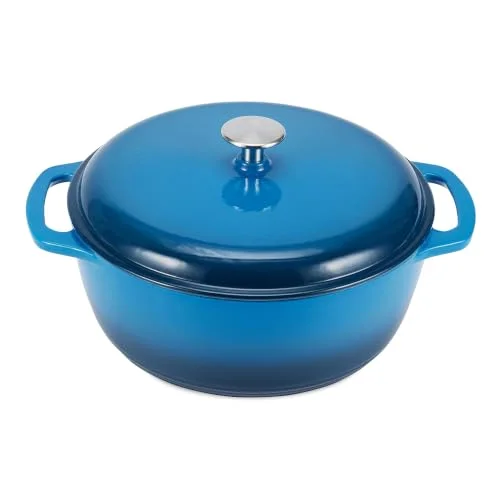
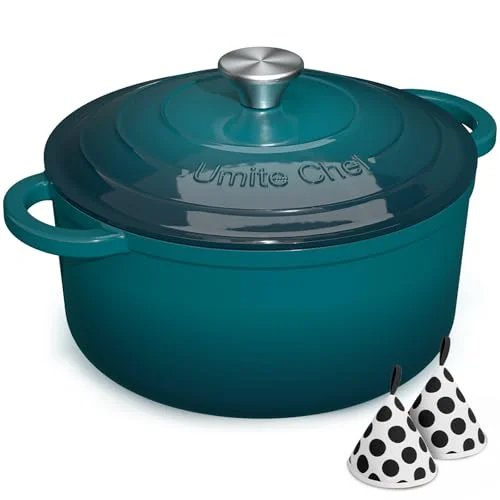
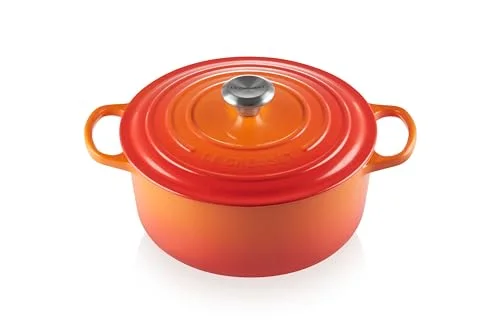
The enamel on a Dutch oven is glass fused to iron, and glass does not wear out the way a nonstick coating does — it chips, it crazes, or it stains, and almost always because of one of three specific habits. Fix those three habits and a $44.99 enameled pot can look nearly new after a decade of weekly use. Ignore them and a $349.99 one will look tired in two years.
Affiliate disclosure: we may earn a commission if you buy through the Amazon links on this page, at no extra cost to you.
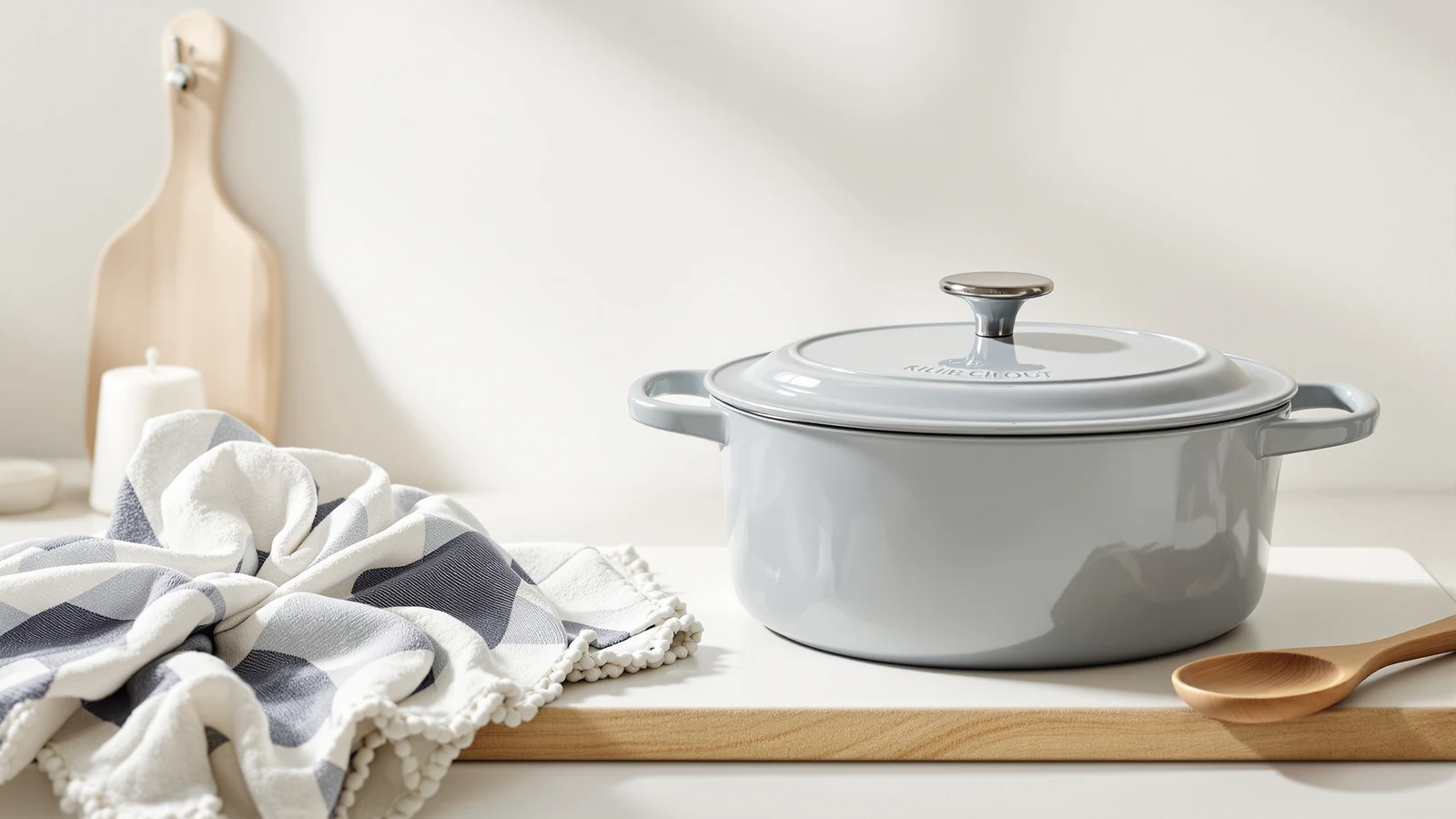
Every enameled Dutch oven on this site, from the Amazon Basics 6-Quart at $44.99 to the Le Creuset at $349.99, is built the same way at the surface level: a coating of glass, fused onto cast iron at high heat in a factory kiln, forming a layer that never needs seasoning and never rusts. That is the entire appeal of enamel over bare cast iron, and it is also the entire source of its vulnerabilities. Glass does not corrode, does not absorb odors, and does not need oil rubbed into it twice a year. Glass also does not flex, does not forgive a sudden temperature swing, and does not grow back once a chip takes a piece of it away.
Nearly every complaint anyone has ever had about an enameled Dutch oven traces back to one of three habits: shocking it with a sudden temperature change, scraping it with something harder than the glass itself, or leaving a scorched spot to bake on for one meal too many. None of those three habits are difficult to avoid once you know to watch for them, and none of them require buying a more expensive pot — a $44.99 Amazon Basics treated correctly will outlast a $349.99 Le Creuset treated carelessly, because the glass does not know what you paid for it.
This guide walks through each habit, in the order that actually matters, plus the two cosmetic questions that worry people more than they should: a stained interior, and a lid that is awkward to store without knocking the rim. None of this is based on physically testing any specific pot — we do not run a testing lab, and we say so plainly in the method section below. It is based on how enamel-over-iron behaves as a material, which does not change by brand, and on the specifications and care guidance that manufacturers themselves publish.
Thermal shock is what happens when one part of the enamel expands or contracts much faster than the part next to it, and the glass cannot stretch to keep up. The classic version: a Dutch oven comes off the stove or out of the oven still hot, and goes straight under a cold tap to "cool it down for washing," or has cold water poured into it to deglaze before the pan has had a minute to come off the highest heat. The outside of the enamel contracts instantly where the cold water hits it while the iron underneath is still radiating heat outward, and the stress between those two temperatures is exactly the kind of force glass is worst at absorbing. The result ranges from a fine hairline crack in the glaze, invisible until you look closely, to an audible crack and a visible fracture across the base or up the side.
The fix costs nothing and takes no extra time: let the pot come down to roughly room temperature, or at minimum to warm-to-the-touch, before it meets cold water of any kind — rinsing, soaking, or a splash to deglaze. If you need to deglaze immediately for a recipe, use warm or hot liquid, not cold, for exactly this reason; it is why so many braise recipes call for warm stock rather than straight from the refrigerator. The same logic runs in reverse and matters just as much: do not set an empty enameled pot on a hot burner and let it preheat dry before adding oil or food, and do not move a pot directly from a refrigerator into a hot oven. Enamel wants its temperature changes gradual, in both directions, every time.
This is also the reason manufacturers publish a maximum oven-safe temperature rather than leaving it unstated, and why that number is worth checking before every roast. The Amazon Basics 6-Quart publishes an oven-safe rating of 500°F, which covers the overwhelming majority of home recipes, including a long, slow braise or a bread bake that starts at a high temperature. Staying inside that published ceiling, and getting there gradually rather than by slamming a cold pot into a preheated 500°F oven, is the second half of avoiding thermal shock — it is not just about water, it is about any abrupt swing the glass has to absorb at once.
A metal spoon or whisk dragged across enamel does not usually chip it outright in a single pass — what it does, repeatedly, is leave fine scratches in the glaze's surface. Each individual scratch is nearly invisible. The accumulation, over months of stirring a Tuesday-night stew with the nearest metal spoon, is a dulled patch on the interior base where the finish has gone from glossy to faintly matte, and that patch is also where the enamel is now thinnest and most exposed to the next scrape, the next hard knock, the next chip. It is a slow-motion version of the same problem thermal shock causes instantly: stress concentrated in one spot until the glass gives.
The straightforward prevention is to reach for wood or silicone instead of metal, as a default rather than an exception. This matters most on the interior base and up the inside walls where food actually gets stirred and scraped, and matters least on the rim or exterior where a utensil rarely touches. If a recipe calls for cutting food inside the pot — breaking apart a braised short rib, for instance — lift it onto a cutting board first rather than running a knife across the enamel; a knife edge is harder than a spoon and does more damage per pass.
Scraping a scorched or stuck-on spot with a metal utensil is the single most common way this habit turns into a visible chip, because it combines pressure with repetition in exactly one place. The next section covers how to actually get a scorched base clean without reaching for a metal scraper or an abrasive pad, which is the situation where people are most tempted to break this rule.
Most enameled Dutch ovens, including budget pots like the Umite Chef 7QT, are marketed as dishwasher-safe, and that claim is generally true in the narrow sense that a dishwasher cycle will not immediately crack or destroy the enamel the way a plunge into cold water can. "Safe" and "good for it" are two different claims, though, and the care instructions that come with most enameled cookware quietly favor hand-washing even when the dishwasher option is printed on the box.
Three things happen in a dishwasher that do not happen at the sink. First, the pot knocks against the rack, other dishes, and the dishwasher's interior walls during the wash and dry cycles, and every one of those contacts is a small, repeated risk to the rim — the thinnest and most exposed edge of the enamel, and the place chips show up first on almost every enameled pot regardless of brand. Second, dishwasher detergent is considerably harsher and more alkaline than dish soap, formulated to blast through baked-on grease at high heat, and repeated exposure dulls the glossy finish of enamel faster than hand soap does, especially on a light interior where any dulling is easy to see. Third, the heated dry cycle on many dishwashers pushes the pot through another full heating cycle it did not need, which is simply more thermal stress over the pot's lifetime for no cooking benefit.
None of this means a single trip through the dishwasher will visibly harm a pot. It means the damage is cumulative and happens exactly where you would not notice it happening — a slightly duller interior, a rim that has lost its crispness — until you compare it side by side with a pot that has only ever been hand-washed. Hand-washing an enameled Dutch oven is not a difficult chore: warm water, regular dish soap, and a non-abrasive sponge get it clean in under a minute for anything short of a true scorch, which brings us to the harder case.
A scorched base — rice that caught, a sauce that reduced too far and stuck, a sear that left a dark, baked-on ring — is the moment people reach for a metal scraper or a green scouring pad, and it is exactly the moment to not do that, because an abrasive pad is hard enough to dull enamel in a handful of uses and a metal scraper combines abrasion with the concentrated pressure problem described above. The reliable method does not involve scrubbing harder; it involves letting water and heat do the work instead of your arm.
Fill the pot with warm water, enough to cover the scorched area, add a tablespoon or two of baking soda, and bring it to a gentle simmer on the stove for ten to fifteen minutes. The combination of heat and the mild alkalinity of baking soda loosens baked-on food from the enamel surface without needing an abrasive to physically grind it off. Turn off the heat, let the pot sit and cool to a safe handling temperature — cooling gradually, not under a cold tap, for the thermal-shock reasons already covered — and then the scorched residue should lift away with a wooden spoon or a nylon scrubbing brush and ordinary dish soap. For a particularly stubborn spot, a paste of baking soda and a small amount of water, left to sit directly on the mark for a few minutes before a gentle scrub with a non-abrasive sponge, handles what the simmer alone does not.
What not to do: no bleach, no oven-cleaning spray, and no steel wool, all three of which are strong enough to etch or dull the glaze even when they do not chip it outright. If a stain remains after this process, it is very likely cosmetic rather than a sign of damage, which is the next question worth answering honestly.
A light-colored interior enamel, the kind used on many higher-end pots specifically because it lets you watch a sauce darken or a fond develop, shows staining far more readily than a dark interior simply because any discoloration is visible against a pale background. Tomato-based braises, turmeric-heavy curries, and long reductions are the most common culprits, and a faint tan or orange tint left behind after the cleaning steps above is almost always staining of the glaze's surface rather than any structural problem with the enamel underneath.
The honest answer is that a stain, on its own, does not affect how the pot cooks, how evenly it holds heat, or how long it will last. It is purely cosmetic. If it bothers you, the same baking-soda simmer described in the previous section, repeated and left to sit a little longer, lightens most staining over a few attempts; a paste of baking soda and water left on the specific stained area overnight goes further still for a deep, set-in mark. What will not work, and will actively hurt the enamel in the attempt, is scrubbing harder or reaching for an abrasive cleaner specifically because a stain feels like it should respond to more force — it is a surface tint, not an adhered deposit, and the same gentle, repeated approach that lifts a scorch mark lifts a stain, just more slowly.
Darker interiors, which several budget and mid-range pots use, essentially sidestep this entire cosmetic question, at the real cost of not being able to see a sauce reduce as easily by eye. Neither choice is wrong; it is a trade between visibility while cooking and visible staining afterward, and it has no bearing on durability either way.
The rim, where the base of the pot meets the lid, is the single most chip-prone part of an enameled Dutch oven, and storage is where most rim chips actually happen — not cooking. A heavy enameled lid set down at an angle, slid across the pot's rim to settle it into place, or stacked with another pot resting directly on top of it, puts hard contact exactly on the thinnest, most exposed edge of the glaze, repeatedly, every time the pot goes back into the cupboard.
A few habits prevent nearly all of this. Set the lid straight down rather than sliding it into place, so it does not scrape across the rim on the way. If cupboard space allows, store the lid off the pot entirely, or store the pot with the lid resting upside down on top rather than seated in its normal closed position, which keeps the two enamel edges from grinding against each other under the lid's own weight during the inevitable shifting that happens every time the cupboard door opens and closes. If another pot or a baking sheet has to share the shelf, a folded kitchen towel between the two surfaces is a genuinely effective, zero-cost buffer, and it is the same principle manufacturers rely on when they ship a pot with a protective pad between the lid and base for transit.
None of this requires buying a rack or a dedicated storage solution, though one helps if cupboard space is tight and pots are routinely stacked two or three high. The underlying rule is simple: anywhere two pieces of enamel can touch under weight or friction, put something softer than glass between them, every time, and the rim will outlast the rest of the pot.
The care routine above applies identically whether the pot in your cupboard cost $44.99 or $349.99, because the glass does not behave differently by price. What differs between pots is mostly capacity and finish, not how carefully they need to be treated.
| Pot | Capacity | Price | Care note | Get it |
|---|---|---|---|---|
| 6 qt | $44.99 | Oven safe to 500°F; let it cool gradually before washing | Get it | |
| 7 qt | $55.99 | Ships with cotton potholders; hand-wash despite dishwasher rating | Get it | |
| 5.5 qt | $349.99 | Light interior shows stains sooner; same thermal-shock rule applies | Get it |
We compared the care and cleaning guidance that manufacturers publish for enameled cast-iron Dutch ovens, cross-referenced against how enamel-over-iron behaves as a material — a well-documented set of properties that does not change by brand. Where a specific product publishes a number, such as the Amazon Basics 6-Quart's 500°F oven-safe rating, we cite it directly rather than estimate it from a similar listing.
We do not physically test these pots, we do not own them, and we have no star ratings or review counts for the specific listings named here, so we don’t publish any. The care advice in this guide reflects how enamel and cast iron behave as materials, not a physical trial of any individual product. See more about our approach on the About page.
Yes. A hot enameled pot plunged into cold water, or hit with a cold splash to deglaze straight off high heat, forces the outer glaze to contract much faster than the iron underneath, and that stress can crack the enamel or the pot itself. Let it cool to warm-to-the-touch before it meets cold water of any kind, and use warm liquid if you need to deglaze immediately.
Usually, in the sense that a cycle will not instantly damage it, but it is still not the best choice. Dishwashers knock the rim against the rack repeatedly, use harsher detergent than hand soap, and add an unnecessary extra heating cycle. The damage is cumulative and shows up as a duller finish and a less crisp rim over years, not after one wash.
Simmer warm water with a tablespoon or two of baking soda in the pot for ten to fifteen minutes, let it cool gradually, then lift the loosened residue with a wooden spoon or nylon brush and dish soap. Avoid steel wool, bleach, and oven-cleaning spray, all of which can dull or etch the glaze.
No. Staining is a surface tint, most visible on light-colored interiors after tomato-based or turmeric-heavy dishes, and it does not affect how the pot cooks or how long it lasts. It can usually be lightened with a repeated baking-soda simmer or a baking-soda paste left to sit, but there is no functional need to remove it.
One needs seasoning and resents tomatoes. The other is ready out of the box and chips. Read →
RoundupWhat a tighter budget actually gives up against a $300 pot, and the three that give up the least. Read →
ComparisonFive times the price for the same material. What the enamel, the lid and the warranty actually buy. Read →
The libraryEvery comparison and buying guide on this site, updated and kept current. Browse →