Best Dutch Ovens
Roundup · Bare Cast Iron, No Enamel

The Best Bare Cast Iron Dutch Ovens (No Enamel)

Every enameled Dutch oven covered elsewhere on this site is glass fused to iron, and that extra step shows up in the price. These three skip it entirely: pre-seasoned straight from the foundry, named by their own listings for a stovetop, an oven, or in two cases a grill and a campfire, and priced well under anything wearing enamel. Here is what bare iron actually gives up against a coated pot, what it asks of you in return, and the three worth buying because of that trade, not in spite of it.

By Ilane Tall · Updated November 24, 2026 · Research-based.

Affiliate disclosure: we may earn a commission if you buy through the Amazon links on this page, at no extra cost to you.

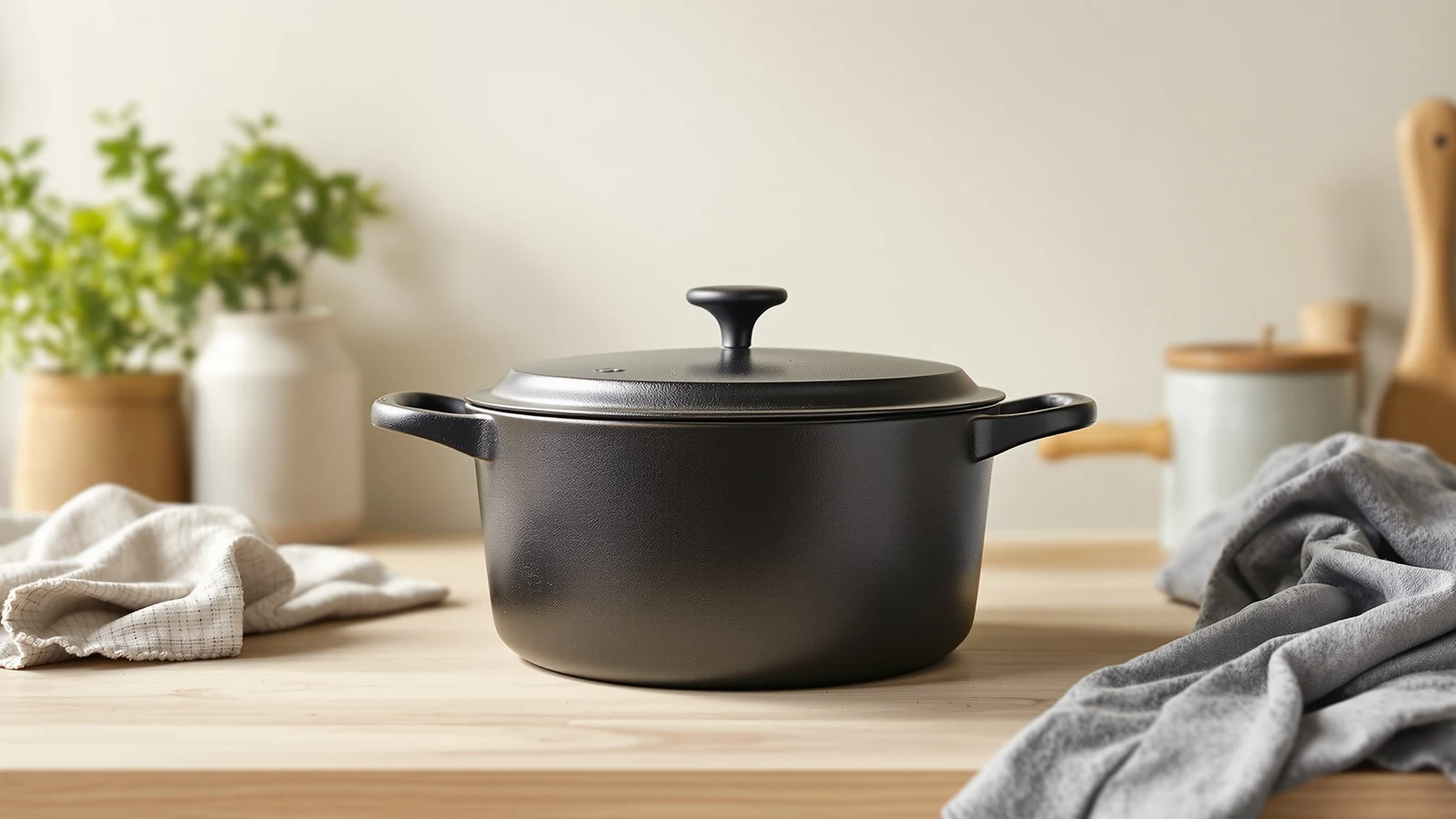
Bare pre-seasoned black cast iron Dutch oven with lid, no enamel coating, on a pale wood kitchen counter
Where the price comes from

Why bare iron costs less than enameled, not more

Cast iron itself is a commodity. Pig iron is melted, poured into a mold shaped like a pot, cooled, and trimmed, and that process is identical whether the pot ends up bare or enameled. It is the reason a $44.99 enameled Dutch oven and a $300 one hold heat the same way: the iron inside them is the same iron. Enamel is a separate manufacturing step layered on top of that iron afterward — a glass coating applied in multiple passes and fired in a dedicated kiln at high temperature, which means extra material, extra equipment, and an extra production stage that has to be paid for somewhere. Skip that stage and the pot still needs to be cast and seasoned, but it never goes near a glazing line. That single difference in process, not any difference in the metal, is why the three pots in this guide land at $40.79, $49.79 and $99.90 — all cheaper than the $69.99 enameled pick we recommend as the best overall Dutch oven on the rest of this site, and a fraction of what the premium French enameled brands charge.

Pre-seasoning is also simply cheaper to apply at scale than enamel is. A foundry seasons bare cast iron the same way a home cook does in their own oven: thin layers of oil baked onto the porous iron surface until they polymerize into a dark, slightly non-stick coating. Doing that to thousands of identical pots on a production line is a far smaller cost than running the same pots through an enamel-glazing process, which is exactly why a bare pot can leave the factory pre-seasoned and still undercut an enameled one on price.

That doesn’t mean every bare cast-iron pot is cheap. The Lodge BOLD in this roundup costs more than double the Amazon Basics pot here because it belongs to Lodge’s design-forward BOLD line, not because it carries any coating the other two lack. Even at $99.90, though, it still sits well under the $300 enameled pots on the rest of this site — the design premium on a bare pot is real, but it is nowhere near the price of adding enamel.

Read the label

What “pre-seasoned” actually means out of the box

All three pots in this guide are described plainly by their own listings as pre-seasoned, which means they can go straight onto a burner or into an oven without you doing the initial seasoning ritual yourself. Seasoning itself is a physical process, not a marketing word: multiple thin layers of oil are baked onto bare iron at high heat until the oil polymerizes into a hard, matte, mildly non-stick coating that also keeps raw iron from rusting on contact with air or water. A factory applying that same process once before a pot ever leaves the foundry is real seasoning. It is also the thinnest and newest layer that pot will ever have.

None of the three listings here state how many coats of oil the factory applied or what oil was used, so the honest way to treat a fresh pre-seasoned pot is as a starting coat rather than a finished surface. Expect more sticking in the first several meals than you’d get from a cast-iron pan that has been cooked in for years, and lean on added butter or oil, especially for eggs or anything delicate, until the surface builds up. Every meal cooked with fat adds a little more seasoning on top of the factory layer, the same way it does on a cast-iron skillet, and the pot gets darker and more slippery with use rather than staying exactly as it arrived. Enamel runs in the opposite direction: a coated pot is at its smoothest the day it ships and doesn’t improve with cooking, it only wears.

The one thing enamel can’t do

Direct flame and campfire coals: what enamel can’t take

Enamel is glass, and glass is hard but brittle, which means it is vulnerable to thermal shock — a sudden, uneven temperature change across the surface, exactly the kind of thing a concentrated flame or a bed of coals pressed against one side of a pot produces. That is why enameled Dutch ovens are built and marketed around the even heat of a stovetop burner or an oven cavity, not the direct, lopsided heat of an open fire; none of the enameled pots covered elsewhere on this site are rated for campfire use. Bare cast iron has no coating to crack in the first place, which is the entire reason it remains the default material for actual outdoor cooking: a bare pot shoved onto coals at an angle, or set over a flame that licks unevenly up one side, simply doesn’t have a glass surface that can fail that way.

This is also where the three pots in this guide separate from each other on paper. The Lodge BOLD’s own listing names it for “Oven, Stove, Grill & Campfire” outright, and the EDGING CASTING pot’s title lists “Camping, Grill, Induction, Electric” alongside its bread-baking use — both are published, rated uses straight from the manufacturer, not an assumption we’re making because the material happens to be bare iron. The Amazon Basics pot’s own listing doesn’t name outdoor or campfire use directly, so we won’t claim it for that job; treat it as a stovetop-and-oven pot unless the current listing says otherwise.

If camping is actually the primary job rather than a bonus use, our dedicated guide to the best Dutch ovens for camping and campfire cooking goes deeper on bail handles and integrated legs, the two features that matter most once cooking moves off a kitchen counter entirely.

The other half of the trade

Seasoning upkeep bare iron asks for that enamel never does

Bare cast iron needs to be dried immediately after washing. Standing water on exposed iron starts surface rust within hours, not days, which means air-drying on a rack the way you would a ceramic bowl is the one habit that causes the most avoidable damage. After drying, wiping a very thin layer of cooking oil over the interior keeps the seasoning topped up, particularly after a meal that involved heavy scrubbing or anything acidic. None of this is difficult, but it is a habit every single use asks for, indefinitely, in a way an enameled pot simply does not.

Acid is the other place the two materials diverge sharply. A thin or newly built seasoning layer can be stripped by a long tomato braise or a wine deglaze, which can also leave a faint metallic taste in the food until the seasoning rebuilds. Enamel is indifferent to acid from the day it ships; you can reduce a tomato sauce in an enameled pot for hours with zero concern about the surface. The same is true of the dishwasher: modern dish soap is gentler than the lye-based soaps that gave bare cast iron its reputation for soap-phobia, so a quick hand wash with soap is fine, but a dishwasher cycle’s prolonged water, heat and detergent exposure will strip a bare pot’s seasoning close to bare metal. Enameled pots are commonly marketed as dishwasher-safe, even where hand-washing is still the recommended care across the category.

Put simply, enamel buys a surface you never have to think about. Bare iron buys a cheaper, flame-tolerant pot in exchange for a few minutes of drying and oiling after nearly every use, for as long as you own it.

Side by side

The three, compared

PotBest forCapacityMade byNotablePriceGet it
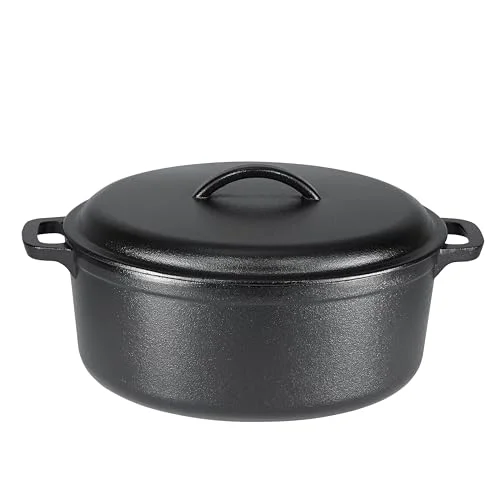
Amazon Basics Pre-Seasoned Cast Iron Dutch Oven Most kitchens 7 qt Amazon Basics Dual handles, oven safe, heavy-duty $40.79 Get it
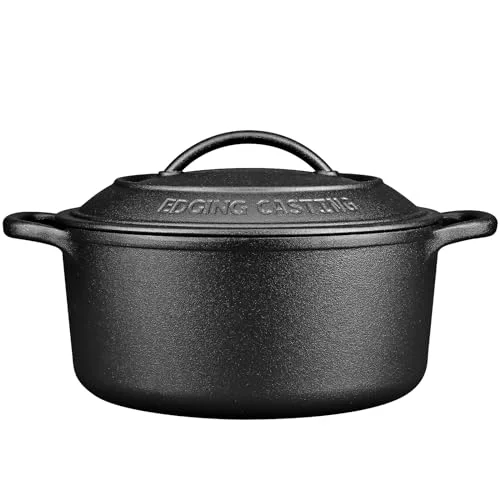
EDGING CASTING Pre-Seasoned Cast Iron Dutch Oven Sourdough bread 7 qt EDGING CASTING Marketed for bread, camping, grill, induction, electric $49.79 Get it
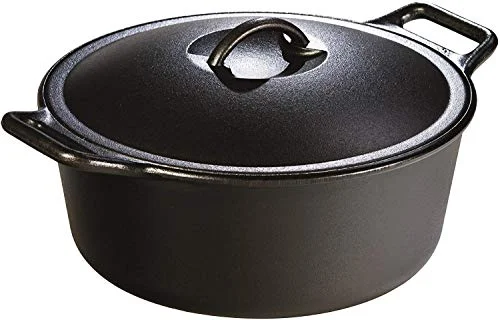
Lodge BOLD Pre-Seasoned Cast Iron Dutch Oven Grill and campfire 7 qt Lodge Exclusive BOLD design line, rated for oven, stove, grill and campfire $99.90 Get it
The picks

Our picks, and who each one is for

01Best overall

Amazon Basics Pre-Seasoned Cast Iron Dutch Oven Pot with Lid and Dual Handles, 7-Quart

Best for most kitchens

7 quarts·Pre-seasoned·Dual handles·Oven safe, heavy-duty

At $40.79, this is the lowest entry point in this guide, and it is still named directly on its own listing as pre-seasoned, oven safe and heavy-duty, with dual handles on a round seven-quart body. There is no bread or campfire claim attached to this one — it is simply a competent bare cast-iron pot for a stovetop or an oven, priced like one. For a kitchen that has no plans to carry a Dutch oven outdoors, there isn’t a bare-iron pot at this price with less to dislike about it.

If your cooking never leaves the kitchen, this is the cheapest honest way into bare cast iron.

Amazon Basics pre-seasoned cast iron Dutch oven, 7 quart
Price
$40.79
Check price →
02Best for bread

EDGING CASTING Pre-Seasoned Cast Iron Dutch Oven, Sourdough Bread Baking Pot, 7 Quart

Best for baking sourdough

7 quarts·Pre-seasoned·Named for camping, grill, induction, electric·Dual handle

A covered cast-iron pot traps the steam a loaf releases in its first several minutes, which is what gives a home oven a crust closer to a steam-injected bakery deck — any heavy lidded pot can do this, but EDGING CASTING prices that use case into the name itself rather than treating it as an afterthought, and its own title names induction and electric compatibility alongside camping and grill use, more outdoor-use detail than its two competitors in this guide state outright. At $49.79 it is only ten dollars over the Amazon Basics pot and still the cheapest of the three.

Bread is the reason this one exists; camping and grill use is a bonus the listing names outright.

EDGING CASTING pre-seasoned cast iron Dutch oven, 7 quart, for sourdough bread
Price
$49.79
Check price →
03Best for the fire

Lodge BOLD Pre-Seasoned Cast Iron Dutch Oven, Design-Forward, 7 Quart

Best for grill and campfire cooking

7 quarts·Pre-seasoned·BOLD design line·Rated for oven, stove, grill & campfire

Lodge’s own listing names this pot for “Oven, Stove, Grill & Campfire” together, the only one of the three to claim all four uses in one place, and it belongs to Lodge’s exclusive BOLD design-forward line rather than their plain utility casting. At $99.90 it costs more than double the Amazon Basics pot above, and that premium is almost entirely name and design on top of the same bare-iron proposition — the same conversation our guide to celebrity and brand-name Dutch ovens has about enameled pots carrying a recognizable label. What is different here is that the extra money buys a name and a finish, not freedom from the seasoning routine every pot on this page shares equally.

You are paying Lodge’s design line for a name and a finish, not for a pot that skips the seasoning ritual.

Lodge BOLD pre-seasoned cast iron Dutch oven, 7 quart, design-forward
Price
$99.90
Check price →

All three pots here are sized at seven quarts. If you regularly cook for a crowd or bake bigger than a single boule, our guide to the best jumbo Dutch ovens for large-batch cooking covers the sizing above what any of these three can hold.

The other side of this guide

When the enamel is worth the extra money instead

If cooking only ever happens on a stovetop or in an oven and never near open flame or coals, most of what bare iron asks you to do stops being a reason to own it. Enamel is the pot for a cook who doesn’t want to think about drying, oiling, or acid at all: the $69.99 enameled pot we recommend elsewhere on this site needs none of the seasoning upkeep described above, and it goes into a tomato braise without a second thought.

The shipping-chip risk belongs entirely to enamel, too. Glass fused to iron is the part of a coated Dutch oven most likely to chip if a courier drops the box or lets it slide off a stack in transit — a failure mode bare iron, having no coating to crack, simply cannot have. If you do go the enameled route and a pot arrives looking wrong, our guide on a Dutch oven arriving chipped or cracked covers what to photograph and who actually covers it before you decide whether to send the whole pot back.

There is also a middle option worth knowing about if the seasoning ritual is the part you want to avoid without paying enamel prices. Our comparison of ceramic non-stick versus enameled cast iron covers a third coating chemistry with its own rules about metal utensils — neither the maintenance of bare iron nor quite the same price tag as traditional enamel.

The honest way to decide: bare iron wins on price and on tolerating direct, uneven heat. Enamel wins on convenience, on acid-heavy cooking, and on being indifferent to how the heat reaches it. Choose based on where the pot will actually spend its life, not on which material sounds more serious.

Our method

How we compared

What we did

Specs, prices, and what each listing actually claims

We compared the published titles, descriptions and current Amazon prices for the Amazon Basics 7-Quart, the EDGING CASTING 7 Quart and the Lodge BOLD 7 Quart, limiting every claim about materials, seasoning and rated uses to what each manufacturer states outright — including the camping, grill and campfire claims, which we pulled directly from EDGING CASTING’s and Lodge BOLD’s own listing titles rather than assuming them from the material. Where none of the three publishes a figure, such as the number of factory seasoning coats or an exact handle measurement, we say so rather than estimate one.

What we didn’t

We don’t run a testing lab

We do not physically test these pots, we do not own them, and we have no star ratings or review counts for these specific listings to report, so we publish none. How a seasoning layer builds over months of real cooking, or how a pot actually behaves on a bed of coals, cannot be answered honestly from a brief trial with any one pot, by us or by anyone claiming otherwise. What we can do is read what each manufacturer actually states, compare it plainly, and say when a specification simply isn’t published. See more on the About page.

FAQ

Common questions

What does “pre-seasoned” actually mean on a bare cast iron Dutch oven?

It means the foundry has already baked thin layers of oil into the iron before the pot ever shipped, the same process a home cook would otherwise do themselves. It is real seasoning, but it is also the thinnest layer the pot will ever have, so expect more sticking in the first few meals than a well-used cast-iron pan and lean on added oil or butter until it builds up with regular cooking.

Can I put a bare cast iron Dutch oven directly on a campfire or coals?

Bare cast iron has no glass coating to crack, which is why it is the standard material for outdoor cooking, but the specific rated uses vary by listing. The Lodge BOLD in this guide names “Oven, Stove, Grill & Campfire” outright, and the EDGING CASTING pot’s title names camping and grill use as well. The Amazon Basics pot’s listing does not make that claim, so treat it as a stovetop-and-oven pot unless the current listing says otherwise.

Do I need to season a bare cast iron Dutch oven myself, and how often?

You don’t need to season it before first use if it’s sold pre-seasoned, but you do need to maintain that seasoning for as long as you own it: dry it immediately after washing to prevent rust, and wipe a thin layer of cooking oil over the interior after meals that involved heavy scrubbing or acidic food. This is an ongoing habit, not a one-time task, which is the main upkeep enameled cast iron never asks for.

When should I choose an enameled Dutch oven instead of bare cast iron?

Choose enamel if your cooking stays in the kitchen, if you cook a lot of acidic food like tomato sauce or wine-based braises, or if you simply don’t want to dry and oil a pot after every use. Choose bare iron if you cook over open flame or coals, or if the lower price matters more than the convenience enamel buys.

Keep reading

More from Best Dutch Ovens