Best Dutch Ovens
Roundup · Built for the Long, Covered Cook

The Best Dutch Ovens for Braising

A four-hour braise is where a lid stops being a cover and starts being equipment. We compared published specifications, shape, and price across three enameled cast-iron pots to find out which ones are actually built to hold moisture over a long, slow, covered cook — and which specification quietly matters more than the brand name on the lid.

By Ilane Tall · Updated October 20, 2026 · Research-based.

Affiliate disclosure: we may earn a commission if you buy through the Amazon links on this page, at no extra cost to you.

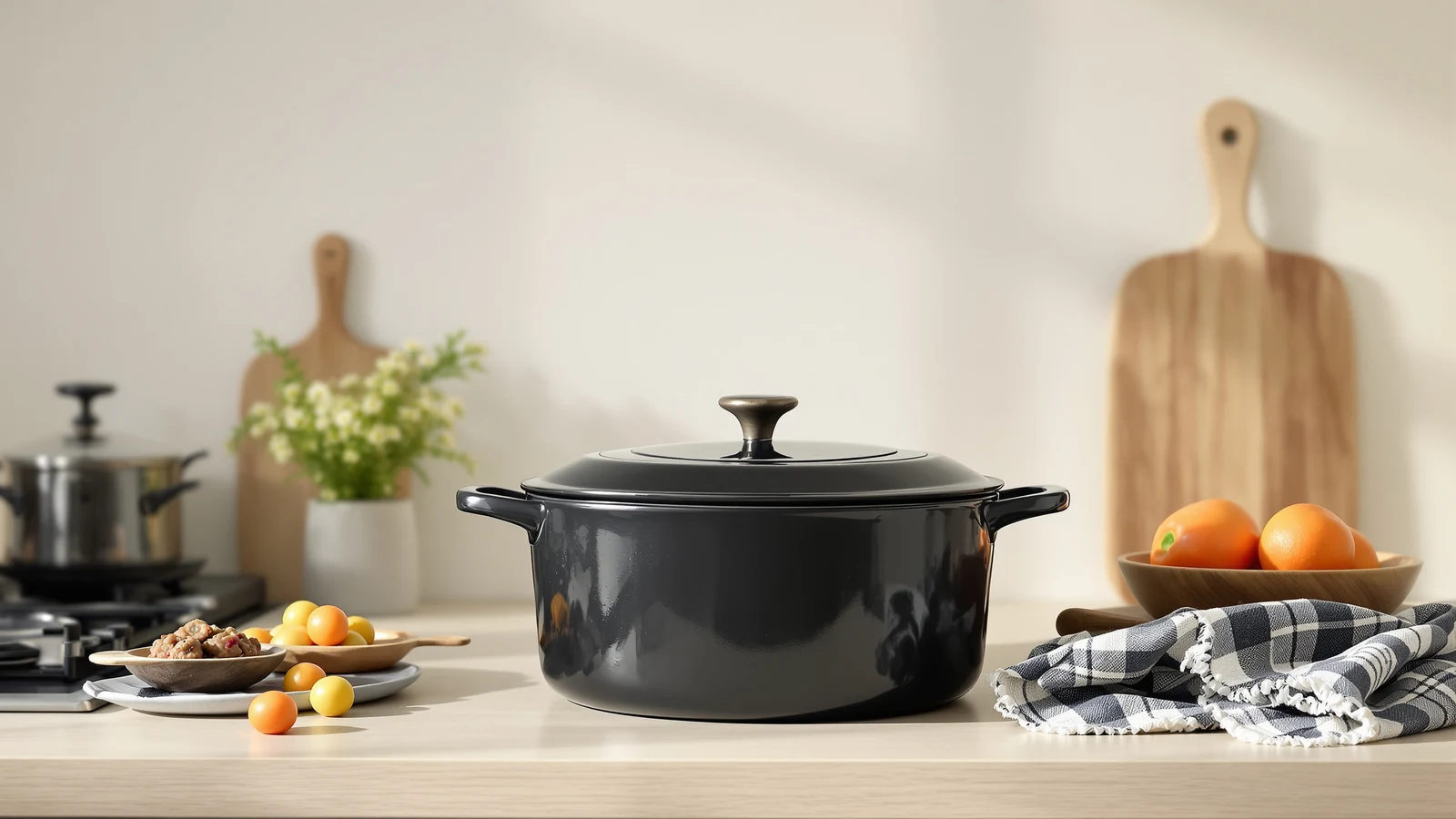
Enameled cast iron Dutch oven with lid on, set on a stovetop beside a cut of meat ready for a long braise
Quick answer

What actually matters for a braise

A braise lives or dies on one thing: whether the lid keeps the liquid the meat is sitting in from evaporating away over three or four hours in the oven. Capacity and shape matter too, but they are secondary to how tightly the lid seats and how heavy it is. Of the three pots in this guide, the Staub 7-qt Round Cocotte is the one built specifically around that problem, with a heavy lid designed to return condensation to the pot rather than let it escape. The Lodge Oval 7 Quart is the practical oval choice for a whole joint of meat, and the Mueller 6qt is the budget entry if you are finding out whether braising is a technique you will use often before spending more. Check the current price on Amazon before buying — it is the authority, not this page.

Before you buy

Things to know before you buy

The lid does the actual work

Capacity and material are the specifications everyone photographs. The lid — its weight, how precisely it seats, whether it is designed to return moisture to the pot — is the specification that decides whether a four-hour braise comes out of the oven as a stew or as dry meat in a thin sauce.

Shape is a question about what you're cooking

An oval pot is built for a shape, not a volume: a whole chicken, a pork shoulder, a leg of lamb, anything longer than it is wide. A round pot is the more flexible everyday shape. Neither is objectively better — the shape of what you intend to braise should decide this, not habit.

The oven-safe number belongs to the knob, not the pot

Cast iron and enamel both tolerate oven heat far beyond what a home braise ever needs. The actual ceiling is usually the lid knob, and on many pots that knob is rated well below the temperature a long braise or an initial sear-then-roast actually wants to run at.

We don't have review data for these three listings

None of the products below carry a published rating or review count in our database, so none of this guide paraphrases owner sentiment or invents a star score. Every claim here is anchored in published specifications, current price, and general facts about how enameled cast iron and braising work.

Why trust us

Why you should trust us

Best Dutch Ovens is written by Ilane Tall and researched rather than lab-tested: we compare published manufacturer specifications, current Amazon pricing, and verified owner reviews where they exist, and we say plainly when they don't. We do not run a fake testing lab, we do not own every pot we write about, and we do not publish invented scores out of ten or paraphrase review sentiment we cannot point to. Where a specification isn't published, we tell you to check the listing rather than guess. That discipline is slower to write than a generic listicle, and it is the only version of this page we think is honest to publish.

Our method

How we picked

We started from the products in our database that are explicitly relevant to braising — enameled cast iron, a lidded design, and either a size or a shape suited to a long covered cook — and cut the list down to pots where the manufacturer publishes something checkable: a capacity, a shape, a country of manufacture, a price. We did not add any product outside our own database, and we did not fill a gap in the specifications with a guess. Where a size or shape isn't stated for a given listing, this guide says so and tells you to confirm it on the current product page instead.

Our method

How we compared

We compared the Mueller 6qt, the Lodge Oval 7 Quart and the Staub 7-qt Round Cocotte on the published capacity, shape, country of origin where stated, and current Amazon price for each. We did not physically cook a braise in any of these three pots ourselves — see what we didn't do below — and we weighted the comparison toward the one factual thing that actually distinguishes them for this specific use: shape, and what each manufacturer states about lid design and construction.

The core question

Moisture retention over four hours

Braising is a covered, low, slow cook: meat sits partly submerged in liquid in a sealed pot, usually in a 300–325°F oven, for anywhere from ninety minutes to four hours or more, until collagen breaks down into gelatin and the meat is fall-apart tender. The entire technique depends on that liquid staying mostly where it started. A pot that lets steam escape steadily over four hours is not braising the same cut of meat that a tightly sealed pot is — it is slow-roasting it in a shallow bath that keeps getting shallower, and the result is drier meat in a reduced, often over-salty sauce by hour three.

This is why lid weight and fit matter more for braising than for almost any other Dutch oven task. A heavy, tight-fitting lid creates a near-seal: steam that tries to escape condenses against the cooler metal of the lid and drips back down into the pot, a loop that keeps repeating for as long as the oven is on. A lighter or looser-fitting lid lets more of that steam vent past the rim with every cycle, and over four hours the difference compounds. Staub is explicit about this design intent for its cocottes — a heavy cast-iron lid built to encourage condensation to return to the food rather than escape, which the brand describes as a self-basting effect. That is a stated design goal, not a guess on our part, and it is the single most relevant fact in this entire guide if braising is specifically why you are buying a pot.

None of this means a lighter pot can't braise at all. It means a braise in a lighter-lidded pot asks more attention from the cook: checking the liquid level partway through, adding a splash of stock if it's dropped further than expected, and accepting a shorter cook time might be the safer target than the full four hours a heavier pot can handle unattended.

The shape question

Oval against round: the shape question for a joint

Shape is a question about what you intend to cook, not a ranking. A round Dutch oven is the more universally useful shape: soups, stews, bread, anything that doesn't have a long axis. An oval Dutch oven exists for one specific reason — to fit something that is longer than it is wide without wasting the corners of a round pot on empty space. A whole chicken lies naturally in an oval. A pork shoulder, a leg of lamb, a short rib arrangement laid in a row, a whole fish — all of these fit an oval pot more efficiently, with the meat closer to fully submerged in the braising liquid rather than poking up out of a round pot's curve.

The Lodge Oval 7 Quart in this guide is the oval option, sized at 7 quarts, which is enough capacity for a joint of meat plus vegetables and enough liquid to braise it properly. The Mueller 6qt and the Staub 7-qt Cocotte are both round, which suits cuts you'd cut into pieces before braising — short ribs, oxtail, a stew-style braise of chunked chuck roast — more naturally than a single whole joint.

If you already know the shape of what you cook most — whole birds and roasts versus cut-up stewing meat — that answers this question more reliably than any review can. If you don't yet know, round is the safer first pot, because it also does everything a braise doesn't ask of it.

Read the label

Oven temperature and the knob limit

A braise typically runs in the 300–325°F range for the long covered phase, and many recipes call for an initial high-heat sear or a final uncovered blast to reduce the sauce, sometimes well above 400°F. The cast iron body and the enamel on any of these three pots can tolerate heat far beyond either of those numbers without issue — that part of the equation is not in question for enameled cast iron as a category. The part that actually limits a pot is almost always the lid knob, not the pot body. Dutch ovens that ship with a plastic or phenolic knob are frequently rated to a lower oven-safe ceiling than the iron and enamel beneath them, which is why several manufacturers across the category sell a stainless steel replacement knob specifically to raise that number.

None of the three listings in our database state a specific oven-safe temperature figure for the Mueller 6qt, the Lodge Oval 7 Quart, or the Staub 7-qt Cocotte. That is common across this category and is not a mark against any of them — but it means the honest move, before you run any of these at a high sear-then-braise temperature, is to check the current listing or the included manual for the knob's specific rating rather than assume the pot's general cast-iron toughness extends to every part of it.

Side by side

The three, compared

PotBest forSize / shapeMade byPriceGet it
Mueller 6qt Enameled Cast Iron A first braise, tightest budget 6 qt, Round Mueller $49.97 Get it
Lodge Oval 7 Quart A whole chicken or joint 7 Quart, Oval Lodge $83.99 Get it
Staub 7-qt Round Cocotte Long, unattended braises 7-qt, Round Staub, France $299.95 Get it
The picks

Our picks, and who each one is for

01Best for long braises

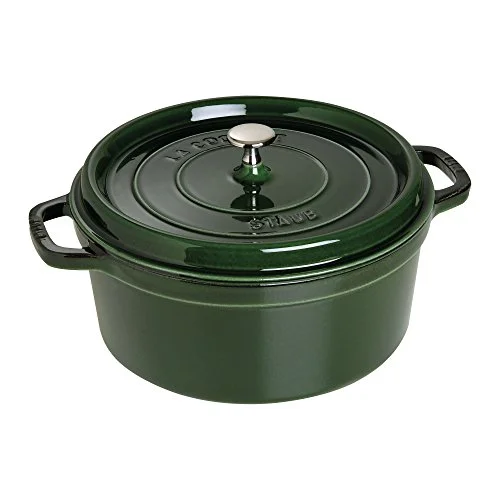
Staub Cast Iron 7-qt Round Cocotte — Basil

Best if braising is specifically why you're buying a pot

7-qt·Round·Made in France·$299.95

Staub built its reputation on the lid, and the lid is exactly what a four-hour braise cares about most. The brand states that the underside of its cocotte lids is designed to collect condensation and return it to the food rather than let it escape — a stated design intent, not a flourish, and the single most relevant published fact for this specific use case among the three pots here. At 7 quarts round, it holds enough liquid and meat for a substantial braise of chunked or cut meat, though it is a round body rather than the oval shape a single whole joint fits most efficiently. It is also, by a wide margin, the most expensive of the three.

Buy it specifically for braising. If you mostly make soups or bake bread, the lid engineering here earns you nothing extra.

Staub cast iron round cocotte, basil, 7 quart
Price
$299.95
Check price →
02Best for a whole joint

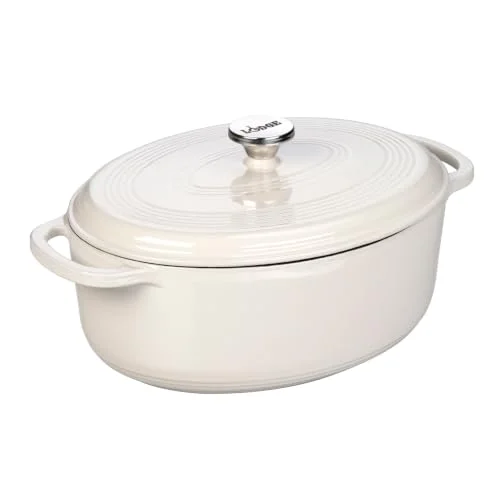
Lodge Enameled Cast Iron Oval Dutch Oven, 7 Quart, Oyster White

Best for a whole chicken, a shoulder, or a leg of lamb

7 Quart·Oval·Enameled, no seasoning·$83.99

This is the oval pick in this guide, and shape is the whole reason to choose it: an oval body fits a whole bird or a long joint of meat closer to fully submerged in braising liquid than a round pot's curved corners allow, with less wasted space around the meat. At 7 quarts it has the room for a joint plus root vegetables and enough liquid to cover most of it. Lodge is enameled cast iron with no seasoning required, the same category as every other pot on this page, at well under a third of the Staub's price.

If what you braise most is a whole piece of meat rather than cut-up stewing chunks, the oval shape is doing real work here, not just looking different.

Lodge enameled cast iron oval Dutch oven, 7 quart, oyster white
Price
$83.99
Check price →
03Best for a first braise

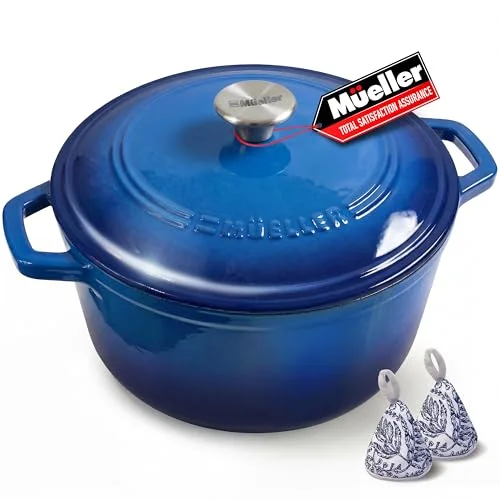
Mueller 6qt Enameled Cast Iron Dutch Oven, Aqua Blue

Best if you're finding out whether braising is for you

6 Quart·Round·Safe for all cooktops·$49.97

Sixty dollars is the lowest entry point of the three, and six quarts round is enough capacity for a braise of short ribs, a chunked chuck roast, or oxtail for four to six people. Mueller markets it as safe for all cooktops, which matters if the braise in your kitchen starts with a stovetop sear before the pot goes into the oven — not every budget enameled pot is rated for every cooktop type, and this one states that it is. It does not carry the stated self-basting lid design of the Staub or the oval shape of the Lodge, so a long unattended braise asks a little more attention here: checking the liquid level around the two-hour mark is a reasonable habit with any lighter-lidded pot, this one included.

The honest starter pot: capable of a real braise, priced so that finding out you love the technique doesn't cost you much to learn.

Mueller 6qt enameled cast iron Dutch oven, aqua blue
Price
$49.97
Check price →
The failure mode

Why a loose lid dries out a stew

The physical mechanism is straightforward once you picture it. Inside a sealed pot in a hot oven, liquid at the bottom turns to steam, rises, hits the underside of the lid, cools, and condenses back into liquid droplets. On a heavy, tight-fitting lid, most of that condensation collects and falls straight back down into the pot — the braising liquid is essentially recycling itself for hours. On a lighter or looser lid, a meaningful fraction of that same steam finds a path out through the gap at the rim instead of condensing and returning, cycle after cycle, for the full length of the cook.

Over a thirty-minute cook this difference is nearly invisible. Over a four-hour braise it compounds every few minutes for the entire time, and the arithmetic is not forgiving: a pot leaking even a small, steady fraction of its internal moisture every cycle can end up noticeably drier than one that isn't, by the time the meat is actually fall-apart tender. The visible symptom shows up as a thinner layer of liquid than you started with, meat that's lost more moisture than the recipe expected, and a sauce that's reduced further and saltier than intended because the proportion of liquid to seasoning has shifted. None of that is a failure of the recipe or the cook — it's a predictable consequence of how much steam a given lid actually traps, which is exactly why manufacturers who build pots specifically for braising, like Staub with its stated self-basting lid design, treat lid engineering as the headline feature rather than an afterthought.

The practical takeaway if you don't own a pot engineered specifically around this: check the liquid level partway through a long braise, and be ready to add a splash of stock or water if it's dropped more than you'd expect. It's a two-second fix for a problem that a heavier, tighter lid would have mostly prevented on its own.

Our method

What we didn't do

What we did

Specs, shape and current prices

We compared the published capacity, shape, country of manufacture where stated, and current Amazon price for the Mueller 6qt, the Lodge Oval 7 Quart and the Staub 7-qt Round Cocotte, and we read what each manufacturer states about its own lid design. Where a specification isn't published for a given listing — an oven-safe temperature, a handle measurement — we say so rather than estimate it.

What we didn’t

We don’t run a testing lab

We do not physically test these pots, we do not own them, and we have no star ratings or review counts for these specific listings to report, so we don’t publish any invented ones. How a braise actually turns out in any given kitchen depends on the cut of meat, the oven, and the recipe as much as the pot — what we can do honestly is explain the physics of moisture retention and report what each manufacturer states about its own lid, rather than fabricate sentiment we don’t have. See more on the About page.

FAQ

Frequently Asked Questions

What makes a Dutch oven good for braising specifically?

A heavy, tight-fitting lid matters more than almost any other specification for braising, because the whole technique depends on keeping liquid inside the pot for hours rather than letting it evaporate away. Staub states that its cocotte lids are designed to collect condensation and return it to the food. Capacity and shape matter too, but a loose-fitting lid will dry out a long braise regardless of how large or well-made the pot is otherwise.

Should I buy an oval or a round Dutch oven for braising?

It depends on what you cook most. Oval suits a whole bird or a long joint of meat, like the Lodge Oval 7 Quart in this guide, because the shape keeps the meat closer to fully submerged than a round pot's corners allow. Round, like the Mueller 6qt or the Staub 7-qt Cocotte, suits cut-up stewing meat — short ribs, oxtail, chunked chuck roast — and is the more universally useful shape if you're unsure.

What size Dutch oven do I need for braising?

Six to seven quarts covers most home braises. Six quarts, like the Mueller in this guide, suits a braise for four to six people. Seven quarts, like the Lodge Oval or the Staub Cocotte here, gives you room for a larger joint or more stewing meat plus vegetables and enough liquid to cover it properly.

What oven temperature should I braise at, and can any of these pots handle it?

Most braises run in the 300–325°F range for the long covered phase, sometimes with a higher-heat sear beforehand. The cast iron and enamel on any enameled Dutch oven tolerate this easily; the actual limiting part is usually the lid knob, which on some pots is rated lower than the pot body. None of the three listings here publish a specific oven-safe figure, so check the current listing or manual before running a high-heat sear-then-braise in any of them.

Keep reading

More from Best Dutch Ovens