Best Dutch Ovens
Honest Take · Naming & Marketing

Cocotte, Casserole, French Oven: Why the Same Pot Has Four Names

Staub calls its iconic round pot a cocotte. Le Creuset calls an identical shape a cocotte too — except when it calls it a Signature oven. Mueller writes nothing but “Dutch Oven” on the box. Nuovva can’t decide and puts “Dutch Oven Pot” and “Casserole Pot” in the same product title. Four listings, one shape: a lidded, enameled cast-iron pot that goes from stovetop to oven. We compared what each listing actually states — capacity, material, country, price — to find out how much of the vocabulary is description and how much is marketing.

By Ilane Tall · Updated November 10, 2026 · Research-based.

Affiliate disclosure: we may earn a commission if you buy through the Amazon links on this page, at no extra cost to you.

Two enameled cast iron pots with lids side by side on a kitchen counter, one labeled in a French-style script, illustrating different names for the same cookware
Where the word comes from

Cocotte is just French for a small pot with a lid

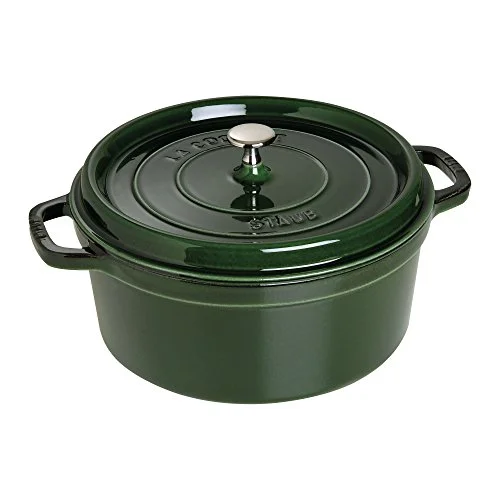
Cocotte is not a technical term and it is not a category of cookware with rules attached. In French kitchens it is simply the everyday word for a covered stewing pot, cast iron or not, used that way for generations before any American retailer put it on a listing. French manufacturers keep using it for the same reason an American manufacturer writes “pot” — it is the correct word in their own language for the object they are making. The Staub listing here states it plainly: “Staub Cast Iron 7-qt Round Cocotte — Basil, Made in France.” The word and the origin claim arrive together, which is the honest version of this pattern: a French brand, manufacturing in France, using the French word for the French object.

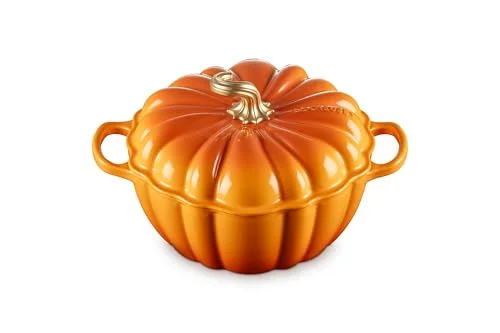
Le Creuset’s listing here does something slightly different. “Le Creuset Enameled Cast Iron Signature Pumpkin Cocotte, 4 qt., Persimmon” pairs cocotte with Signature, which is the brand’s own invented line name, not a French word at all. Both companies are selling enameled cast iron made to the same basic principle — iron cast into a pot shape, glazed with enamel so it never needs seasoning — and both reach for cocotte when they want the listing to carry some French weight. For a closer look at how these two brands differ in substance rather than vocabulary, see our Staub vs Le Creuset comparison.

The practical takeaway for a shopper: cocotte on a listing is not a separate product category and does not imply a different casting process, wall thickness, or lid design than a pot labeled Dutch oven. It is kept because it is correct French vocabulary for a French-made item, and because in an English-language marketplace, a French word reads as more considered than the plain, functional “pot with lid.” That is a real effect on how a listing feels to read. It is not a real difference in what is inside the box.

Tracing the English side

Dutch oven, French oven, casserole: three English names, one pot

“Dutch oven” is the older English term, used for centuries to describe a heavy, lidded cooking pot, associated with a casting method that reached England by way of Dutch metalworkers. “French oven” has no comparable history as a formal term; it is retail shorthand that became common once enameled, often brightly colored pots from French manufacturers entered the American market, and shoppers needed a way to distinguish the glazed version from a bare cast-iron Dutch oven their grandmother might have owned. “Casserole” is older still in French, where it originally named the vessel itself before also describing the dish cooked in it — and it has always been used loosely enough in English to cover any covered, ovenproof pot, cast iron included.

None of these three English terms describes a different shape, material, or capacity by any formal rule, and the clearest proof of that sits in one of our own listings. The Nuovva product title reads, in full: “Nuovva Enamelled Cast Iron Dutch Oven Pot with Lid—6.4 Quart Non Stick Casserole Pot—Heavy Duty & Oven Safe up to 500° F for Bread Baking, Braising, Stews, Roasting — 28cm Dark Blue.” That single sentence calls the same 6.4-quart object a “Dutch Oven Pot” and a “Casserole Pot” within a few words of each other. No other evidence is needed that the words are interchangeable at the point of sale, not categories a shopper needs to tell apart.

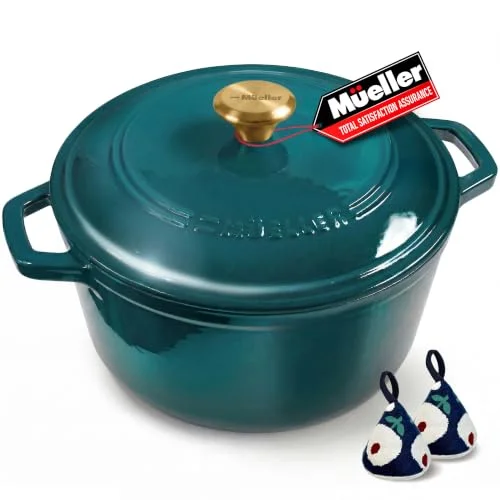
Mueller’s listing takes the opposite approach and commits to one word only: “Mueller DuraCast 6 Quart Enameled Cast Iron Dutch Oven Pot with Lid.” No casserole, no French oven, no cocotte. That is a naming choice, not a design one — the Mueller is still enameled cast iron with a fitted lid, the same basic category as the Nuovva, about ten dollars and one word away.

Reading past the title

What actually differs between these four listings, besides the word on the box

Set the vocabulary aside and the four listings do differ on real, stated specifications. Capacity ranges from 4 quarts (the Le Creuset Pumpkin Cocotte) up to 7 quarts (the Staub Round Cocotte), with the Nuovva at 6.4 quarts and the Mueller at 6 quarts in between. Price spans an enormous range for products in the same material class, from $49.27 up to $394.95. Only one listing states a country of manufacture outright: the Staub, which says “Made in France” directly in the title. The others simply don’t address it, which is a gap worth noticing rather than filling in with a guess.

Shape is where the Le Creuset listing actually earns its extra word. “Pumpkin” in the title is not flavor text — it tells you the vessel is shaped differently from a plain round pot, a genuine physical distinction stated outright, not one we’re inferring. None of the four listings publish the specification that matters most for comparing stovetop performance: wall thickness, which drives heat retention and searing far more than capacity or color. We cover that gap in Heat Retention and Searing: The Spec Most Listings Don’t Mention — and since none of these four state it, we won’t claim any one sears or holds heat better than another.

“DuraCast” in the Mueller title is its own small example of the same pattern as Le Creuset’s “Signature”: a brand-invented line name layered on top of the plain material description, enameled cast iron. Every brand in this comparison has at least one word in its listing that is doing marketing work rather than spec work — DuraCast, Signature, Pumpkin, Basil, Persimmon. Only capacity, price, and (for Staub alone) country of manufacture are stated facts you can actually compare side by side.

The real exception

Does the name ever signal a real design difference?

Mostly, no. Dutch oven, casserole pot, and cocotte are three ways of naming the same type of object, and swapping one for another on a listing changes nothing about how the pot is cast or how it cooks. But there are two places in this set of four listings where the extra word does more than flavor work. The first is Staub’s pairing of “cocotte” with “Made in France” — the French word riding alongside a real, verifiable fact about where the pot is produced, a fact the other three listings simply don’t state. That is useful information bundled with the vocabulary, not a design claim about the pot itself.

The second is Le Creuset’s “Pumpkin Cocotte.” Here, the extra word genuinely tracks a physical difference: this is a shaped vessel, not the brand’s plain round pot, and the title says so plainly rather than leaving it to a photo. That is the rare case where a fancier-sounding name coincides with an actual, stated distinction — but it is the shape word, “Pumpkin,” doing that work, not “cocotte” itself, which appears on round Le Creuset pots too.

For the other combinations here — Dutch oven, casserole pot, DuraCast Dutch oven — there is no shape, material, or construction claim bundled into the name difference at all. It is vocabulary only, the listing equivalent of choosing a flattering adjective. We’ve seen the same pattern with other listing language that implies more than the published specs confirm — see Does Dutch Oven Color Actually Change Anything? for another example of marketing language outrunning what a manufacturer actually states.

Price and vocabulary

How retailers use the fanciest name to justify the price

Look at the price and the vocabulary together across these four listings and a pattern appears before a single spec is read. The Nuovva, at $44.99, calls itself a “Dutch Oven Pot” and a “Casserole Pot” — plain, hedged across two search terms. The Mueller, at $49.27, commits to the plainest word available: “Dutch Oven Pot.” The Staub, at $299.95, reaches for “Cocotte” and “Made in France.” The Le Creuset, at $394.95, combines “Signature,” “Cocotte,” and a shape name, “Pumpkin.” The two cheapest listings use the most generic, American-facing words; the two most expensive use the French word, an invented line name, and a color name. That correlation is visible on the page before you compare a single quart measurement.

This is not proof that the word causes the price — both pricier pots here are also from brands with real manufacturing claims, warranty programs, and decades of reputation, and that reputation is a legitimate part of what the money buys. But “cocotte” reads as upscale and imported even though it translates to nothing more exotic than “pot.” Combine it with a flattering color name like Basil or Persimmon and a line or shape name like Signature or Pumpkin, and a listing accumulates language that signals premium-ness independently of any stated construction difference — none of which, as noted above, is actually published for wall thickness or enamel grade on any of these four products.

The honest read: price in this category tracks brand reputation, warranty, and foundry history far more reliably than the word chosen for the title. A shopper who mentally subtracts cocotte, Signature, and the color names, reading only capacity, stated country of manufacture, and included accessories, gets a clearer picture of what $44.99 and $394.95 actually buy. New to this category? See The Best Dutch Ovens for Someone Who Has Never Owned One. The same name-versus-price gap shows up at the entry-level end too, in our CAROTE vs Amazon Basics comparison.
The four, by name

The picks, named whatever you like

01The hedge

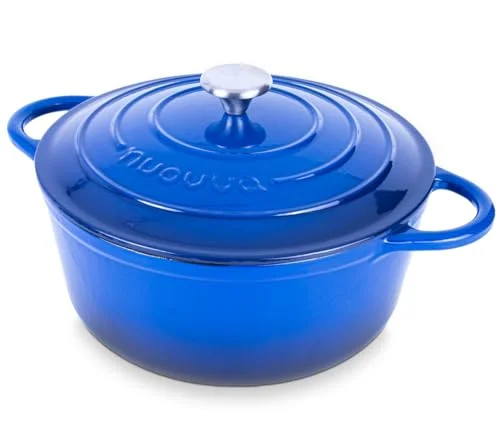
Nuovva Enamelled Cast Iron Dutch Oven Pot with Lid, 6.4 Quart, Dark Blue

Best if you just want an honest way in

6.4 quarts·28cm·Oven safe to 500°F·Dark Blue

The only listing of the four that calls itself both a Dutch oven and a casserole pot in the same sentence, which makes it the plainest proof in this whole comparison that the words are interchangeable. At $44.99 for 6.4 quarts with a published 500°F oven-safe rating, it is sized and rated for the same jobs — bread, braising, stews, roasting — as every other pot here, regardless of which of its two names you search for.

Whatever you call it, it is 6.4 quarts of enameled cast iron for $44.99.

Nuovva enameled cast iron Dutch oven pot with lid, 6.4 quart, dark blue
Price
$44.99
Check price →
02The one word

Mueller DuraCast 6 Quart Enameled Cast Iron Dutch Oven Pot with Lid

Best if you want the label to just say “Dutch oven” and stop there

6 quarts·Round·Enameled cast iron·DuraCast line

At $49.27 for 6 quarts, this listing commits to a single term and leaves casserole and cocotte out of it entirely. “DuraCast” is Mueller’s own name for the enamel line, the same kind of brand-invented label as Le Creuset’s “Signature” a few price tiers up — a reminder that even the plainest-sounding listing in this group still carries one piece of marketing vocabulary of its own.

The most straightforwardly named pot on this page, at six quarts round.

Mueller DuraCast 6 quart enameled cast iron Dutch oven pot with lid
Price
$49.27
Check price →
03The cocotte that states its origin

Staub Cast Iron 7-qt Round Cocotte, Basil, Made in France

Best if “Made in France” matters to you as much as the word cocotte does

7 quarts·Round·Made in France·Basil

At $299.95 for 7 quarts, the Staub is the only listing in this comparison to pair the French word with an explicit country-of-manufacture claim, which is the one place in this whole article where the vocabulary and a verifiable fact arrive together on the same line. Whether cocotte itself matters to you is a matter of taste; that the pot is actually made in France is a stated fact none of the other three listings offer either way.

Here, at least, the fancy word comes with a fact attached to it.

Staub cast iron 7-quart round cocotte, basil, made in France
Price
$299.95
Check price →
04The cocotte with a shape to match

Le Creuset Enameled Cast Iron Signature Pumpkin Cocotte, 4 qt., Persimmon

Best if the shape is the actual reason you’re looking

4 quarts·Pumpkin shape·Signature line·Persimmon

At $394.95 for 4 quarts, this is the most expensive pot in the comparison and the one where the extra vocabulary is doing the most real work: “Pumpkin” tells you outright that this is a shaped vessel, not Le Creuset’s plain round pot, and that is a genuine physical distinction stated in the title rather than a flourish. “Signature” and “Cocotte” are the brand and category vocabulary layered on top of that one real fact.

The one listing here where the fancier name actually matches a fancier shape underneath it.

Le Creuset enameled cast iron Signature Pumpkin Cocotte, 4 quart, Persimmon
Price
$394.95
Check price →
Side by side

The four, compared

PotCalled on the listingCapacityMade byNotablePriceGet it
Nuovva 6.4 Quart Dutch Oven Pot / Casserole Pot 6.4 qt Nuovva Oven safe to 500°F $44.99 Get it
Mueller DuraCast 6 Quart Dutch Oven Pot 6 qt Mueller Round, enameled cast iron $49.27 Get it
Staub 7-qt Round Cocotte 7 qt Staub, France Made in France, stated outright $299.95 Get it
Le Creuset Signature Pumpkin Signature … Cocotte 4 qt Le Creuset Pumpkin shape, stated outright $394.95 Get it
Our method

How we compared

What we did

Read the titles as closely as the specs

We compared the exact product titles, published capacities, and current Amazon prices for the Nuovva, the Mueller DuraCast, the Staub 7-qt Round Cocotte, and the Le Creuset Signature Pumpkin Cocotte. Every naming claim in this article — that Nuovva uses two names, that only Staub states a country of manufacture, that only Le Creuset states a shape — is drawn directly from the sellers’ own listing titles, not from an assumption about what the brand “probably” means.

What we didn’t

We don’t run a testing lab, and we don’t invent sentiment

We do not physically test these pots, we do not own them, and we have no star ratings or review counts for these specific listings to report. Where a specification like wall thickness or enamel grade simply isn’t published for a given pot, we say so rather than guess at it from a sibling product or a brand’s general reputation. See more about our approach on the About page.

FAQ

Common questions

Is a cocotte a different pot from a Dutch oven?

No. Cocotte is simply the French word for a lidded stewing pot, and French brands use it because it is the correct term in their own language for the object they make. A cocotte, a Dutch oven, and a casserole pot can all describe the identical piece of enameled cast iron — the Nuovva listing in this comparison literally uses “Dutch Oven Pot” and “Casserole Pot” for the same 6.4-quart product.

Why does Staub call its pot a cocotte instead of a Dutch oven?

Because Staub is a French company manufacturing in France, and cocotte is the correct French word for what it makes. The listing in this comparison pairs the word with an explicit “Made in France” claim, which is the one case here where the French vocabulary arrives alongside a stated, verifiable fact about where the pot is produced.

Does the name on a listing ever tell you something real about the pot?

Occasionally. In this comparison, Le Creuset’s “Pumpkin Cocotte” genuinely signals a different shape than a plain round pot — that is a real physical distinction stated in the title. But for the other three listings here, the extra naming is vocabulary only: Dutch oven, casserole pot, and DuraCast Dutch oven all describe the same basic shape of enameled cast-iron pot.

Why is the Le Creuset Signature Pumpkin Cocotte priced so much higher than the Nuovva casserole pot?

Mostly brand reputation, warranty, and the Pumpkin shape itself, not the word cocotte. At $394.95 against $44.99 for the Nuovva, the price gap reflects Le Creuset’s foundry history and enamel reputation plus a genuinely shaped vessel, rather than anything inherent in calling a pot a cocotte versus a casserole pot.

Keep reading

More from Best Dutch Ovens