Best Dutch Ovens
Roundup · Whole Chicken & Pot Roast

The Best Dutch Ovens for a Whole Chicken or a Pot Roast

A stew fills whatever shape holds it. A whole chicken or a pot roast does not — it is a fixed object that needs a base wide enough to lie flat, a dome tall enough to clear the lid, and a lid heavy enough to drip moisture back onto the meat instead of letting it dry out. We compared the published capacities, prices and included accessories for three enameled cast-iron Dutch ovens against exactly that job: one roast, not six servings of soup.

By Ilane Tall · Updated October 28, 2026 · Research-based.

Affiliate disclosure: we may earn a commission if you buy through the Amazon links on this page, at no extra cost to you.

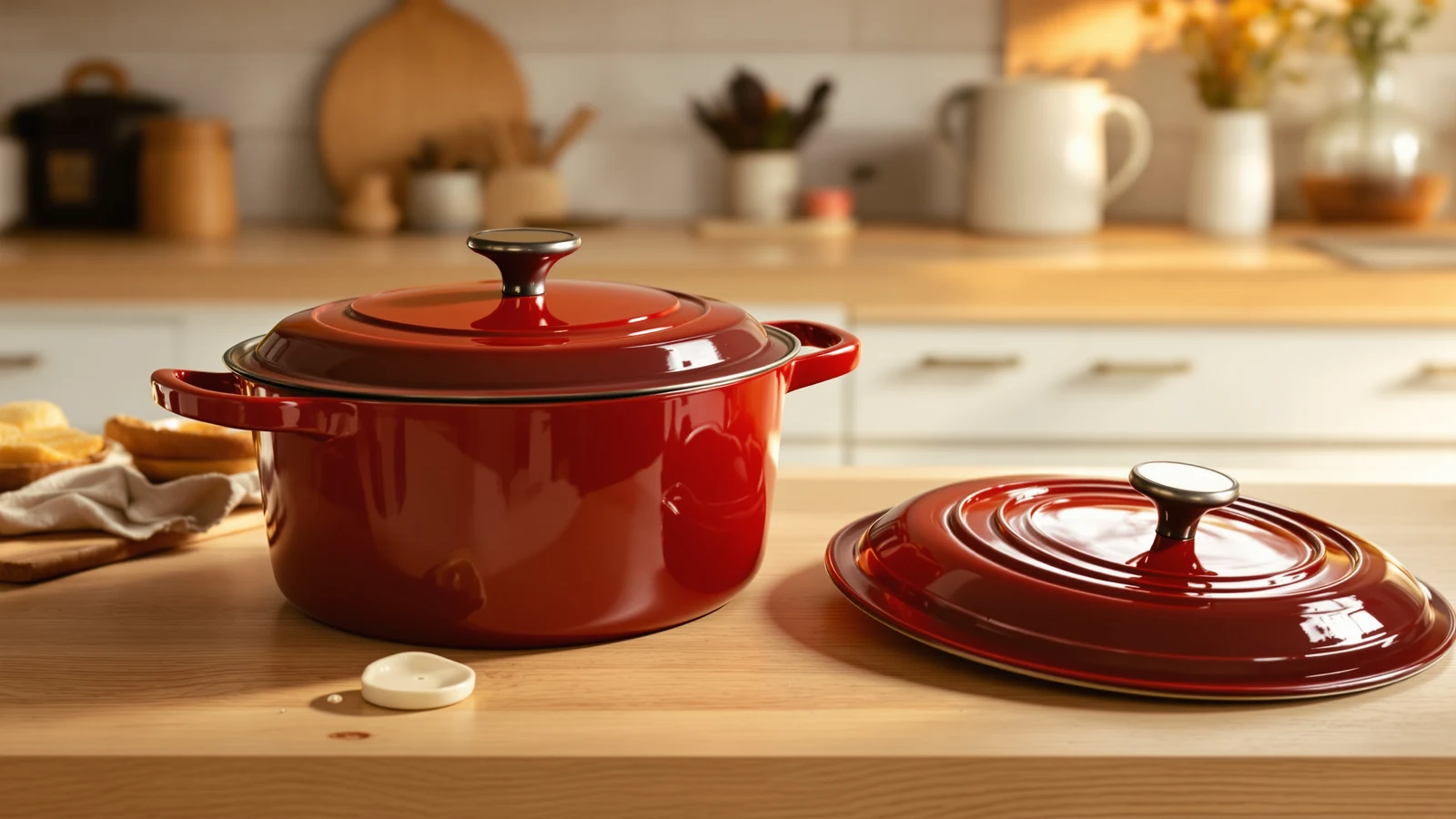
Whole roast chicken resting in an open enameled cast iron Dutch oven on a kitchen counter, lid set beside it
The spec that actually matters

Why a roast needs diameter more than it needs quarts

Quarts measure volume, and volume is a forgiving number for a soup or a braise cut into pieces — six quarts of stew settles into a tall, narrow pot or a wide, shallow one equally well, because liquid and chunks of meat fill whatever shape is in front of them. A whole chicken does not do that. It is a fixed object with legs, wingtips and a breastbone that keep their shape through cooking, and it needs a base with enough floor area to sit flat with the lid seated, not perched on top of a bird too wide for the pot it was dropped into. A pot roast is more forgiving in outline but still has a long axis that a narrow, tall pot forces onto its end rather than letting it lie the way it wants to lie.

This is the trap of shopping by capacity alone: two pots can both be rated at six quarts and still behave differently with a roast inside, because one is tall and narrow and the other is wide and shallow. Round pots split that six quarts fairly evenly between width and height; an oval Dutch oven spreads more of the same volume across the floor instead of up the walls, which is the trade a long cut of meat or a bird's wingspan benefits from. None of the three pots in this guide is sold as oval, so if floor area is your binding constraint, it is worth reading that comparison before committing to a round pot by capacity number alone.

The practical rule: when buying for a specific roast rather than a general-purpose pot, check the base diameter on the current listing in addition to the quart rating, and picture the bird or joint actually sitting inside it with room for the lid to close flat. A capacity number tells you how much the pot holds. It does not tell you what shape that capacity comes in.

Before the oven

Searing on the stovetop before the oven ever sees it

The point of cooking a pot roast in a Dutch oven rather than a roasting pan is that it is the same vessel for both halves of the job. You brown the meat directly in the pot on the stovetop first — building a crust, developing the browned bits that become the base of a gravy — then move that same pot, crust and all, straight into the oven with the lid on. A roasting pan can't do the first half on a burner; a slow cooker can't do it at all. Enameled cast iron is built for exactly this handoff: the cast-iron core takes direct stovetop heat for searing, and the enamel means you are not seasoning or babying the surface between the two steps the way you would with bare iron.

This is also worth checking your own stovetop before you buy rather than after. Enameled cast iron works on gas and standard electric coil without caveats, but induction depends on the base having enough ferrous material to couple with the cooktop's magnetic field, and not every listing says so plainly. If searing before the oven is the whole reason you want a Dutch oven, it is worth reading what the base actually needs to work on your stovetop before choosing between these three.

Searing itself is a shorter, hotter step than the braise that usually follows it, and the two techniques are easy to conflate. If you are weighing a whole chicken or pot roast against a long, liquid-heavy braise in the same pot, the guide to Dutch ovens built around braising covers that slower half in more depth; this page is specifically about the single-roast job, where the pot spends most of its time dry-roasting with the lid on rather than simmering in a few inches of liquid.

Measure before you buy

Fitting a four-to-five-pound bird with the lid on

A standard supermarket whole chicken runs roughly four to five pounds, and across the category of enameled cast-iron Dutch ovens, six quarts is generally the floor for fitting a bird that size with the lid actually seated flat rather than tented up on the breastbone. A tented lid is worse than it sounds: it breaks the seal that makes basting work at all, and it means the pot is no longer doing the one thing it is good at, which is trapping moisture around the roast. Seven quarts gives real slack above that floor — room for the bird plus a ring of carrots, onions and potatoes around it, or a bit more basting liquid pooling in the base without crowding the lid.

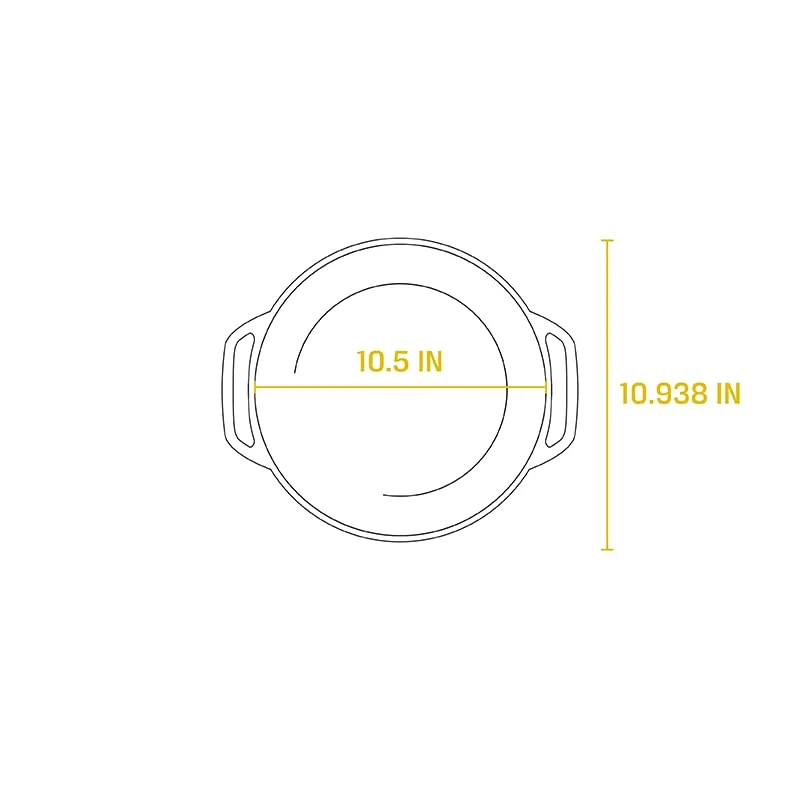
Of the three pots here, the Umite Chef 6QT and the Lodge Essential Enamel 6 Quart sit at that practical floor; the Umite Chef 7QT sits in the bracket with extra room for vegetables around the bird or a larger joint. None of these three listings publishes a base diameter in the specifications we have on file, so we won't put a number on it that nobody has confirmed — if your bird is on the large end of "whole chicken," check the current listing's dimensions or photos for the base width rather than assuming six quarts automatically clears it. For a broader walk-through of matching capacity to what you cook, our buying guide covers the sizing question more generally than this page does.

The accessories matter here too, in a small way. The Umite Chef pots both ship with cotton potholders — the 7QT also includes a cookbook — and a loaded Dutch oven coming out of a 350°F oven with a four-or-five-pound bird inside is genuinely heavy. Potholders sized for gripping a hot handle are not a throwaway inclusion once you are the one lifting it.

What the lid is doing

Basting without opening the oven door

A sealed, heavy lid over a roasting bird or joint turns the inside of the pot into a small, self-contained weather system. Moisture given off by the meat rises, hits the cooler underside of the lid, condenses, and drips back down onto the roast — a loop that repeats on its own for as long as the lid stays shut. That is the entire mechanism behind "basting" a Dutch-oven roast without a baster, a spoon, or opening the oven door at all. It is physics, not a feature unique to any one brand: any heavy, well-seated enameled cast-iron lid does this to some degree, which is also why none of the three pots in this guide needs a specialized lid design to manage it.

What changes the effect is how well the lid seals and how much interior height the dome gives the condensation loop to work in. None of the three products here publish a dome depth or lid weight in the specs available to us, so we won't invent a number — but it's worth checking the product photos for how deep the lid sits above the rim, since a shallower dome gives moisture less room to circulate before it drips straight back down in one spot rather than spreading across the roast.

The payoff is the oven door itself. Every time you open it to baste by hand, the oven loses a meaningful amount of heat — a swing of 25 degrees Fahrenheit or more is common, and recovering that takes several minutes during which the roast isn't cooking at the temperature your recipe assumes. A Dutch oven that bastes itself under a sealed lid means you can leave the door shut for the entire cook, a real advantage over an open roasting pan basted by hand every twenty or thirty minutes.

Side by side

The three, compared

PotBest forCapacityMade byNotablePriceGet it
Lodge Essential Enamel 6 Quart A Sunday roast, most kitchens 6 qt Lodge No seasoning needed, casting iron since 1896 $69.33 Get it
Umite Chef 7QT Enameled A roast with vegetables around it 7 qt Umite Chef Ships with cookbook and cotton potholders $55.99 Get it
Umite Chef 6QT Enameled A bird on its own, tightest budget 6 qt Umite Chef Dual handles, cotton potholders included $39.99 Get it
The picks

Our picks, and who each one is for

01Best overall

Lodge Essential Enamel Cast Iron Dutch Oven, 6 Quart, Island Spice Red

Best for a Sunday roast in most kitchens

6 quarts·Island Spice Red enamel·No seasoning·Made by Lodge

At $69.33, this is the pot with the clearest provenance for a single-roast job: Lodge has cast iron in South Pittsburg, Tennessee, since 1896, and the Essential Enamel line gives you that heritage without the seasoning ritual of bare iron. Six quarts sits at the practical floor for a four-to-five-pound chicken or a comparable pot roast with the lid seated flat, and because it is enameled, it goes straight from searing on a burner to roasting in the oven without a second thought about the surface.

If this is the one Dutch oven you own, six quarts and a brand with a hundred and thirty years behind it is a safe place to stop looking.

Lodge Essential Enamel cast iron Dutch oven, 6 quart, Island Spice Red
Price
$69.33
Check price →
02Best for a roast with sides

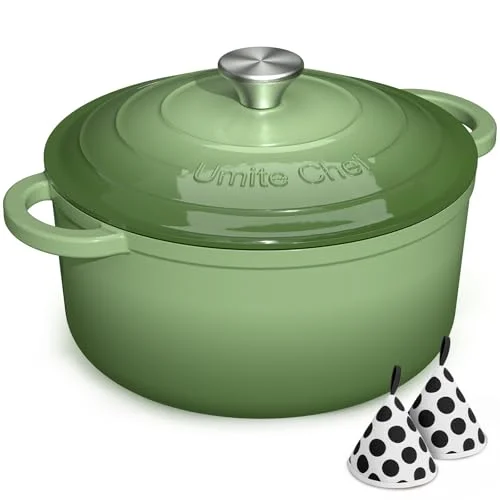
Umite Chef Enameled Cast Iron Dutch Oven, 7QT, Sage Green

Best for a pot roast surrounded by vegetables

7 quarts·Dual handles·Cookbook included·Cotton potholders included

Seven quarts at $55.99 is the pot to reach for when you want more in the base than just the bird — a ring of carrots, potatoes and onions roasting in the same drippings, or a larger joint than the strict four-to-five-pound chicken this guide is built around. The extra quart over the 6QT version buys real clearance for the lid to seat flat over a fuller pot, which matters for the self-basting effect: a lid forced to tent over a crowded base breaks the seal that makes that loop work. It ships with a cookbook and cotton potholders, and full, coming out of the oven, you will want both hands for the lift.

The extra quart is for the vegetables, not the bird — and it's the difference between a sealed lid and a tented one once the pot is full.

Umite Chef enameled cast iron Dutch oven, 7 quart, sage green
Price
$55.99
Check price →
03Best value

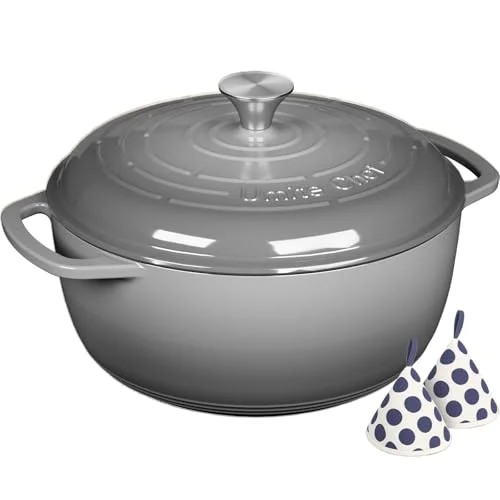
Umite Chef Enameled Cast Iron Dutch Oven, 6QT, Grey

Best for a bird on its own, on the tightest budget

6 quarts·Dual handles·Cotton potholders included·Grey enamel

At $39.99, this is the least expensive route into the category covered here, and it still sits at the six-quart floor that fits a four-to-five-pound chicken with the lid closed. Dual handles are built onto a round body, and it ships with cotton potholders, not a throwaway inclusion once a full pot is coming out of a hot oven. It skips the cookbook its 7QT sibling includes, and at six quarts rather than seven it has less room for vegetables around the bird — but for a roast on its own, with sides cooked separately, it does the core job for under fifty dollars.

If the job is one bird, by itself, and the budget is the deciding factor, this is the pot that still clears the bar.

Umite Chef enameled cast iron Dutch oven, 6 quart, grey
Price
$39.99
Check price →
The honest alternative

When a sheet pan would honestly do the job better

The mechanism that makes a Dutch oven good at this job — a sealed lid trapping moisture and dripping it back onto the roast — is the same mechanism that works against you if what you want is crisp, browned skin on a spatchcocked chicken, or a tray of root vegetables with real char on the edges. Enclosed, humid heat is good at keeping meat from drying out over a long cook. It is not good at the dry, open exposure that crisps skin or caramelizes a vegetable's edge, because the lid is, by design, keeping steam in the pot rather than letting it escape. If crisp skin on every surface is the goal rather than a fall-apart, basted interior, a sheet pan or an open roasting pan does that job better, full stop.

Size is the other honest limit. None of the pots on this page, or in this category generally, is built to hold a full-sized turkey — most enameled Dutch ovens top out well under the volume a large holiday bird needs, lid included. A sheet pan or a dedicated roasting pan has no such ceiling on footprint.

And if you are chasing genuinely high, dry heat — 450°F and up, to force fast browning on a smaller cut — check the oven-safe rating on any Dutch oven before pushing it that hard, since the limiting part is often the lid knob rather than the pot itself. None of this makes the pots above wrong for the job this page is about; it just means a basted, hands-off roast and "maximum browning, no lid" are two different goals, and buying for one when you want the other is the most common mismatch in this category.

Our method

How we compared

What we did

Specs and current prices, matched to the job

We compared the published capacities, current Amazon prices and included accessories for the Umite Chef 6QT, the Umite Chef 7QT and the Lodge Essential Enamel 6 Quart, against the demands of roasting a single whole chicken or a pot roast rather than a general-purpose stew pot. Where a listing does not publish a figure — base diameter and lid dome depth, for all three — we say so plainly rather than estimate it from a similar-looking product.

What we didn’t

We don’t run a testing lab

We do not physically test these pots, we do not own them, and we have no star ratings or review counts tied to these specific listings, so we don’t publish any invented sentiment to fill that gap. What we can describe honestly is how a sealed enameled cast-iron lid behaves with a roast inside it — that is established cooking physics, not a brand-specific claim — and we apply it the same way to every pot on this page. See more on the About page.

FAQ

Common questions

Do I need a Dutch oven for a whole chicken, or will a roasting pan do?

A roasting pan works fine if you want crisp, browned skin all over and don't mind basting by hand every twenty to thirty minutes. A Dutch oven earns its place when you want a hands-off cook: the sealed lid traps the moisture the bird gives off and drips it back onto the meat on its own, so you can leave the oven door shut for the whole cook instead of opening it repeatedly and losing heat each time. The trade is skin that stays moist rather than crackling, since the lid is deliberately keeping steam in.

What size Dutch oven fits a four-to-five-pound chicken?

Six quarts is generally the floor for fitting a bird that size with the lid seated flat rather than tented up. Seven quarts gives you real slack above that — room for vegetables around the bird or a slightly larger joint of meat without crowding the lid. Check the base diameter on the current listing too, not just the quart rating, since two pots at the same capacity can still differ in floor area.

Should I sear a pot roast before putting the lid on?

Yes, and it's the main reason to use a Dutch oven rather than a slow cooker or a covered roasting pan for this job. Browning the meat directly in the pot on the stovetop first builds a crust and develops the browned bits on the bottom that become the base of a gravy, and enameled cast iron can take that stovetop heat and then go straight into the oven with the lid on, in the same vessel, without a pause to transfer anything.

Why is the chicken skin soggy when I cook it in a Dutch oven?

Because the lid is doing exactly what it's designed to do. A sealed lid traps the steam the bird releases and condenses it back onto the skin, which is the mechanism behind basting without opening the oven door — and it's also why the skin stays moist rather than crisping. If crackling skin on every surface is the goal, an open sheet pan or roasting pan with no lid will get you there; a Dutch oven is built for a different trade-off.

Keep reading

More from Best Dutch Ovens