Best Dutch Ovens
Honest take · Induction, Glass and Gas

Is a Dutch Oven Safe for Your Stovetop? Induction, Glass and Gas, Checked

Most Dutch oven listings say nothing about induction at all. They mention capacity, color, and whether it is oven safe, and then go quiet on the one question that decides whether the pot works on your stove the day it arrives. Here is what a cooktop actually needs from the base of a pot, which of our three products says so and which stays silent, and how to check a listing before you buy rather than return the pot after.

By Ilane Tall · Updated October 27, 2026 · Research-based.

Affiliate disclosure: we may earn a commission if you buy through the Amazon links on this page, at no extra cost to you.

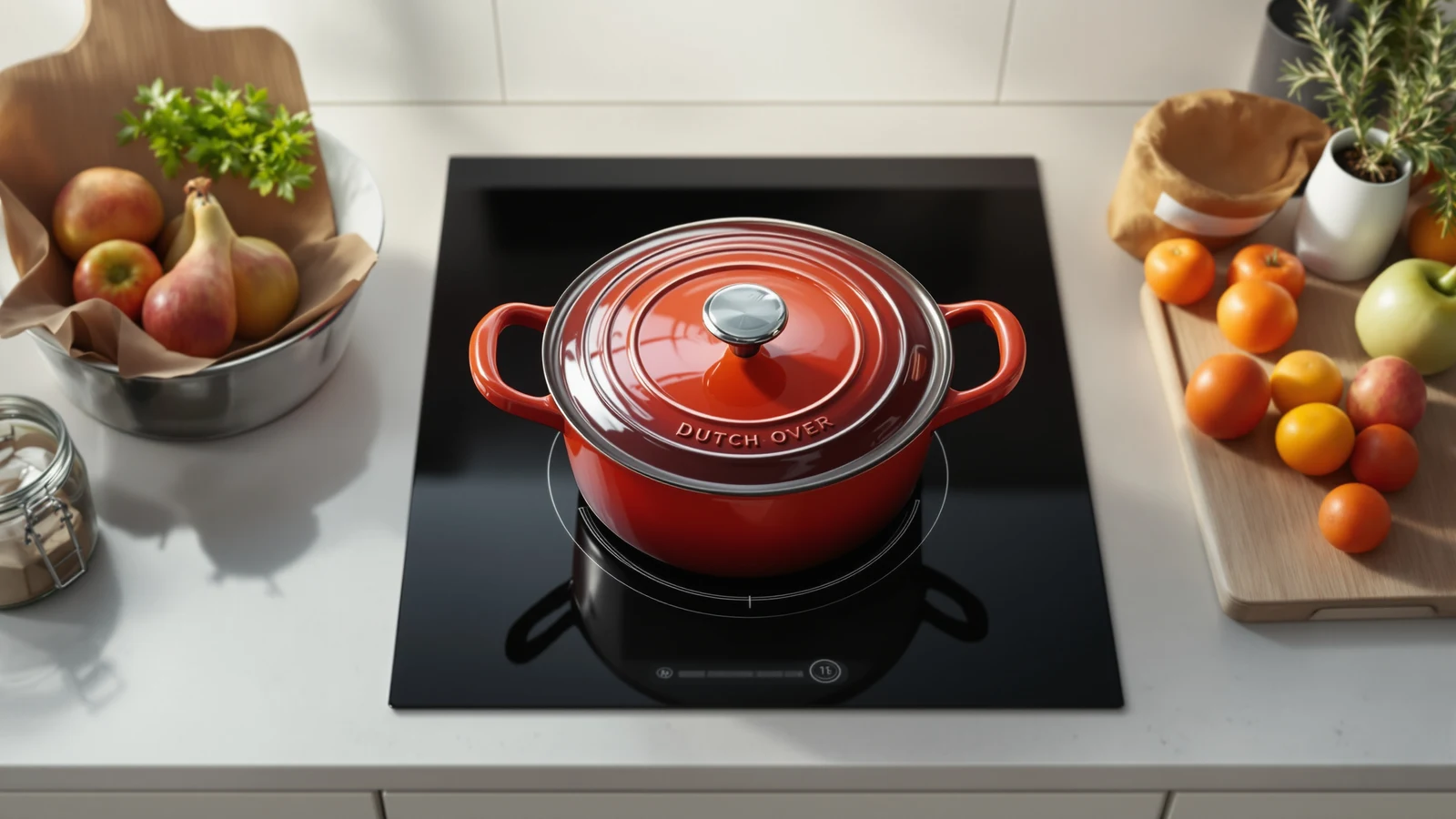
Enameled cast iron Dutch oven sitting on an induction cooktop in a bright kitchen
The question that matters most

What induction actually needs from the base of a pot

An induction cooktop does not burn gas and does not glow red like an electric coil. It generates a rapidly alternating magnetic field under the glass surface, and that field only turns into heat if the pot itself is magnetic enough to respond to it — the cooktop heats the pot directly, through the base, rather than heating the air or a coil underneath it. Put a pot made from aluminum, most stainless steel or copper on an induction burner and nothing happens, because the field has nothing to grip. This is also why an induction cooktop will not get warm to the touch on its own; if the base is not responding, there is no heat being generated anywhere near it.

Cast iron, bare or enameled, is one of the most reliable materials for this because iron is ferromagnetic by nature — it is the same property that makes a refrigerator magnet stick to a cast iron skillet. The enamel coating on top does not interfere, since the field is coupling with the iron underneath, not the glassy surface. This is the main reason enameled cast iron Dutch ovens have stayed relevant as induction cooktops have become common in US kitchens: the category was never a question mark the way all-aluminum or thin stainless cookware is.

What actually varies, pot to pot, is whether the manufacturer bothers to say so. A base that is "induction compatible" or "safe for all cooktops" in the listing copy is a specific, checkable claim, not marketing filler — it means someone tested the base against an induction field and is willing to put that in writing, which carries some liability if it is wrong. A listing that says nothing about induction at all is not necessarily a pot that fails on induction. Enameled cast iron almost always works. It is simply a listing that didn't bother to answer the one question an induction household is actually asking.

Where this is a non-issue

Gas and electric coil: the easy cases

If your stove is gas or a traditional electric coil, the entire induction question is irrelevant to you, and you can skip straight to the glass-top section below if that's your situation instead. A gas burner heats the air directly under the pot with an open flame, and an electric coil heats a resistive metal element that then transfers heat to whatever touches it. Neither method cares what the pot is made of magnetically. Aluminum, copper, stainless, enameled cast iron — all of it works, because the heat source does not depend on the pot's material at all, only on the pot sitting in contact with it.

The one practical note for gas specifically: a heavy enameled cast iron pot distributes a gas flame's naturally uneven heat far better than a thin aluminum one would, since the iron's mass spreads the hot spot directly above the flame across the whole base before it reaches the food — the same mass that makes these pots well suited to long braises in the first place. That is a genuine advantage of the category on gas, not a requirement to use it. Electric coil behaves the same way — cast iron's slow, even heat retention smooths out a coil's habit of cycling on and off to hold a set temperature, which is part of why Dutch ovens became a kitchen staple decades before induction or glass-top stoves existed at all.

None of the three products in this guide need to publish anything about gas or coil compatibility, because there is nothing to fail. If your stove is one of these two types, the base material question that actually matters to you is the one in the next section instead.

A different risk entirely

Glass-top stoves and the scratching question

A glass-top or ceramic-glass electric stove is a different situation from induction, and it is worth separating the two clearly because they get confused constantly. Induction is about whether the pot heats at all. Glass-top is about whether the pot damages the cooking surface, because the heat itself comes from an electric element glowing under a sheet of smooth glass or ceramic — the pot sits directly on that glass, and virtually any cookware material will heat on it. The risk is physical, not electromagnetic: scratching, scuffing, or in the worst case cracking the glass if a heavy pot is dragged rather than lifted.

Enameled cast iron is heavy and has a glassy exterior finish of its own, and the combination means the usual advice applies with extra emphasis: lift the pot on and off the burner rather than sliding it, and be especially careful with a pot that has any rough or chipped spot on its base, since that is exactly the kind of imperfection that can scratch glass on contact. A pot's round or oval base shape doesn't change this risk either way — it's about the condition of the base, not its outline. None of the three products here publish a glass-top-specific warning or a scratch-resistance rating — that is typical for the category, since the core concern is handling, not a material property the manufacturer tests for.

The practical rule for a glass-top stove is the same regardless of which pot you buy: check the base for smoothness before the first use, lift rather than slide every time, and don't set a hot pot down hard. That advice holds whether the pot is this guide's $39.99 enameled pot or a $300 one — glass-top risk is about technique and base condition, not price tier.

Reading the three listings

When a listing states it plainly, and when it does not

Of the three Dutch ovens in this guide, one states its stovetop compatibility outright. The Mueller 6qt Enameled Cast Iron Dutch Oven is listed, in its own product name, as "Safe for All Cooktops" — that phrase is doing real work in the listing, and it is the kind of specific, checkable claim worth taking seriously precisely because the manufacturer chose to put it in the title rather than bury it in a bullet point. At $49.97 for 6 quarts, it is also the pick to default to if confirming induction compatibility before checkout matters to you and you don't want to go digging through the rest of the listing.

The Umite Chef 5QT Enameled Cast Iron Dutch Oven, at $39.99, does not state a cooktop compatibility claim in the specifications we have on file for it. That is not the same as it being incompatible — enameled cast iron is magnetic by nature of the iron underneath, and the physics covered earlier in this guide applies to it the same as to any enameled cast iron pot. It simply means the listing didn't answer the question directly, so if induction compatibility matters to you specifically, it's worth opening the current Amazon listing and checking whether a cooktop-compatibility bullet has been added since, rather than assuming either way from the product name alone.

The Le Creuset Enameled Cast Iron Signature Deep Round Oven, 6.5 qt., at $289.95, also does not carry an explicit stovetop-compatibility phrase in its product title the way the Mueller does. That omission reads very differently at this price tier, and the next section explains why.

Reading between the lines

Why premium brands rarely bother saying it

A $39.99 or $49.97 pot is often a first Dutch oven, bought by someone who may not already own enameled cast iron and may genuinely be unsure whether it works on their stove. Spelling out "safe for all cooktops," as the Mueller does, answers a real objection for exactly that buyer and can be the difference between a sale and an abandoned cart. It is a sensible thing for a budget or mid-range brand to put front and center.

A $289.95 Le Creuset Signature, by contrast — the kind of pot people choose specifically to give as a gift to someone who already cooks seriously — is being bought by someone who in most cases already understands the category — they know enameled cast iron is magnetic, or they are replacing a pot they already own, or they have read enough to know the physics covered at the top of this guide. Le Creuset's own published materials describe the construction as cast iron with a vitrified enamel finish, which is simply the premium articulation of the same iron-plus-glass-coating structure every pot in this guide shares. A legacy cookware brand selling into that kind of buyer has less marketing incentive to spell out "works on induction" in the title, because the buyer researching a $290 purchase is far more likely to already know the answer, or to check elsewhere, than the buyer comparing two $40 pots on a phone screen.

That is a pattern worth recognizing across the category generally, not a rule specific to these three pots: silence on a spec in a listing often reflects who the listing is written for, not a defect in the product. It is still worth confirming for yourself rather than assuming a brand's reputation answers the question for you — which is exactly what the next section covers.

The three pots in this guide

What each one actually publishes

01States it plainly

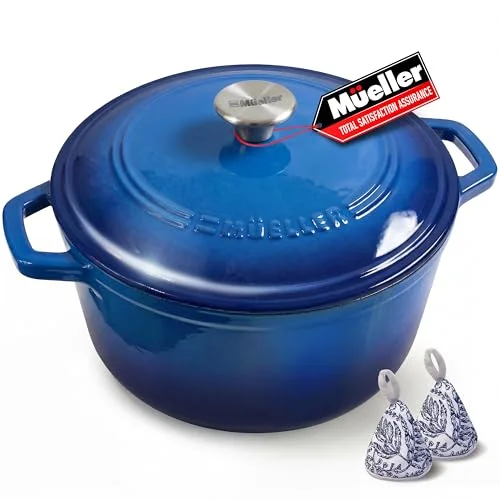
Mueller 6qt Enameled Cast Iron Dutch Oven, Aqua Blue

Best if you want cooktop compatibility confirmed in writing

6 quarts·Round·"Safe for All Cooktops" in the listing name·Enameled, with lid and knob

This is the one product in this guide where the manufacturer puts the cooktop answer directly in the product name rather than leaving a buyer to infer it: "Safe for All Cooktops." That is the specific claim a shopper checking this guide before buying is actually looking for, and it covers gas, electric coil, glass-top and induction without making you dig through bullet points or a Q&A section to find it. At $49.97 for 6 quarts, it sits between the two other pots on price, and the explicit claim is the main reason to default to it if confirming this one spec matters more to you than anything else on the listing.

When a listing answers the question in its own title, that's the easiest version of this decision you'll get.

Mueller 6qt enameled cast iron Dutch oven, safe for all cooktops
Price
$49.97
Check price →
02Silent, not incompatible

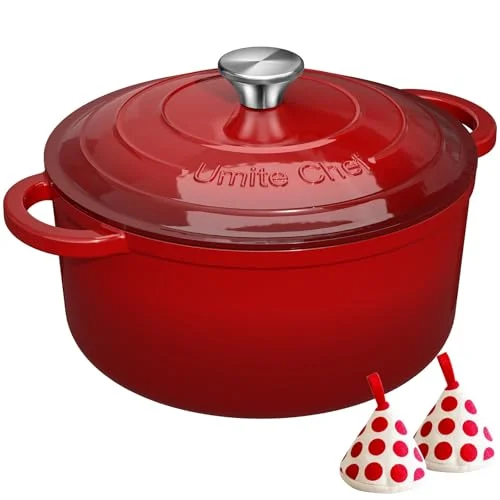
Umite Chef 5QT Enameled Cast Iron Dutch Oven, Red

Best budget pot, if you're comfortable checking induction yourself

5 quarts·Enameled cast iron·Ships with cotton potholders·No cooktop claim published

At $39.99 this is the least expensive of the three, and it is built from the same enameled cast iron as the other two — the iron underneath is magnetic regardless of what the listing does or doesn't say about it. What's missing is the explicit "all cooktops" phrasing the Mueller carries. That's a gap in the marketing copy, not necessarily a gap in function, but it means a buyer on an induction stove who wants it confirmed in writing before ordering should check the current listing's specifications and Q&A section rather than assume from the product class alone.

The physics almost certainly works in your favor here. The listing just isn't the one doing the reassuring.

Umite Chef 5QT enameled cast iron Dutch oven, red
Price
$39.99
Check price →
03The premium case

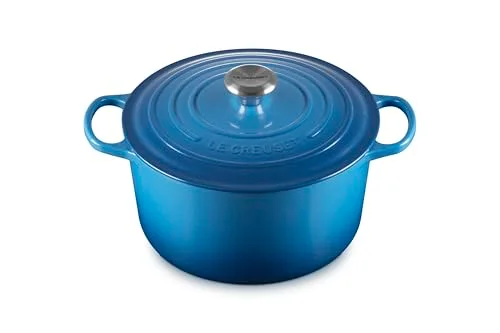
Le Creuset Enameled Cast Iron Signature Deep Round Oven, 6.5 qt., Marseille

Best if you already know the category and want the enamel, not the reassurance

6.5 quarts·Cast iron with vitrified enamel·No induction claim in the title·Made by Le Creuset

At $289.95, the Le Creuset Signature is the most expensive pot in this guide and, like the Umite, doesn't lead its listing with a cooktop-compatibility phrase. As the earlier section on premium brands explains, that's consistent with who buys at this price point: someone who typically already understands enameled cast iron is magnetic cookware and works the same way on induction as any other pot in this category. The base construction is cast iron underneath a fused glass enamel — the same structure, materially, that makes every pot in this guide respond to an induction field.

The silence here reads as confidence in the buyer's prior knowledge, not a gap in the product.

Le Creuset Signature Deep Round Oven, 6.5 quart, Marseille
Price
$289.95
Check price →
Side by side

The three, compared on this one question

PotSizeStates cooktop compatibility?PriceGet it
Mueller 6qt Enameled 6 qt Yes — "Safe for All Cooktops" in listing name $49.97 Get it
Umite Chef 5QT 5 qt Not stated; enameled cast iron base $39.99 Get it
Le Creuset Signature 6.5 qt. 6.5 qt Not stated in title; vitrified enamel over cast iron $289.95 Get it
Before you click buy

How to check before you buy, not after

The fastest check needs no listing at all: hold a refrigerator magnet to the base of a Dutch oven you already own, or to a floor-model pot in a store. If the magnet grips firmly, the base is magnetic enough to work on induction, full stop — this works because induction and a kitchen magnet respond to the identical property, a ferromagnetic base, even though the strength involved is different. It will not tell you anything about glass-top scratch risk or oven-safe temperature, but it answers the induction question completely and for free.

When buying online, where you can't test with a magnet first, read the listing title and the first few bullet points specifically for phrasing like "induction compatible," "safe for all cooktops," or a list of stovetop types. If you find it, as with the Mueller in this guide, that's your answer in writing. If the listing is silent, as with the Umite Chef and the Le Creuset Signature here, that silence is not a red flag for enameled cast iron specifically — it almost always means the base is iron, which almost always means induction works — but check the Q&A section and, if one exists, the "from the manufacturer" section further down the page, since compatibility details sometimes live there instead of the title.

If you are buying any cookware material other than cast iron, stainless with a magnetic base layer, or a listing that explicitly advertises induction, the calculation changes and a direct "induction compatible" statement from the manufacturer becomes much more important to find before ordering, since aluminum, copper, and many stainless pieces will not work on induction at all. For enameled cast iron specifically, the physics favors you by default; checking before you buy is about confirming that default, not gambling against it. The same habit of checking a listing closely before ordering, rather than after, is worth applying to oven-safe temperature ratings too — another spec that gets skipped for the same reasons induction does.
Our method

How we compared

What we did

Published specs, listing language and general material science

We compared the published titles and specifications for the Umite Chef 5QT, the Mueller 6qt and the Le Creuset Signature 6.5 qt., noting exactly which one states cooktop or induction compatibility and which do not, and we explained how induction, gas, electric coil and glass-top cooking actually work from established material science — the same physics that applies to enameled cast iron as a category regardless of brand. Every price and size figure in this guide comes from the current listing for that specific product; we did not estimate or carry over a spec from a similar pot.

What we didn’t

We don’t run a testing lab

We did not place any of these three pots on an induction cooktop, a gas burner or a glass-top range ourselves, and we don’t publish star ratings or review counts for these listings because we don’t have verified figures for them. What we can do honestly is explain the general physics that governs every enameled cast iron pot on an induction field, and report plainly which of the three listings answers the cooktop question directly and which stays silent. See more about our approach on the About page.

FAQ

Common questions

Does enameled cast iron work on induction cooktops?

Yes, in virtually every case. Induction needs a magnetic base to generate heat, and iron is naturally ferromagnetic, so the enamel coating on top doesn't change the outcome — the induction field couples with the iron underneath. This applies to the Umite Chef, the Mueller and the Le Creuset Signature in this guide, even though only the Mueller states "Safe for All Cooktops" directly in its listing name.

Why does only one of these three listings mention induction?

Mostly marketing strategy rather than a difference in the pot itself. A lower-priced pot aimed at a first-time buyer, like the Mueller at $49.97, benefits from spelling out "safe for all cooktops" to remove doubt at checkout. A legacy premium brand like Le Creuset, selling to buyers who often already understand the category, has less incentive to state it. The Umite Chef at $39.99 simply doesn't include the phrase in the specifications we have on file, which isn't evidence against it working.

Will a Dutch oven scratch my glass-top stove?

Only if it's dragged across the surface or has a rough, chipped base. The risk on a glass-top or ceramic-glass range is physical contact, not electromagnetic compatibility — the pot sits directly on the glass while an element heats underneath it. Lift any heavy enameled pot on and off the burner rather than sliding it, and check the base for smoothness before first use. This applies equally to all three pots in this guide regardless of price.

How can I check induction compatibility before buying, without a store nearby?

Read the listing title and bullet points for phrasing like "induction compatible" or "safe for all cooktops," as in the Mueller listing here. If the listing is silent, check whether the product is described as cast iron or enameled cast iron — if so, induction almost always works, since the base material is inherently magnetic. For any non-cast-iron cookware, a direct manufacturer statement becomes much more important, since aluminum and many stainless pieces are not induction-compatible at all.

Keep reading

More from Best Dutch Ovens