Best Dutch Ovens
Honest Take · Oven-Safe Ratings

How Hot Can a Dutch Oven Go? Check the Knob, Not the Pot

The iron and the enamel on an enameled Dutch oven will take more heat than almost any home recipe asks of them. The lid knob usually will not, and almost nobody mentions it. We looked at what actually limits an enameled Dutch oven's oven-safe rating, why phenolic, plastic and stainless knobs don't share a ceiling, and what to do when a listing gives you no number at all.

By Ilane Tall · Updated October 23, 2026 · Research-based.

Affiliate disclosure: we may earn a commission if you buy through the Amazon links on this page, at no extra cost to you.

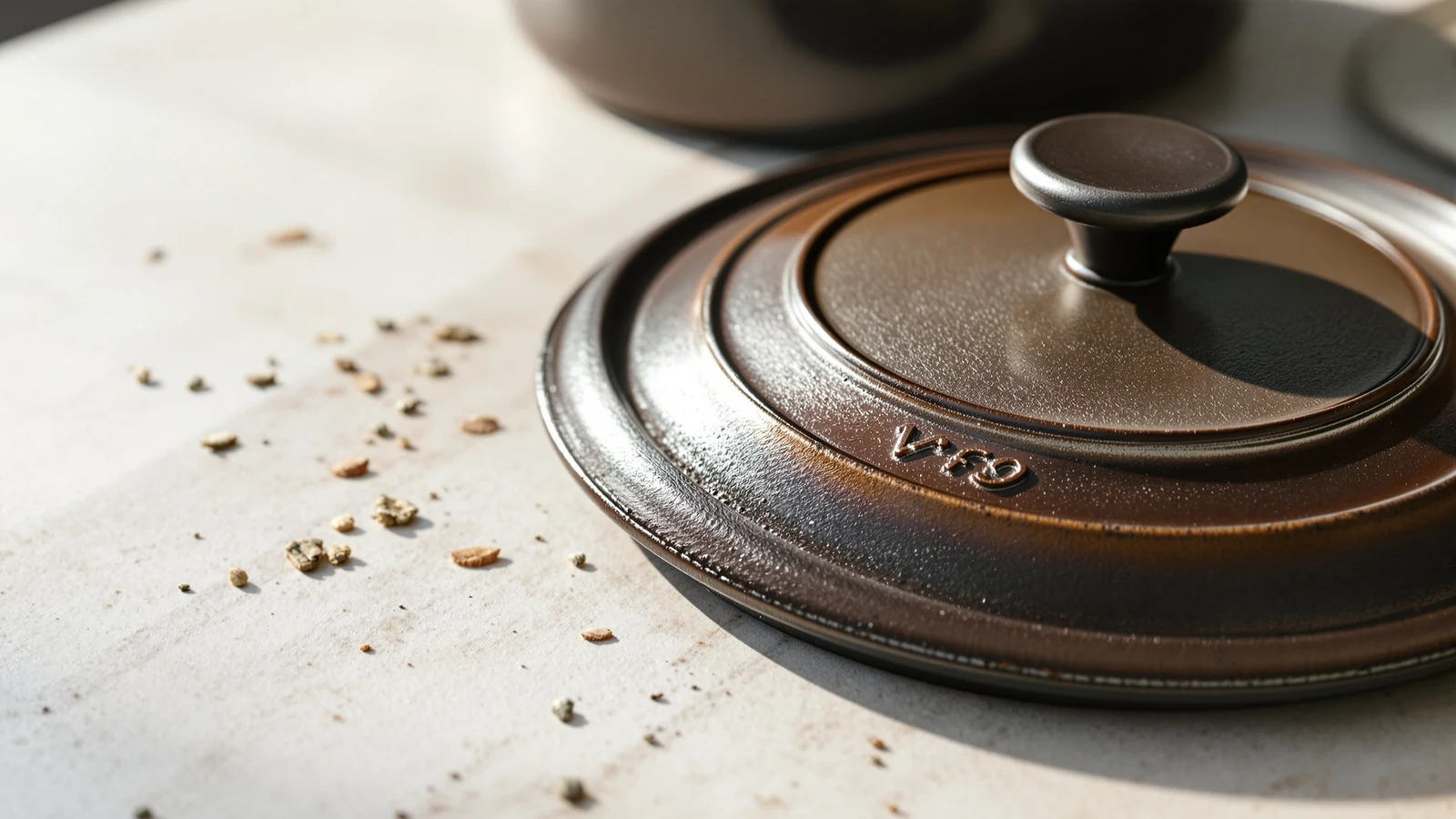
Close-up of an enameled Dutch oven lid and its knob on an oven rack, illustrating the question of oven-safe temperature limits
Start with the metal

The iron and the enamel can take more than your oven can give them

Cast iron is forged from metal that doesn't begin to soften until well past 2,000°F, a temperature no residential oven reaches, self-clean cycle included. The ceramic-glass enamel fused over that iron belongs to the same broad material family as a glass baking dish: it's chosen specifically because it tolerates sustained heat, acidic sauces, and the thermal swing of going from a cold countertop into a hot oven without flaking apart in normal use. None of the three pots named in this guide — the Parmedu 5.5QT, the Amazon Basics 6-Quart or the Umite Chef 7QT — will have their iron or their enamel coating meaningfully stressed by anything a home oven can produce. That's true of enameled cast iron as a category, not a claim specific to any one brand, and it's the first fact worth separating from whatever number is printed on the box.

So when a listing prints "oven safe to 500°F," or any other figure, that number is almost never describing the limit of the iron or the enamel underneath it. Enameled cast iron behaves differently from bare iron in several real ways — no seasoning, no rust risk, easier cleanup — but raw heat tolerance of the pot body is not where the two part ways, and it is not where any of these three pots will run into trouble either. The part of a Dutch oven that actually carries a documented, material-specific ceiling sits on top of the lid, is usually the cheapest single component on the entire pot, and is the part almost nobody checks before ordering.

The real ceiling

The knob is usually what the number is actually about

Lift the lid off almost any enameled Dutch oven and the knob at its center is doing a different job than the rest of the pot. It's typically a separate part, fixed through the lid with a screw or a rivet, molded or machined from a different material than the cast iron and enamel surrounding it, and often sourced from a different supplier than the foundry that cast the pot itself. When a brand publishes a single oven-safe temperature for the whole unit, that figure is frequently set by whichever component fails first under sustained heat — and on the large majority of mid-market Dutch ovens, that component is the knob, not the ten or more pounds of iron surrounding it.

This is a sensible way to write a spec sheet, not a defect. A manufacturer can't honestly print "oven safe to 500°F" and mean the knob if the knob would warp at 400°F, so the published number collapses to the weakest link, every time. The lid overall is doing more work than most people assume — sealing in moisture for a braise, venting it for a crust on bread — and the knob is one small, usually replaceable piece of that larger design, not a flaw hiding inside it. The practical takeaway is simple: before you push any Dutch oven toward the upper end of its printed range, find out what that knob is actually made of, because the number on the box is frequently the knob's number, wearing the pot's coat.

Phenolic, plastic, stainless

Three knob materials, three different ceilings

Phenolic resin is the material most mid-tier Dutch ovens ship with on the lid knob: a hard, dark, thermoset material that has been used on pot handles and knobs for decades because it tolerates stovetop and oven heat far better than an ordinary household plastic. It does not melt the way a milk jug would, but it is still built with a finite heat ceiling baked into the resin itself, and that ceiling sits meaningfully below what the cast iron underneath it could survive without noticing.

Plain plastic knobs — nylon or ABS, usually found on the least expensive end of the category — sit below phenolic on that same scale. They tend to be the first thing to discolor, soften or warp if a pot is pushed hard under a broiler or left in a hot oven longer than that specific part was designed for, and a warped knob is both a cosmetic problem and a clear sign the lid assembly has seen more heat than its weakest component was built to shrug off.

Stainless steel knobs remove the question entirely. Steel is metal, it belongs to the same material family as the pot's own handles, and it shares the cast iron's practical ceiling rather than imposing a separate, lower one of its own. This is exactly why higher-end Dutch ovens default to a metal knob on the lid, and why the knob is the first thing worth checking on any pot you plan to run hot and often.

Why the upsell exists

Replacement knobs, and why manufacturers sell them

Search most established Dutch oven brands' own sites and you'll usually find a stainless-steel replacement knob sold on its own, sized to fit that brand's lid. That accessory exists for a straightforward reason: it lets one lid design serve two different buyers without the manufacturer re-engineering anything. The buyer who never pushes an oven past a weeknight stew gets a cheaper phenolic or plastic knob bundled into the price they already paid. The buyer who bakes bread hot every weekend, or wants to put the pot under a broiler, pays a little more once, for a knob rated for exactly that.

It's also an honest way to handle the spec sheet. A brand that ships a plastic knob but prints the oven-safe number for the cast-iron body alone is setting buyers up to melt a knob and blame the pot. Publishing the lower, knob-limited figure — and then selling the fix separately — keeps the stated number accurate for the part that's actually installed, while still giving anyone who wants more headroom a documented way to get it. If you already own a Dutch oven with a plastic or phenolic knob and you're starting to bake hot and often, that upgrade is worth looking up by name before you simply hope the stock knob holds.

Where the ceiling gets tested

Bread recipes at 450°F and above are where this actually matters

Most stews and braises never approach the temperatures where a knob becomes the story — roughly 325°F to 375°F covers the bulk of what a Dutch oven is used for day to day, and at that range almost any knob on almost any pot is fine. Bread is the exception. Covered Dutch-oven bread recipes routinely call for preheating to 450°F or 500°F and holding the pot there, covered, for twenty to thirty minutes before the lid ever comes off — exactly the sustained high-heat window where a weak knob reveals itself while the cast iron underneath it does not.

Two of the three pots named in this guide are built and marketed specifically with that use in mind. The Parmedu 5.5QT is named directly for it — "Enameled Cast Iron Dutch Oven for Sourdough Bread" is the actual product title — and 5.5 quarts is a size suited to a standard one-to-two-pound loaf. The Umite Chef 7QT lists "Bread Baking" alongside braising, stews and marinating on its own listing, at the larger 7-quart capacity, and ships with cotton potholders included, which matters once you've felt how hot a lid handle gets after thirty minutes at 450°F. Neither listing states an oven-safe temperature figure in the specifications we have on file for it, which is the detail worth flagging rather than glossing over, given what both pots are being sold to do.

01For bread

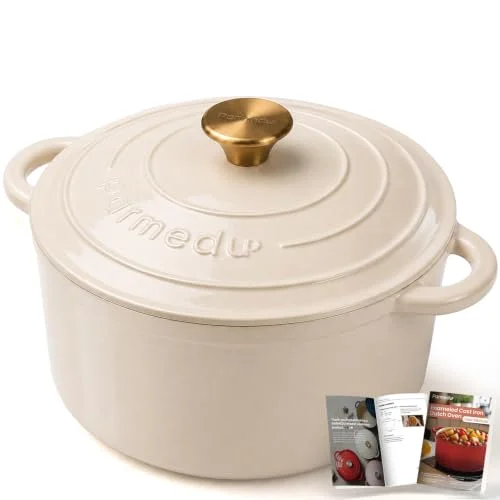
Parmedu 5.5QT Enameled Cast Iron Dutch Oven for Sourdough Bread, White

Sized and named for a one-to-two-pound loaf

5.5 quarts·Enameled cast iron·No oven-safe figure published on file

At $39.99, this is the lowest-priced pot in the group and the only one with "Sourdough Bread" written directly into its name. We don't have an oven-safe temperature on file for this listing, so if your bread routine runs at 450°F and above, that's a question to confirm before you buy rather than one to assume from the product name alone.
Parmedu 5.5QT enameled cast iron Dutch oven for sourdough bread, white
Price
$39.99
Check price →
Side by side

What each listing does and doesn't tell you

We checked the current specifications and product titles for all three pots named in this guide against exactly this question — does the listing give an oven-safe temperature figure at all — rather than inventing one where it's missing.

PotCapacityPriceOven-safe figure on fileGet it
Parmedu 5.5QT for Sourdough Bread 5.5 qt $39.99 Not stated in the specs we have Get it
Amazon Basics 6-Quart 6 qt $44.99 Title says "oven safe," no number given Get it
Umite Chef 7QT 7 qt $55.99 Not stated in the specs we have Get it
The quiet case

When a listing gives no figure at all

None of the three pots in this guide publish a specific oven-safe temperature in the data we have for them. The Amazon Basics 6-Quart comes closest, with "Oven Safe for Stews, Roasting & Baking" built right into the product title — a real claim, but one with no number attached, which tells you the pot is fine for ordinary use and tells you nothing about where "fine" stops. The Parmedu 5.5QT and the Umite Chef 7QT don't include an oven-safe phrase in their titles or in the specifications on file at all.

Silence on this specific point is extremely common across the category, at every price tier, and it is not automatically a red flag about the pot. It is, however, a direct instruction to do one more step before you buy: check the listing's own Q&A section for a specific answer from the seller, look closely at the product photos for whether the knob reads as metal or molded resin, and if you can't find either, ask the seller directly before you push the pot toward a 450°F-plus bread bake. Routine care and occasional high-heat baking are different enough questions that it's worth answering them separately rather than assuming one answer covers both.

If you already own one of these three pots, or any Dutch oven where the listing was this quiet, the safe default is to treat the knob as the limiting part until you've confirmed otherwise: keep it under roughly 400°F if you don't know what the knob is made of, or look up a stainless replacement knob if your recipes regularly call for more. That one five-minute check, done once, is cheaper than a melted knob mid-bake and a loaf you have to finish in a pot with no lid.

02Title says "oven safe"

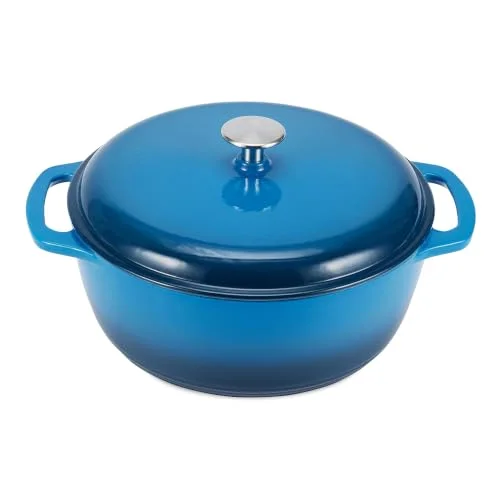
Amazon Basics Enameled Cast Iron Dutch Oven, 6-Quart, Blue

Dual handles, round body, no number in the title

6 quarts·Dual handles·"Oven Safe" in the title, no figure given

At $44.99, the listing title itself says "Oven Safe for Stews, Roasting & Baking" — a genuine claim, but one that stops short of a number. For everyday stews and roasts that's plenty of reassurance. For a 450°F-plus bread bake, it's exactly the kind of claim worth following up on before you rely on it.

Amazon Basics enameled cast iron Dutch oven, 6-quart, blue
Price
$44.99
Check price →
03Largest here

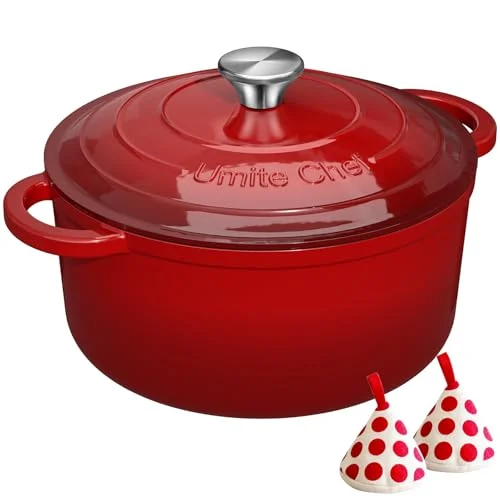
Umite Chef 7QT Enameled Cast Iron Dutch Oven with Lid & Cotton Potholders, Red

Built for bread baking and braising at 7 quarts

7 quarts·Cotton potholders included·No oven-safe figure published on file

At $55.99, this is the largest and most expensive of the three, listed for bread baking, braising and stews alike, with cotton potholders included for handling a hot lid. We have no oven-safe temperature figure on file for it, so the same rule applies: confirm the knob material before you run a 7-quart loaf through a 450°F-plus bake.

Umite Chef 7QT enameled cast iron Dutch oven with lid and cotton potholders, red
Price
$55.99
Check price →
Our method

How we compared

What we checked

Listings, titles and published specifications

We compared the current Amazon listings, product titles and published specifications for the Parmedu 5.5QT, the Amazon Basics 6-Quart and the Umite Chef 7QT, limiting every claim about oven-safe temperature, capacity and included accessories to what each listing actually states. Where a figure such as a specific oven-safe degree rating is not published for a given pot, we say so directly instead of estimating it from a similarly priced pot or a knob we haven't inspected ourselves.

What we didn’t do

We don’t run a testing lab

We did not put any of these three knobs into a hot oven to find their breaking point; a research-based comparison owns none of these pots and runs no physical trials on them, since doing that honestly would mean owning dozens of units and a thermocouple setup most kitchens don't have. We also have no star ratings or review counts for these specific listings, so none are reported here. What we can do, and did, is describe what cast iron, enamel and the common knob materials are generally known to tolerate, and flag exactly where each listing is specific versus silent. See more on the About page.

FAQ

Common questions

What temperature can a Dutch oven go in the oven?

Cast iron and the enamel coating on top of it both tolerate ordinary home-oven temperatures with plenty of room to spare — neither is the practical limit. The number printed on most listings is usually describing the lid knob, not the pot body, which is why two pots with identical iron can carry very different printed ceilings depending on what their knob is made of.

Can I bake bread at 450°F in an enameled Dutch oven?

Generally yes, as far as the iron and enamel are concerned — that heat range is well within what the pot body can take. The real question is the knob: phenolic and plastic knobs are where problems start at sustained 450°F-plus heat. If you bake bread hot and often, check what your knob is made of, or swap in a stainless replacement knob.

What if the listing doesn't give an oven-safe temperature?

Treat the silence as information rather than an oversight to ignore. Check the listing's Q&A section, look at product photos for whether the knob appears to be metal or molded resin, and if you still can't tell, ask the seller before pushing the pot past roughly 400°F. None of the three pots in this guide publish a specific figure, which is exactly the scenario this question covers.

Why do Dutch oven brands sell replacement knobs separately?

Because many pots ship with a plastic or phenolic knob rated below the cast-iron body around it, and a stainless-steel replacement knob removes that lower ceiling without the brand having to redesign the lid. It lets one lid serve both an everyday cook and a high-heat bread baker, at two different price points.

Keep reading

More from Best Dutch Ovens