Best Dutch Ovens
Roundup · Oval Enameled Cast Iron

The Best Oval Dutch Ovens for a Roast or a Whole Fish

An oval pot is not a round pot that someone stretched for variety. It is shaped around a different job: a whole fish, a pork loin, a rack of ribs, a leg of lamb laid flat instead of curled into a circle. It also sits awkwardly on the one thing nearly every American kitchen has — a round burner — which is the trade you are making the moment you buy one. We compared the published specifications and current prices of three 7-quart oval enameled Dutch ovens to work out what the shape actually buys, and where it costs you.

By Ilane Tall · Updated November 25, 2026 · Research-based.

Affiliate disclosure: we may earn a commission if you buy through the Amazon links on this page, at no extra cost to you.

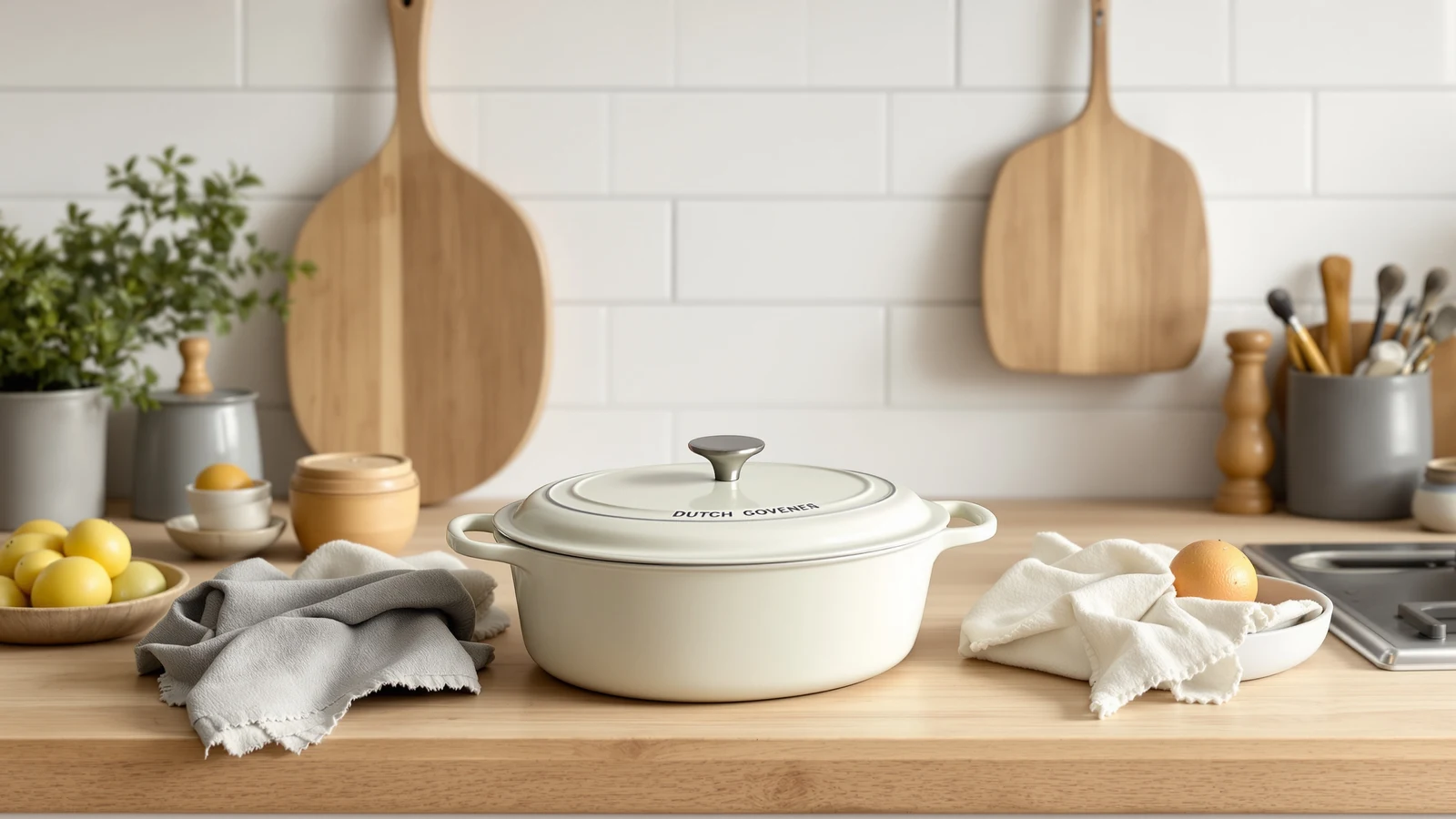
An oval enameled cast iron Dutch oven with its lid resting beside it on a kitchen counter
The actual difference

What an oval footprint actually fits that round doesn’t

Take a round Dutch oven and an oval one with the same stated capacity, and the oval pot is not simply a bigger circle. Volume is the same; the shape of the base is not. A round 7-quart pot is roughly as wide as it is long by definition — it has to be, to be round — while an oval 7-quart pot, like the three in this guide, stretches that same seven quarts along a longer axis and a narrower one. That changes what sits flat on the bottom of the pot. A whole fish, a pork loin, a rack of ribs laid on its side, a leg of lamb — all of these are longer than they are wide, and all of them either curl to fit a round interior or simply don’t fit without being cut down. An oval interior lets them lie flat, end to end, the way the cut is actually shaped.

This is also why oval is the traditional shape for a French-style braising pot in the first place, long before any of the three pots on this page existed. The format exists because a kitchen that regularly braises a whole joint of meat, rather than diced stew meat, needs a vessel shaped like the joint, not like a bowl. If your cooking is mostly soups, stews, chilis and bread — things that are liquid, diced, or round themselves — a round pot uses its interior space more efficiently and a wide, shallow round pot solves a related problem (surface area for browning, not length) without the stovetop trade-offs covered below. Oval earns its keep specifically on the subset of meals built around one long, intact cut.

None of the three pots here publish exact interior length-and-width dimensions in the specifications available to us, so we won’t invent a number of inches. What we can say plainly, because it follows from the geometry and not from any single listing, is that at an equal stated capacity an oval pot's long axis is longer than a round pot's diameter, and that gap is the entire reason to choose the shape.

The trade you’re making

Burner mismatch: where the heat goes on a round hob

Here is the part the marketing photos never show: almost every residential stove in the US has a round heating element, whether that’s a gas burner ring, an electric coil, or an induction zone. A round pot's base sits squarely over that circle, and heat moves up through the metal fairly evenly in every direction from the center. An oval pot's base does not match that circle. Set a 7-quart oval pot with a long axis stretched well past a standard burner's diameter onto that same round heat source, and the two ends of the pot — the narrow tips of the oval — sit outside or at the edge of the ring, getting noticeably less direct heat than the center of the pot does.

In practice, this means an oval pot on a stovetop needs more attention than a round one doing the same job: rotating the pot partway through a sear, expecting the ends to brown more slowly than the middle, or accepting that a sauce simmering in an oval pot on a round burner will reduce unevenly unless you stir more often. None of the three pots in this guide publish a specific statement about stovetop heat distribution, so we are describing the geometry of a round burner under an oval base, not a claim any of these three manufacturers makes about their own pot.

It is also the reason oval Dutch ovens lean so heavily on the oven rather than the stovetop for the long cooking stage of a recipe. An oven's heat surrounds the entire pot from every side, not from one circle underneath it, so the mismatch that matters on a burner mostly disappears once the pot goes in to braise. The practical pattern with all three pots here is the same one French ovens have always used: sear or brown on the stovetop, accepting the uneven heat for the few minutes that takes, then move the pot into the oven for the hours-long braise where the mismatch stops mattering.

What the shape is actually for

Searing a long cut, a fish, or a rack — lengthwise

Searing is about contact: the more of a cut's surface touches hot metal at once, the more even and complete the crust. A whole fish or a flat rack of ribs laid into a round 7-quart pot either has to curl against the curved wall, breaking contact along the sides, or simply doesn’t fit and gets cut into pieces that lose the "whole" presentation that was the point of cooking it that way. The same cut laid into an oval 7-quart pot — any of the three here, all built at that capacity — sits flat from end to end, with its full length in contact with the hot base at once.

This matters most for the specific list of cuts that are long rather than round in the first place: a whole trout or branzino, a pork tenderloin, a rack of lamb or ribs kept intact, a butterflied leg of lamb. All three pots in this guide are sold at 7 quarts, which is a reasonable working size for a whole fish up to a few pounds or a rack sized for a family meal — large enough to hold the cut flat with room for liquid or vegetables around it, without the excess volume of a much bigger pot. None of the three listings specify a maximum cut length the pot will hold, so when a specific fish or rack is near the largest sizes sold, checking the current listing's own photos and any buyer-supplied measurements before buying is the honest next step, not a guess from us.

The enamel interior does the rest of the work the same way it would in a round pot: it browns and builds fond exactly like the round enameled pots covered elsewhere on this site, because the chemistry of enamel-over-iron doesn’t change with the shape of the mold it was cast in. The NSIRONS pot in this guide specifically describes a non-stick enamel coating, which — if you’re comparing that claim against a standard enameled interior — is worth reading in more detail in our ceramic non-stick versus enameled cast iron comparison before assuming it behaves identically to the other two.

The space nobody measures before buying

The oven shelf space an oval pot actually asks for

A round pot's footprint is the same in every direction, so if it fits your oven at all, it fits regardless of which way you slide it in. An oval pot does not have that property. Its long axis has to clear the width of your oven cavity, and because the handles on all three pots in this guide extend out from the two narrow ends of the oval, the pot's full handle-to-handle length is longer than its body alone — which is the number that actually has to fit between your oven's side walls, not just the pot's printed capacity.

This is the specification that is easiest to overlook when buying online, because a product photo on a plain background gives no sense of scale next to your own oven rack. None of the three pots here publish an exact handle-to-handle length in the data available to us, so measure your own oven's interior width, front to back if your racks run that direction, before assuming a 7-quart oval pot slides in the way a round one would. If you regularly cook for a crowd and are choosing between a larger oval pot and simply going up a size in round, our guide to jumbo Dutch ovens for large-batch cooking covers the round side of that same shelf-space trade-off.

The upside of the same geometry: an oval pot's narrower width can leave more side-to-side room on the shelf next to it than a round pot of equal capacity would, which matters if you’re also running a second dish in the oven at the same time. The trade is simply length for width — you give up clearance in one direction to gain it in the other, and which one your oven has more of to spare is worth checking before you buy rather than after.

Side by side

The three, compared

PotBest forCapacityMade byNotablePriceGet it
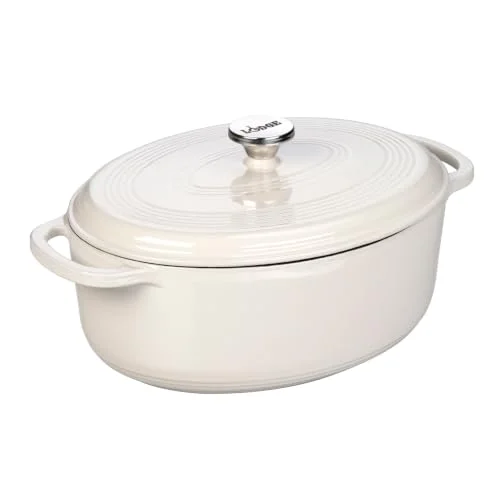
Lodge Enameled Oval Dutch Oven Long braises, heritage enamel 7 qt Lodge Oyster White, from a foundry casting iron since 1896 $83.99 Get it
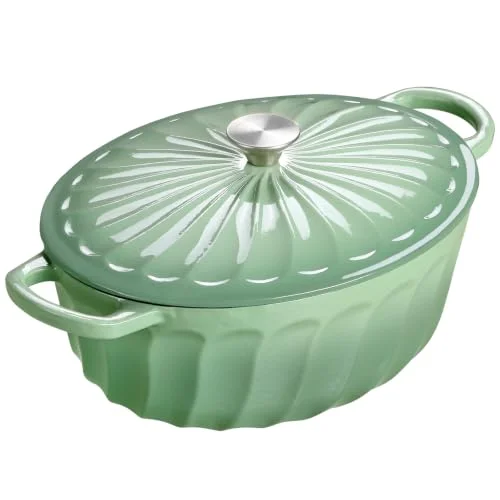
NSIRONS Enameled Oval Dutch Oven Dual handles, easy lift 7 qt NSIRONS Green, dual handles, non-stick enamel coating $56.99 Get it
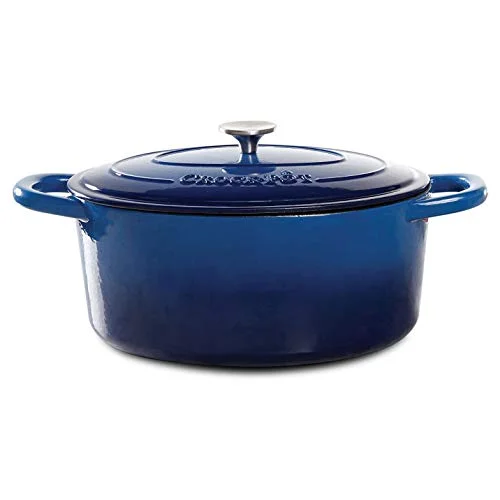
Crock-Pot Artisan Oval Dutch Oven Budget first oval pot 7 qt Crock-Pot Sapphire Blue, heavy-duty enameled cast iron $49.10 Get it
The picks

Our picks, and who each one is for

01Best overall

Lodge Enameled Cast Iron Oval Dutch Oven with Lid, 7 Quart, Oyster White

Best for long braises and the pot you expect to keep

7 quarts·Oval·Enameled cast iron·Oyster White

At $83.99, this is the one pot in this guide that comes with the same foundry pedigree as the round pick we recommend as the best overall Dutch oven on the rest of this site: Lodge has cast iron in Tennessee since 1896. The oval shape here does the specific job oval exists for — a whole fish, a rack, a loin laid flat — while carrying the brand confidence that goes with buying from a company that stakes its name on how its enamel holds up. Whether that history is worth the roughly $34 premium over the Crock-Pot below is the same question we work through, brand by brand, in our guide to named-brand Dutch ovens and the markup.

If you already know you’ll use an oval pot regularly, buy the one with the longest track record for enamel that actually lasts.

Lodge enameled cast iron oval Dutch oven, 7 quart, oyster white
Price
$83.99
Check price →
02Best for lifting

NSIRONS Enameled Dutch Oven Pot with Lid, 7 QT, Green

Best for easy handling once the pot is full

7 quarts·Oval·Dual handles·Non-stick enamel coating

$56.99 for an oval pot that specifically names dual handles and a non-stick enamel coating in its own listing — both genuinely useful on a pot whose long, narrow shape already makes it a less balanced lift than a round pot of the same capacity once it’s full of liquid and a whole fish or rack. A non-stick enamel coating is a different claim from standard enamel, and worth reading closely rather than assuming it behaves the same way; our comparison of ceramic non-stick versus enameled cast iron covers exactly what changes.

A sensible middle price, with the one feature — handles built for an awkward shape — that an oval pot specifically needs.

NSIRONS enameled oval Dutch oven, 7 quart, green, with dual handles
Price
$56.99
Check price →
03Best value

Crock-Pot Artisan 7-Quart Oval Enameled Cast Iron Dutch Oven, Sapphire Blue

Best for finding out if oval is a shape you’ll actually use

7 quarts·Oval·Enameled cast iron·Sapphire Blue

$49.10 is the lowest price among the three oval pots we compared, from a brand better known for slow cookers putting its name on heavy-duty enameled cast iron. For a shape most households are buying as a second, specialty pot rather than a daily driver, that lower price matters: it is the cheapest honest way to learn whether a long fish or a flat rack actually comes up often enough in your cooking to justify owning the shape at all, before spending more on the Lodge or the NSIRONS above.

Buy this one first if you’re not yet sure how often you’ll reach for an oval pot specifically.

Crock-Pot Artisan oval enameled cast iron Dutch oven, 7 quart, sapphire blue
Price
$49.10
Check price →
The honest recommendation

Buying oval as a second pot, not a first

If you own exactly one Dutch oven, it should almost always be round. Round pots handle the entire everyday range — soup, chili, stew, a braised chicken cut into pieces, a loaf of sourdough bread — with no downside at all, because none of those jobs care about a long axis, and round pots don’t carry the burner mismatch covered above. Oval is a specialty shape built around one specific category of cooking: an intact, elongated cut you want to keep whole through the sear and the braise, rather than cut up to fit a round interior.

That specialty makes oval a genuinely good second pot and a questionable first one. A household that already owns a round Dutch oven and finds itself buying a whole fish, a rack of ribs, or a leg of lamb to braise whole a few times a year has a clear, specific reason to add an oval pot to the cupboard. A household buying its very first Dutch oven, with no track record yet of cooking that kind of cut, is better served starting round — both because round covers more weeknight meals and because it sidesteps the stovetop heat-distribution question entirely while you’re still learning what you’ll actually use the pot for.

There is also a material question worth asking before adding a second pot of any shape: if what you actually want out of a second pot is lower cost and flame tolerance rather than a different footprint, a bare cast iron pot with no enamel solves a different problem than oval does, and the two reasons for owning a second pot are easy to conflate if you haven’t pinned down which gap you’re actually filling. Oval answers "I need to cook something long and intact." Bare iron answers "I need a pot that can take a flame directly." They are not substitutes for each other, and buying the wrong one to solve the other problem is the most common mistake we see in this category.

All three pots in this guide are sized at 7 quarts, which is a sensible single size to start with if oval earns a place in your kitchen at all — large enough for a whole fish or a family-sized rack, without the extra bulk and oven-shelf length of going larger before you know you’ll use the shape regularly.

Our method

How we compared

What we did

Specs and current prices, cross-checked

We compared the published specifications and current Amazon prices for the Crock-Pot Artisan 7-Quart Oval, the NSIRONS 7 QT Oval and the Lodge Enameled Oval 7 Quart, limiting every claim in this article to what each listing actually states — capacity, shape, included lid, color, and any feature the manufacturer names outright such as dual handles or a non-stick enamel coating. Where a specification such as exact interior length or handle-to-handle width is not published for a given pot, we say so plainly rather than estimate it.

What we didn’t

We don’t run a testing lab

We do not physically test these pots, we do not own them, and we have no star ratings or review counts for these specific listings to report, so we don’t publish any. How an oval pot actually sits on your specific stovetop, or whether a given fish fits its interior, are questions we answer with the geometry and the published specs, not with an invented score from a pot we don’t own. See more about our approach on the About page.

FAQ

Common questions

Is an oval Dutch oven better than a round one?

Not for most cooking. Round pots handle soup, stew, chili and bread with no downside and no stovetop heat-distribution issue. Oval earns its place specifically for a whole fish, a rack of ribs, or a loin you want to cook lying flat and intact — a job round pots genuinely can’t do as well. For a household's only Dutch oven, round is almost always the better first choice.

Does an oval Dutch oven work on a round stovetop burner?

It works, but not as evenly as a round pot does. A round burner heats a round pot's base fairly evenly from the center outward; under an oval base, the two narrow ends sit outside or at the edge of that circle and get less direct heat, which is why oval pots are typically seared briefly on the stovetop and then moved into the oven, where heat surrounds the whole pot, for the long cooking stage.

What size oval Dutch oven fits a whole fish or a rack of ribs?

All three pots compared in this guide are 7 quarts, which comfortably holds a whole fish up to a few pounds or a family-sized rack with room for liquid or vegetables around it. None of the three listings publish an exact interior length, so for a particularly large cut, check the current listing's own photos and any buyer-supplied measurements before assuming it will fit.

Should my first Dutch oven be oval or round?

Round, for almost everyone. Oval is a specialty shape for one specific category of cooking — long, intact cuts — and most weeknight cooking doesn’t call for that. Buy oval as a second pot once you already know, from experience, that you regularly cook something long enough to need the shape.

Keep reading

More from Best Dutch Ovens