Best Dutch Ovens
Buying Guide · Wide vs. Standard Dutch Ovens

Wide, Shallow Dutch Ovens: What a 3.5-Quart “Wide” Pot Is Actually For

Le Creuset sells a 3.5-quart Dutch oven in two genuinely different shapes, not just two colors. The Round Wide Dutch Oven trades depth for diameter — a lower, broader bowl built for a different set of recipes than the brand’s standard, deeper cocotte. It is not a smaller pot. It is a pot that does a smaller list of jobs extremely well, and a larger list of jobs not at all. We compared the published shapes, capacities and prices of Le Creuset’s wide 3.5-quart line against its standard-depth cocotte to work out exactly where that line sits.

By Ilane Tall · Updated November 19, 2026 · Research-based.

Affiliate disclosure: we may earn a commission if you buy through the Amazon links on this page, at no extra cost to you.

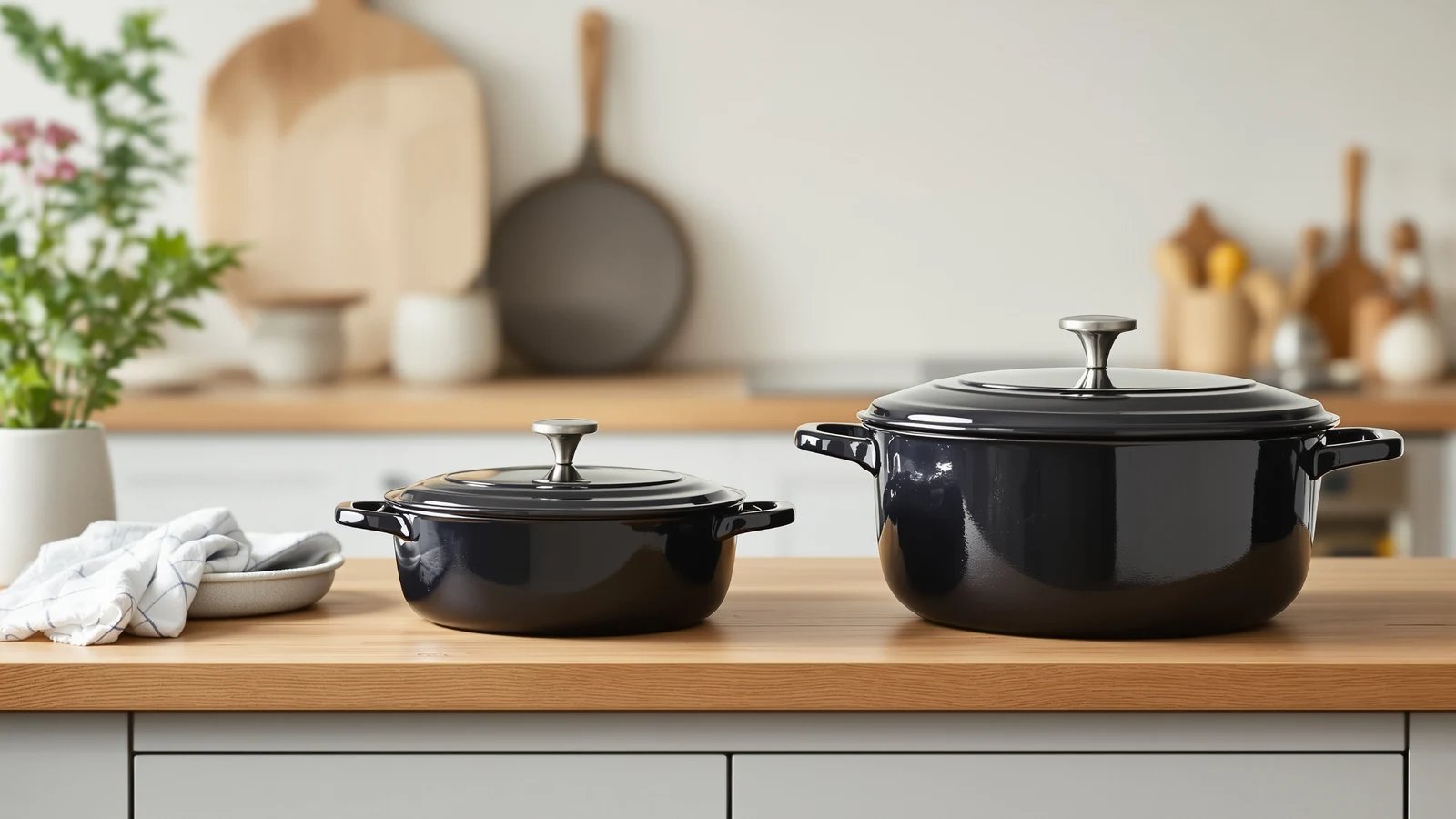
A wide, shallow enameled cast iron Dutch oven on a stovetop beside a taller, standard-depth cocotte
The number that gets skipped

Capacity is not the only number that matters

Quart capacity is the figure every Dutch oven listing leads with, and it is the figure that tells you the least about what a pot is actually like to cook in. The same 3.5 quarts of volume can be built two different ways: as a narrower bowl with tall walls, or as a wider bowl with low walls. Both hold the same amount of liquid to the brim. They behave nothing alike once there is food in them, because the ratio between a pot’s diameter and its depth decides how much of that food is ever in direct contact with the hot base, and how much surface area is open to the air under a lifted lid.

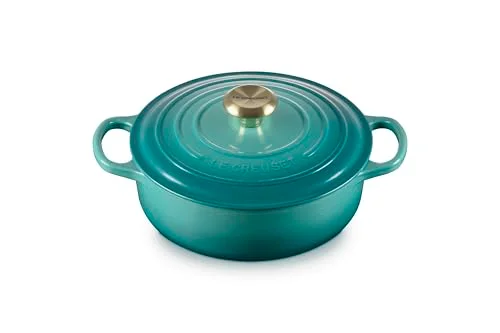
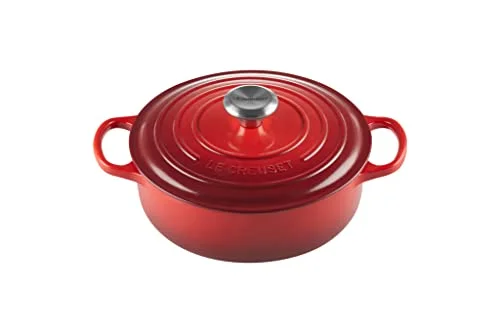
Le Creuset makes this comparison easy to see because it sells both shapes at the same capacity, under the same brand. The Round Wide Dutch Oven, 3.5 qt., in Riviera and the same pot in Cerise are both built on a noticeably wider base than a standard 3.5-quart round cocotte would use for the identical volume, which is the entire point of the “Wide” line within Le Creuset’s catalog — it is a separate shape, not a separate size tier. The Cerise listing confirms a 24cm diameter for this specific colorway; the Riviera listing we have on file does not publish that measurement, so treat the two as the same wide silhouette in different finishes and confirm the exact diameter on the current listing before you buy, rather than assuming it from the sibling color.

This is exactly the trap that the same quart number can hide across a whole category: two pots can share a capacity figure and still be shaped for opposite jobs. A 3.5-quart wide pot and a 3.5-quart standard pot will both say “3.5 qt” on the box. Only one of them is built to sear four chicken thighs in a single layer without crowding them.

What it is for

What a shallow profile actually suits

Browning needs direct contact with a hot surface, and a wide pot gives you more hot surface per quart of capacity than a deep one does. That single fact explains almost everything the wide shape is good at. Flat cuts — chicken thighs, pork chops, a butterflied leg of lamb, short ribs trimmed thin enough to lie down rather than stand up — brown properly only when they are not stacked or crowded against each other. In a narrow, deep pot, four thighs either overlap or get pushed up the curved sides where the heat is weaker; in a wide, shallow pot at the same 3.5-quart capacity, there is simply more flat base to put them on, so more of the meat is actually searing instead of steaming against its neighbor.

Risotto is the other obvious case, and it is less about searing and more about evaporation. A proper risotto needs the liquid to reduce steadily as you add stock in stages, and that reduction happens at the surface. A wide, shallow pot gives you more surface area exposed to the air relative to the volume of rice and liquid inside it, so the dish thickens at a pace you can actually control standing at the stove, rather than staying soupy far longer than the recipe implies.

A gratin is the clearest case of all, because it is finished uncovered, often under a broiler, specifically to brown the top. A wide pot keeps more of the dish’s surface close to that heat source — a Dutch oven with a wide, shallow bowl is standing in for a gratin dish while still being enameled cast iron, with the heat retention that implies once it comes off the heat.

What it is not for

What it cannot do: a standing roast or a tall braise

Everything that makes the wide shape good at searing and reducing makes it a poor fit for anything that needs vertical room. A standing roast — a whole chicken, a rolled pork shoulder, a bone-in prime rib set upright — needs the lid to close over it with clearance, so the steam that collects under a Dutch oven lid can circulate around the meat rather than sit against the top of it. A shallow bowl runs out of that clearance fast: either the lid does not seat properly over a tall roast, or it seats right against the top of the meat, leaving the upper surface exposed to direct, dry oven heat instead of the moist environment a covered roast is supposed to get.

A tall braise has the same problem from a different angle. Braising a thick chuck roast, or stacking short ribs in two layers submerged in liquid, depends on the liquid line sitting above the meat for most of the cook. In a wide, shallow pot, the same volume of braising liquid spreads out thinner across the larger base, so the liquid line sits lower relative to a tall cut than it would in a narrow pot holding the same number of quarts. You end up adding more liquid than the recipe calls for just to get coverage, or accepting that the top of the meat dries out above the liquid line partway through the cook. If what you actually need is the vertical and overall room for a whole turkey, a tall brisket, or a double batch for a crowd, that is squarely the territory of the jumbo end of the category, not the wide end of it.

There is a quieter safety angle worth a direct mention: a wide, shallow pot holds a noticeably shallower pool of oil than a deep pot at the same quart figure, which changes how it behaves if you ever use it for frying rather than braising. Less oil depth means less margin before the oil line gets uncomfortably close to the rim as food is added. We cover that trade-off in more detail in our look at deep frying in an enameled Dutch oven — it applies more directly to a wide pot than to a standard one.

Side by side

The wide 3.5-quart vs. the brand’s own standard-depth cocotte

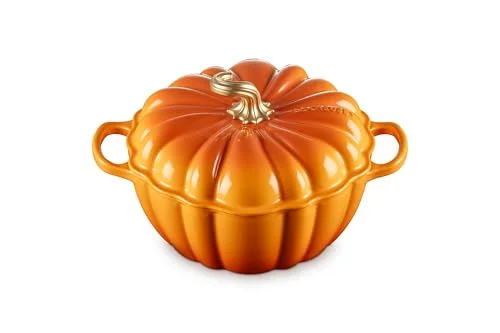
Le Creuset’s catalog gives us a direct way to see this shape difference inside one brand, though the specific standard-depth pot available for this comparison is a seasonal one: the Signature Pumpkin Cocotte, a 4-quart round cocotte cast with pumpkin-style ridges and a stem-shaped knob, built on the brand’s standard, deeper cocotte proportions rather than the wide line’s lower, broader bowl. It holds slightly more than the wide 3.5-quart pot, yet nobody would reach for it to brown four chicken thighs in a single layer, because its proportions follow the standard cocotte silhouette, not the wide one.

Be clear-eyed about the price gap in the table below, too: at $394.95, the pumpkin cocotte costs substantially more than either $219.95 wide pot, and that premium is not a clean lesson in “standard-depth costs more than wide.” A meaningful part of it is the seasonal, decoratively molded pumpkin shape, a specialty casting rather than Le Creuset’s plain core Signature round cocotte. For a true apples-to-apples price comparison, check the brand’s core round Signature lineup directly rather than its seasonal pieces.

PotProfileCapacityMade byPriceGet it
Le Creuset Round Wide Dutch Oven, 3.5 qt., Riviera Wide, shallow 3.5 qt Le Creuset $219.95 Get it
Le Creuset Round Wide Dutch Oven, 3.5 qt., Cerise (24cm) Wide, shallow 3.5 qt Le Creuset $219.95 Get it
Le Creuset Signature Pumpkin Cocotte, 4 qt., Persimmon Standard-depth (seasonal pumpkin shape) 4 qt Le Creuset $394.95 Get it
Before it reaches the oven

Stovetop footprint and burner match

A wide, shallow pot asks more of your stovetop real estate than a standard one at the same capacity, because the same volume is spread across a larger base diameter. That matters in two ways before the pot ever reaches the oven. First, footprint: a wider base takes up more counter and more of a burner grate, and on a crowded range it can crowd a neighboring burner the way a narrower, taller pot of the same capacity would not. Second, and more about how the food cooks, is heat match: most home ranges' large burners run roughly 8 to 9 inches across. If a wide pot's base extends well beyond the ring the burner actually heats, the center of the base runs hotter than the rim — a real problem for something like risotto that depends on even heat across the whole bottom while you stir.

None of this is specific to Le Creuset's wide line; it is the physical consequence of trading depth for diameter, on any brand. Check the actual base measurement against your largest burner and your cabinet or shelf clearance before buying, rather than assuming a wide pot will behave the way it did in a product photo shot on a professional range. We go through exactly how to take those measurements, including where people get caught out with ovens, sinks and dishwasher racks, in our guide to measuring before you order.

The options

Our picks, and who each one is for

01Wide, in blue

Le Creuset Round Wide Dutch Oven, 3.5 qt., Riviera

Best if you want the wide shape and prefer a blue finish

3.5 quarts·Wide, shallow profile·Riviera colorway·Le Creuset

This is the wide shape described throughout this guide: a lower, broader bowl built for searing flat cuts in a single layer, reducing a risotto evenly, or finishing a gratin close to the heat. The listing we have on file does not publish an exact base diameter for the Riviera finish specifically, so confirm that measurement against your largest burner before ordering if an exact fit matters to you. At $219.95, the price is identical to the Cerise colorway below — this is purely a choice of finish, not a different pot underneath it.

Buy this for the jobs that reward surface area. It will not replace a tall braising pot, and it is not trying to.

Le Creuset Round Wide Dutch Oven, 3.5 quart, Riviera
Price
$219.95
Check price →
02Wide, in red

Le Creuset Round Wide Dutch Oven, 3.5 qt., Cerise

Best if you want a confirmed diameter before you buy

3.5 quarts·24cm diameter·Wide, shallow profile·Le Creuset

The same wide 3.5-quart shape as the Riviera above, in a red Cerise finish, with one useful difference on paper: this specific listing confirms a 24cm diameter. If you are trying to match this pot to a particular burner size or a specific shelf width, that published measurement makes this the easier of the two colorways to check against your own kitchen before you commit $219.95 to it.

Same job as the Riviera. Pick the color you actually want to see on your stovetop every week.

Le Creuset Round Wide Dutch Oven, 3.5 quart, Cerise, 24cm
Price
$219.95
Check price →
03If you actually want standard-depth

Le Creuset Signature Pumpkin Cocotte, 4 qt., Persimmon

Best if the wide shape is wrong for what you cook

4 quarts·Standard-depth cocotte·Seasonal pumpkin shape·Le Creuset

Included as the contrast, not a swap-in at the same price. This is a 4-quart cocotte on Le Creuset’s standard, deeper proportions, decoratively cast with pumpkin ridges and a stem-shaped knob, at $394.95. It can take a standing roast or hold a tall braise submerged the way the wide 3.5-quart pot cannot. The price reflects the seasonal, decorative casting as much as the depth — for a plain standard-depth round cocotte rather than this seasonal piece, check Le Creuset’s core Signature lineup directly.

This is what you reach for when the recipe needs height, not surface area.

Le Creuset Signature Pumpkin Cocotte, 4 quart, Persimmon
Price
$394.95
Check price →
The honest recommendation

Buy the wide shape as a second pot, not a first

If you own exactly one Dutch oven, make it a standard-depth pot. A tall, narrow pot can always be used shallow — add less liquid, fill it halfway, and it will still brown a cut of meat passably, even if it is not the ideal tool for the job. A wide, shallow pot cannot be used tall; there is no amount of patience that gives it the vertical clearance to close its lid over a standing roast or hold a submerged braise. A standard-depth cocotte covers soups, stews, bread, pot roasts and braises — the bulk of what most households actually cook in a Dutch oven across a year — in a way a wide pot structurally cannot.

The wide shape earns its place once you already own that standard pot and know, from repeated use, that you regularly cook the handful of dishes it is specifically good at: flat cuts browned in a single layer, risotto, gratins finished uncovered. At that point it is a legitimate, specialized second vessel that replaces reaching for a separate sauté pan or gratin dish, with the heat retention of enameled cast iron built in. Buying it first risks spending $219.95 on a pot that cannot do the one thing most new owners actually want first — a whole roast chicken or a long Sunday braise. We go through the broader math of owning one versatile pot versus two specialized ones in our look at Dutch oven cost per year.

Our method

How we compared

What we did

Published shapes, capacities and current prices

We compared the published product names, capacities, listed size variants and current Amazon prices for Le Creuset's Round Wide Dutch Oven at 3.5 quarts, in both the Riviera and Cerise colorways, against the brand's Signature Pumpkin Cocotte at 4 quarts. Where a listing specifies a measurement — the Cerise colorway's 24cm diameter — we reported it directly. Where it does not, such as the Riviera's exact base diameter, we said so rather than estimate it from a sibling product.

What we didn’t

We don’t run a testing lab

We do not physically test these pots, we do not own them, and we have no star ratings or review counts for these specific listings, so we don’t publish any. What the wide shape is good and bad at follows directly from its published proportions and basic, well-established cooking physics — surface area, evaporation, and vertical clearance — not from a brief trial run that nobody, including us, could meaningfully complete in a few weeks with a cast-iron pot. See more about our approach on the About page.

FAQ

Common questions

Is a wide Dutch oven just a smaller version of a regular one?

No. A wide, shallow Dutch oven at 3.5 quarts can hold a very similar or even larger volume than some standard round pots — the difference is not size, it is shape. The same quart figure is spread across a wider base and lower walls instead of a narrower base and taller walls, which changes what the pot is good at rather than how much it holds.

Can I braise a whole chicken in a wide, shallow Dutch oven?

Not well. A whole chicken needs vertical clearance for the lid to seat properly above it so trapped steam can circulate around the bird. A shallow pot often cannot close over a standing chicken at all, or closes right against the top of it, leaving that top surface exposed to dry oven heat instead of the moist environment a covered braise is supposed to provide. A standard-depth cocotte is the right shape for this job.

Why does Le Creuset's pumpkin cocotte cost so much more than the wide 3.5-quart pot?

Mostly because it is a seasonal, decoratively cast piece, not because standard depth is inherently more expensive than a wide profile. At $394.95 against $219.95 for the wide pots, a meaningful share of that gap reflects the pumpkin-ridge casting and stem-shaped knob rather than the capacity or the depth alone. A plain standard-depth round cocotte from Le Creuset's core Signature lineup would be the fairer price comparison to the wide shape, not this seasonal piece.

What size burner does a wide Dutch oven need?

Check the pot's actual base diameter against your largest burner rather than assume. Most home ranges' large burners run roughly 8 to 9 inches across; a wide pot with a base noticeably larger than that will heat unevenly, running hotter in the center than at the rim, which matters for anything that needs even heat across the whole base, like risotto.

Keep reading

More from Best Dutch Ovens