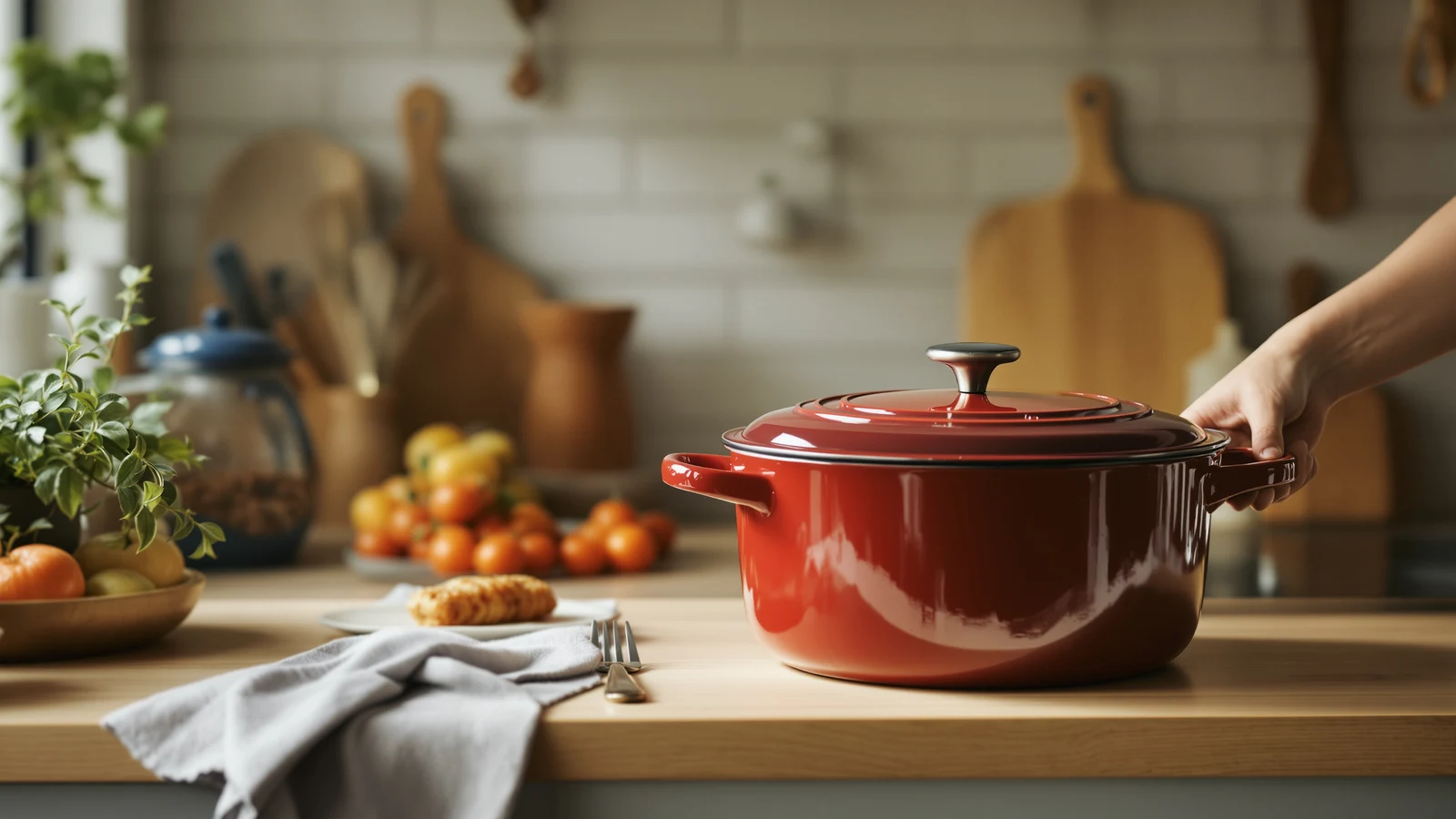
A single braise asks for more than one lift, and the sequence matters. The pot starts on the stovetop, often at the back burner, where it gets seared and deglazed. It then has to move, full, into the oven — frequently a shelf at waist height or lower, which means bending at the same time as lifting, the exact combination physical therapists tend to flag as the riskiest way to move a heavy, hot object. After an hour or several, it comes back out, full and hotter than it went in, onto a trivet or a folded towel on the counter. If you are serving directly from the pot — which is most of the appeal of owning one — it then makes a third trip to the table, again full, again hot, again requiring both hands in mitts that limit grip and depth perception at the same time.
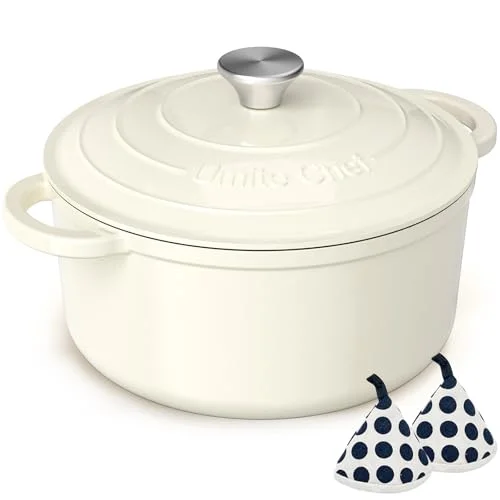
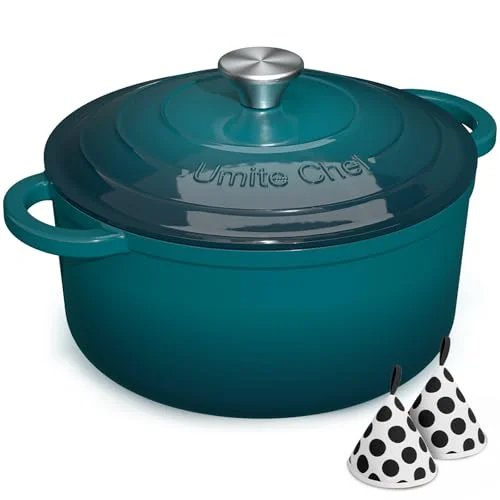
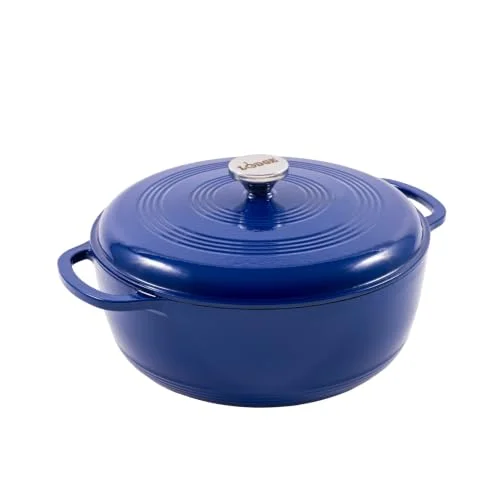
Each of those three transfers happens with the pot at or near its heaviest point: full of food, at serving temperature, with two handles that need to be gripped symmetrically and squarely for the carry to be stable. A pot that leans even slightly to one side mid-carry — because a handle was grabbed off-center, or because the liquid inside shifted — puts a sudden, uneven load on one wrist or one shoulder rather than splitting it evenly, which is a meaningfully different kind of strain than simply holding a static weight. This is also where the overall shape of the pot plays a quiet role: a wider, shallower profile keeps the center of mass lower and closer to your body during the carry than a tall, narrow one, even at an identical quart capacity.
The practical habit that actually helps here is simple and has nothing to do with which pot you buy: always use two full oven mitts for the final carry, grip both handles at the same time rather than one, and set the destination surface — a trivet, a towel, the table itself — in place and within easy reach before you lift the pot out of the oven, not after. The lift is unavoidable. Doing it in a straight line, over the shortest possible distance, with both hands committed at once, is the part you control.