Best Dutch Ovens
Roundup · Gift Guide

The Best Dutch Ovens to Give as a Gift

Cookware is a famously risky gift. A Dutch oven is the exception, because it is one of the only kitchen items that gets heavier use the longer someone owns it — a loaf, a stew, a braise, on repeat for decades, not a gadget that gets tried twice and shelved. The risk is not the category. It is picking the wrong one for a kitchen you have not seen.

By Ilane Tall · Updated October 22, 2026 · Research-based.

Affiliate disclosure: we may earn a commission if you buy through the Amazon links on this page, at no extra cost to you.

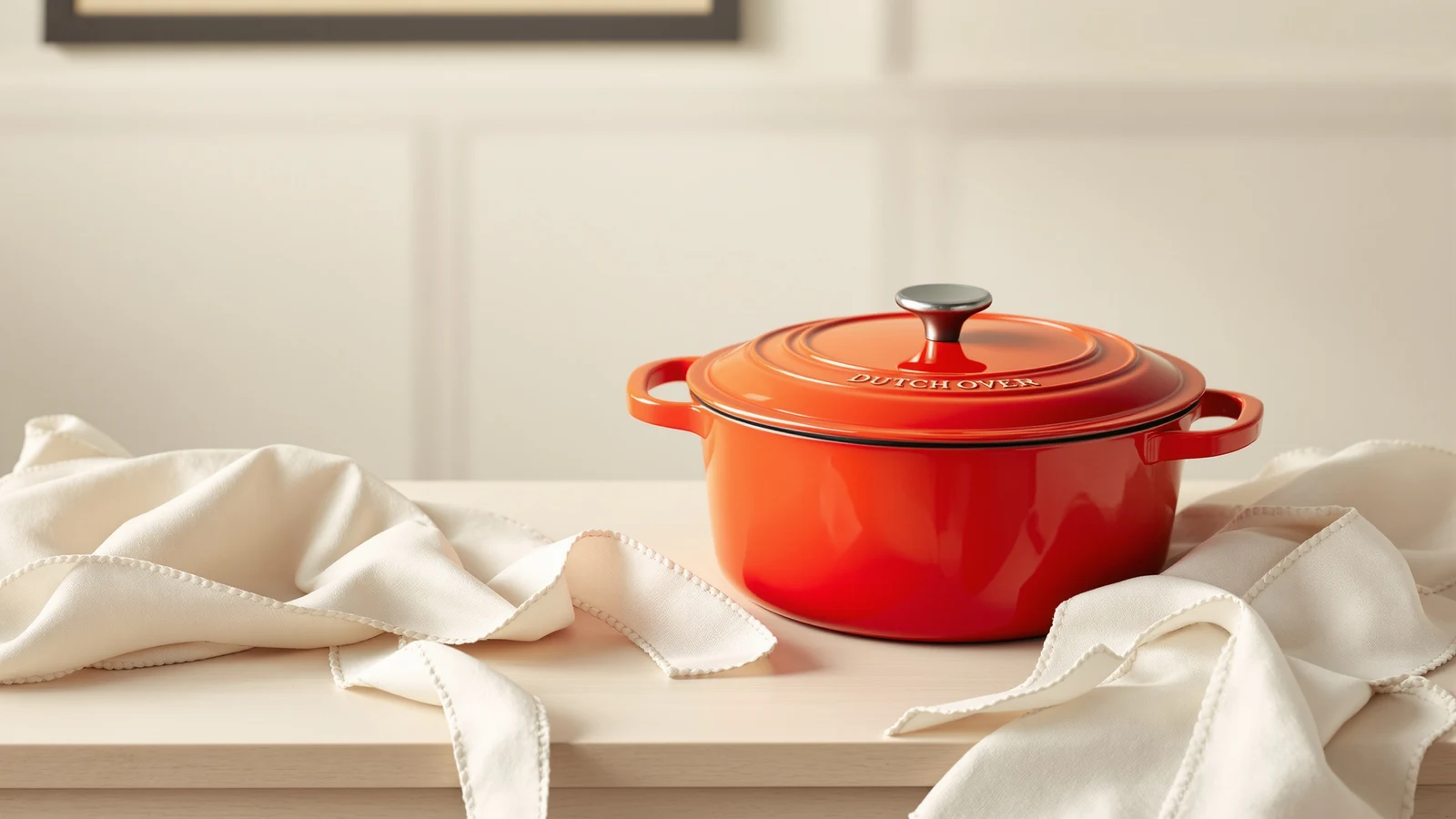
An enameled cast iron Dutch oven wrapped with a ribbon as a gift on a kitchen counter
Why this category

Cookware is a risky gift. This is the exception.

Most kitchen gifts fail quietly. An air fryer gets used for a month and then lives on top of the fridge. A single-purpose gadget — an egg cooker, a panini press — solves a problem the recipient did not know they had, and solving it turns out not to matter much. The failure mode for cookware specifically is usually one of two things: it duplicates something they already own, or it demands a skill or a ritual they were never going to adopt. Bare cast iron is the classic version of the second problem — a beautiful, honest pan that needs seasoning, careful drying, and a wary relationship with tomato sauce, which is exactly the kind of maintenance a gift recipient did not sign up for.

An enameled Dutch oven avoids both failure modes. It does not duplicate anything most households already own — a heavy, lidded, oven-safe pot is a genuine gap in most kitchens, including kitchens that already have a full set of nonstick pans. And it demands nothing. The enamel means there is no seasoning, no rust risk, no acidic-food restriction. You open the box, wash it once, and it behaves like a mature piece of cookware on day one. That is the entire case for giving one: it is useful immediately, it does not ask anything of the person who receives it, and it keeps being useful for a braise, a stew, a loaf of bread, or a pot of rice years after a trendier gift would have been forgotten.

The part that actually carries risk is not the category — it is the specific decisions a gift buyer has to make without the one piece of information a person shopping for themselves always has: what their own kitchen looks like. You do not know their stovetop, their cabinet space, their grip strength, or whether their countertop is sage green or charcoal. Three decisions determine whether a Dutch oven gift gets used weekly for the next twenty years or gets quietly re-gifted: size, color, and weight. Get those three right and the rest of the purchase takes care of itself.

Decision one

Six quarts: the safe size for someone else's kitchen

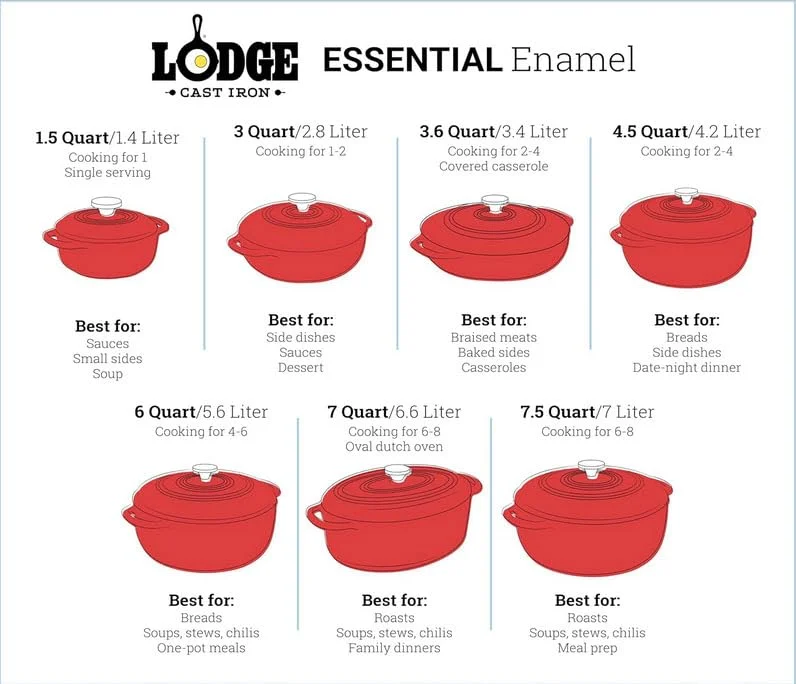
Capacity is the single decision most likely to go wrong when you are buying for someone else, because the right size depends on how many people they usually cook for — information a gift buyer rarely has with confidence. Our full sizing guide breaks this down in more detail, but the short version for gift-buying is simple: six quarts is the size that works across the widest range of households, which makes it the safest default when you are guessing. It handles a whole roasting chicken, a loaf of sourdough, or a stew for a family of four to six, and it still fits on a standard oven shelf with room to spare — something a seven-quart pot cannot promise in every kitchen.

The temptation when buying a gift is to go larger, on the theory that more capacity reads as more generous. Resist it. A pot sized for seven quarts and up is the right tool for someone who already knows they regularly cook for a crowd, but it is a poor guess for someone whose household size you are not certain of — it is heavier empty, it takes up more cabinet space, and a couple cooking for two ends up using a third of its capacity most nights. A smaller pot, in the five to five-and-a-half-quart range, is the better choice specifically when you know the recipient lives alone or as a couple, or when you know the gift is aimed at someone who bakes more than they braise.

If you genuinely have no information about household size, six quarts is the answer that is wrong the least often. It is the size every major enameled cast-iron line treats as its flagship for exactly this reason: it is the capacity that suits a default household, not an edge case in either direction.

Decision two

Colour, and the kitchen you have not seen

Enamel is the reason a Dutch oven comes in color at all — it is glass fused to the iron, and glass takes pigment, where bare cast iron is permanently the color of iron. That makes color a real decision for a gift buyer in a way it simply is not for most cookware, and it is also where buying for someone else gets genuinely harder than buying for yourself: you know your own counters, your own cabinets, your own taste. You very likely do not know theirs.

The safe choices are the ones that read as neutral in almost any kitchen: white, cream, and oyster tones sit comfortably whether the counters are white quartz, butcher block, or dark soapstone, and they photograph well whether the pot lives on the stovetop as a display piece or gets put away in a cabinet between uses. A saturated color — a deep flame red, a bright teal — is a stronger style statement, and it is the right call only when you already know the recipient's kitchen leans toward bold color, or when you know they specifically collect a particular shade. Absent that information, a neutral finish is the choice that will not clash with a kitchen you have never been inside.

This is also a place where it pays to read the actual listing rather than assume. Not every finish option is available in every size on every pot, and a color that looks right in a thumbnail can run slightly warmer or cooler in person depending on the lighting in a product photo. If the person has a registry, a wish list, or has ever mentioned their kitchen's palette in passing, that beats any general rule. If they have not, go neutral.

Decision three

Weight, and who you are buying for

Cast iron is heavy by design — that mass is exactly what gives it the slow, even heat retention a Dutch oven is bought for in the first place. But the mass does not disappear once the pot is full of stew and coming out of a 400-degree oven in thick mitts. This is the specification gift buyers overlook most often, because it rarely shows up in a product photo and almost never shows up in the marketing copy, yet it is the detail that decides whether the gift gets used weekly or gets quietly parked on a low shelf because lifting it full feels like a two-person job.

Think concretely about who will actually be lifting this pot, and how often. A six-quart pot, full, is a substantial weight for anyone; a seven-quart or larger pot, full, is genuinely heavy, and we would not recommend buying into that size range as a gift unless you already know the recipient cooks in volume regularly and is comfortable handling that mass. If you are buying for an older relative, someone with limited grip strength, or simply someone who has never owned cast iron and is finding out whether they like it, a smaller, lighter pot in the five-to-six-quart range is the kinder and more usable choice — it does the job without turning every dinner into a two-handed event.

Handle size matters here too, for the same reason it matters when buying for yourself: wider, more generously spaced handles are easier and safer to grip in oven mitts than small, tight ones, regardless of how much the pot weighs. Where a listing describes its handles specifically, that is worth reading before you buy. Where it does not, assume an average grip and buy the lighter size when you are unsure.

Side by side

The picks, compared

PotBest as a gift forCapacityMade byNotablePriceGet it
CAROTE 5QT Floral A first pot, or a tight budget 5 qt CAROTE Floral enamel pattern $42.99 Get it
Lodge Essential Enamel 6 Quart Most people, most kitchens 6 qt Lodge Oyster White, no seasoning $69.99 Get it
Le Creuset Round, Flame A milestone gift, kept for decades 5.5 qt Le Creuset Flame enamel, light interior $349.99 Get it
By budget

The picks, by budget

01Under $50

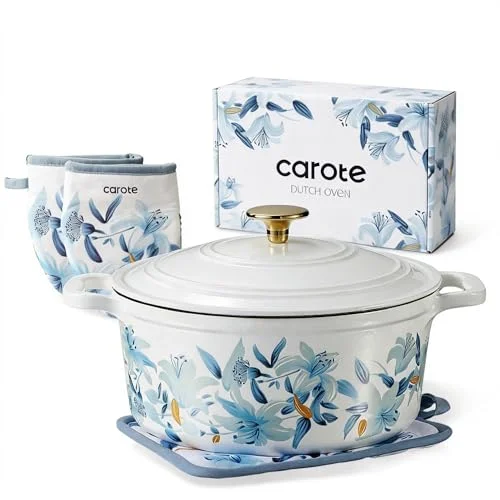
CAROTE 5QT Enameled Floral Cast Iron Dutch Oven Pot with Lid

Best for a first pot, or a gift under fifty dollars

5 quarts·Enameled cast iron·Floral pattern·$42.99

At five quarts, this is a size suited to a couple or a small household rather than a family of six, which makes it a sensible choice when you know the recipient cooks for one or two people, or when you are buying for someone finding out whether they will use a Dutch oven at all before anyone invests more. The floral enamel pattern gives it a decorative quality that a plain solid color does not, which can be exactly the point for a gift meant to be noticed on a stovetop rather than tucked into a cabinet. Lighter than a six-quart pot when full, it is also the kinder choice for a recipient you suspect has limited grip strength.

A genuine enameled cast-iron pot, at a price where getting the color wrong is not a costly mistake.

CAROTE 5QT enameled floral cast iron Dutch oven
Price
$42.99
Check price →
02The safe default

Lodge Essential Enamel Cast Iron Dutch Oven, 6 Quart, Oyster White

Best for most people, most kitchens

6 quarts·Oyster White enamel·No seasoning·$69.99

This is the pick to reach for when you genuinely do not know the recipient's household size or kitchen palette, which is the exact situation most gift buyers are in. Six quarts is the capacity that suits a default household — a whole chicken, a loaf, a stew for four to six — without being the heavy, oversized pot that only makes sense for someone who already cooks in volume. Oyster White is about as neutral a finish as enameled cast iron comes in, sitting comfortably against almost any countertop or cabinet color. Lodge has cast iron in Tennessee since 1896, which gives the gift a provenance story worth mentioning in a card, without the price tag of the French brands.

The pick for when you have to guess, because it is built to be right across the widest range of guesses.

Lodge Essential Enamel Dutch oven, 6 quart, oyster white
Price
$69.99
Check price →
03The milestone gift

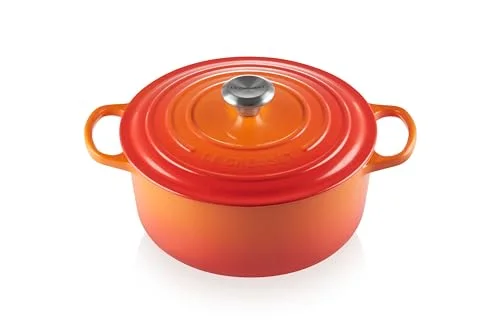
Le Creuset Enameled Cast Iron Round Dutch Oven, 5.5 qt., Flame

Best for a wedding, housewarming, or retirement gift meant to last decades

5.5 quarts·Flame enamel·Light interior·$349.99

This is the gift that reads as an event rather than an errand — the pot most people recognize on sight, and the one Le Creuset states is built to resist dulling, staining, chipping and cracking over years of use, with a light-colored interior that makes it easier to watch a sauce reduce. Flame is the brand's signature color, bold and recognizable rather than neutral, which makes it the right call specifically when you know the recipient likes a statement piece on their stovetop, or when the occasion itself — a wedding registry item, a retirement, a milestone anniversary — justifies spending well past the practical minimum. At 5.5 quarts it is sized for a couple to a family of four, not a crowd.

The one gift on this list that is also a small act of confidence that the recipient will still be cooking with it in twenty years.

Le Creuset enameled cast iron round Dutch oven, 5.5 quart, Flame
Price
$349.99
Check price →
Make it a complete gift

What to pair it with

A Dutch oven on its own is a complete, usable gift — it does not need accessories to justify the price. But a small, well-chosen addition can turn a practical present into one that feels considered, and it can also answer a question the recipient might otherwise have to figure out alone. The most useful pairing is information rather than an object: if the recipient has never owned enameled cast iron before, a short, handwritten note pointing them toward how to care for it saves them from the one mistake that actually damages these pots — thermal shock from cold water hitting a hot surface, or years of metal utensils scraping the interior. That single piece of guidance does more for the pot's lifespan than any gadget you could wrap alongside it.

If you want to include something physical, a pair of heavy silicone-handled oven mitts solves the real, unglamorous problem this guide keeps returning to: a full Dutch oven is heavy and hot, and thin cotton potholders are not quite enough protection for most people's comfort. Beyond that, think about what the recipient is likely to cook first. If they have mentioned wanting to bake bread, our guide to the best Dutch ovens for sourdough explains why a lidded cast-iron pot is the home-oven equivalent of a steam-injected bakery deck, and a bag of good bread flour alongside the pot turns the gift into a starter kit rather than just cookware. If they are more likely to braise than bake, our guide on the best Dutch ovens for braising covers the kind of long, slow, covered cooking this category is actually built for, and a recipe card for a specific braise is a small, thoughtful way to signal what the pot is for.

What we would not pair it with is a set of metal utensils, however nice-looking. Enamel and metal spoons are a genuinely bad combination over years of use, and including them undercuts the one thing the gift is supposed to deliver: a pot that still looks good in a decade.

Our method

How we compared

What we did

Specs, prices, and the gift-specific questions

We compared the published capacity, color options, and price of three enameled cast-iron Dutch ovens, and weighed them specifically against the questions a gift buyer has to answer without the information a self-buyer takes for granted: an unknown household size, an unseen kitchen palette, and an unknown comfort level with a heavy, full pot. Every claim about size, color, and included features in this guide comes from the manufacturer's own published specifications for these exact listings.

What we didn’t

We don’t run a testing lab

We do not physically test these pots, we do not own them, and we have no star ratings or review counts for these specific listings to report, so we don’t publish any. We did not invent anything about how a recipient's kitchen looks or how strong their grip is — the sizing and weight guidance here is general cooking and ergonomics knowledge about the category, not a claim about any one household. See more about our approach on the About page.

FAQ

Common questions

What size Dutch oven should I buy as a gift if I don't know their household size?

Six quarts. It is the capacity every major enameled cast-iron line treats as its flagship size, because it handles a whole chicken, a loaf of bread, or a stew for four to six without being the oversized, heavier pot that only makes sense for someone who already cooks in volume. See our full sizing guide for the breakdown by household.

What color Dutch oven is the safest gift choice?

A neutral finish — white, cream, or oyster tones. They sit comfortably against almost any countertop or cabinet color, where a saturated shade like Le Creuset's Flame is a stronger style statement that pays off only when you already know the recipient's kitchen or taste leans toward bold color.

Is a Dutch oven too heavy as a gift for an older relative?

It can be, in the larger sizes. A seven-quart-and-up pot, full, is genuinely heavy to lift out of a hot oven, and we would not recommend that size range unless you already know the recipient is comfortable handling that mass regularly. A smaller pot in the five-to-six-quart range, with generously spaced handles, is the kinder choice when grip strength or lifting comfort is a concern.

Do I need to buy anything else to go with a Dutch oven gift?

No, it is a complete gift on its own. If you want to add something, a note pointing to basic enamel care or a pair of heavy oven mitts solves a real problem for a first-time owner. Avoid pairing it with metal utensils, which damage enamel over years of use.

Keep reading

More from Best Dutch Ovens